High potential dropped object during lifting operations
- Safety Flash
- Published on 3 December 2018
- Generated on 2 July 2026
- IMCA SF 26/18
- 3 minute read
A crewman was hit by a steel plate bouncing off the deck after it fell 14 m from a load after a magnet failed.
What happened?
The incident occurred when shaped steel plates for reinforcing were being lifted from the main deck to the ROV hangar through a hatch. The lifting equipment was a 25T crane, two connected soft slings and a heavy-duty magnet. As a lift was swung into position over the hatch opening, one steel plate (sized roughly 1.5m x 1m and weighing approx. 450 kg) came loose from the magnet and fell approximately 14 metres down into the ROV hangar.
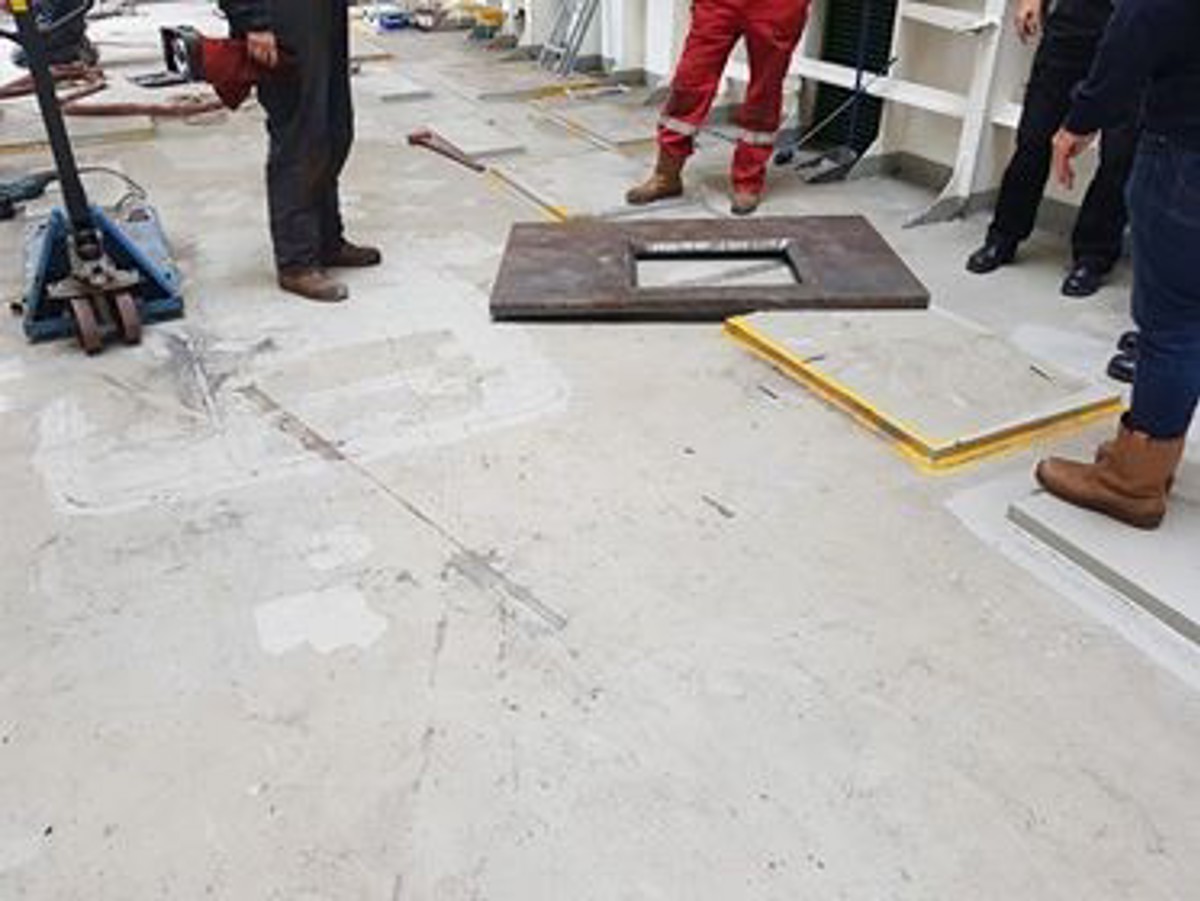
A welder foreman who was in the area underneath, was struck by the plate in the back of his legs as the plate bounced up from deck. Investigation after the incident showed the plate had bounced twice and the last time it struck the bulkhead forward in the ROV hangar. The welder was able to walk away from the incident but complained subsequently of pains where the plate had struck. He was sent to hospital for a check-up and returned to work the next day.
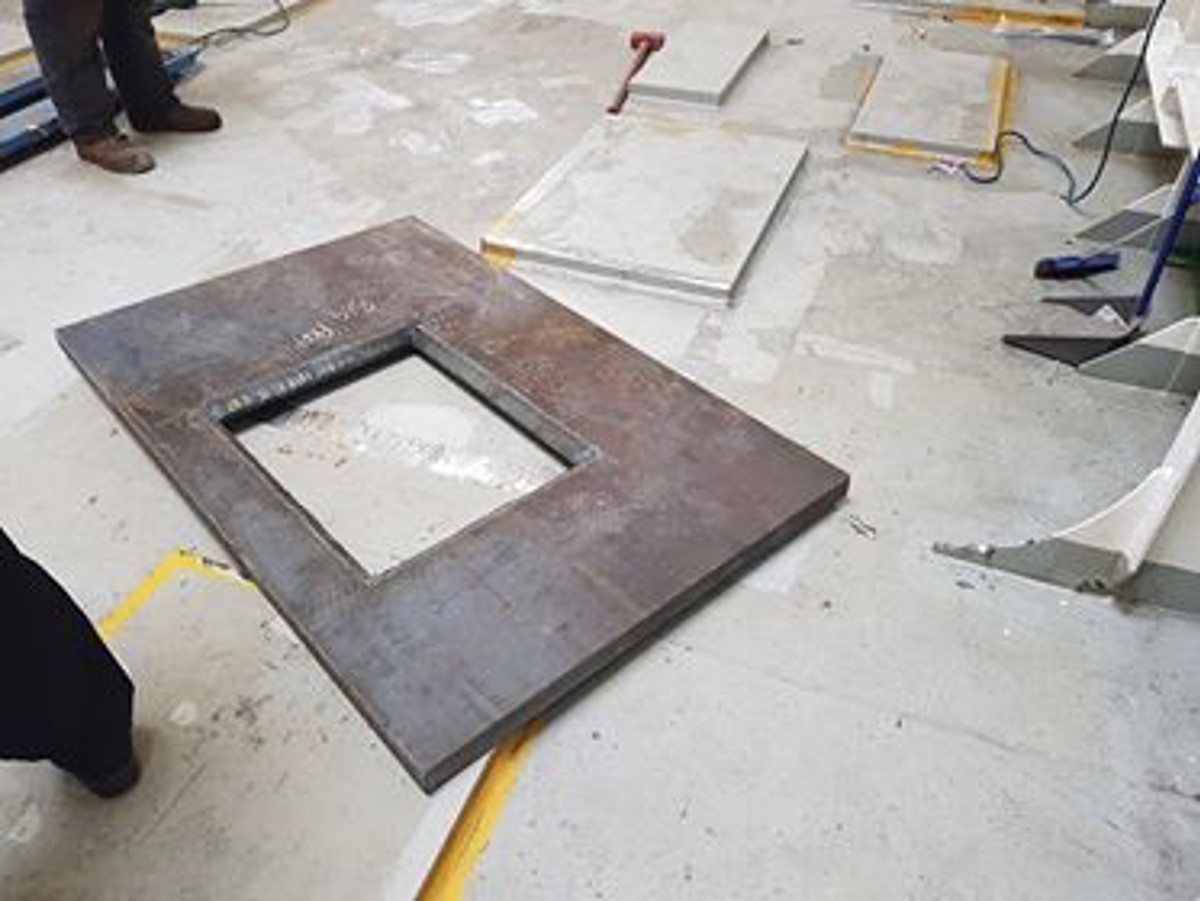
What went wrong? What were the causes?
- The plate was so shaped that the magnet could not hold it properly: it was noted that 8 or 9 rectangular plates without cut outs had been lifted successfully with the magnet. The plate that fell was shaped differently, having a rectangle 68 cm x 54 cm cut from it (see photographs). As this plate was to be lifted, no one took into consideration that this plate had a large cut out, limiting the connection area for the magnet.
- Clear instructions were not followed: investigation also shows that the lifting operation was planned with clear instructions NOT to use magnet for lifting into ROV hangar. Pallets were to be used to lift plates into hangar, and magnet to distribute only, not above 300mm off deck.
What actions were taken? What lessons were learned?
- Lifting plans should be followed and should also cover all aspects, as in this case, where there are differences in object properties. This short cut could easily have resulted in major injury and, more than likely, a fatality if the plate had struck directly.
- The importance of following plans and also focus on identifying increased risk cannot be stressed enough.
Members may wish to refer to:
- Guidelines for lifting operations (IMCA HSS019)
Related Safety Flashes
-
IMCA SF 11/17
22 May 2017
-
IMCA Safety Flashes summarise key safety matters and incidents, allowing lessons to be more easily learnt for the benefit of the entire offshore industry.
The effectiveness of the IMCA Safety Flash system depends on the industry sharing information and so avoiding repeat incidents. Incidents are classified according to IOGP's Life Saving Rules.
All information is anonymised or sanitised, as appropriate, and warnings for graphic content included where possible.
IMCA makes every effort to ensure both the accuracy and reliability of the information shared, but is not be liable for any guidance and/or recommendation and/or statement herein contained.
The information contained in this document does not fulfil or replace any individual's or Member's legal, regulatory or other duties or obligations in respect of their operations. Individuals and Members remain solely responsible for the safe, lawful and proper conduct of their operations.
Share your safety incidents with IMCA online. Sign-up to receive Safety Flashes straight to your email.