Portable electrical equipment – serious fire in the accommodation
- Safety Flash
- Published on 15 October 2021
- Generated on 27 October 2026
- IMCA SF 28/21
- 2 minute read
A Member reports a serious fire in the accommodation on a vessel at anchor.
What happened?
There was no injury nor loss of life, but there was significant and costly damage to the vessel, reputational damage and ten days loss of earnings whilst off-hire.
Fire was smelt in a cabin; on investigation a massive fire was discovered in a nearby cabin. The alarm was raised and the crew were mustered. The crew managed to extinguish the fire but it took nearly four hours to contain and it was necessary to use boundary cooling provided by other nearby vessels.
What was the cause?
It was noted that first appearances showed the bedroom of the cabin to be completely damaged. The damage in the day room was much less. This had given the initial impression that the fire had originated from the bedroom. However investigation revealed that the fire had actually started from the day room.
Further investigation showed that the fire was caused by an electric kettle in the day room which had been left on while the occupant was not in the cabin. There is a very high probability that the kettle cut-off safety switch did not operate. This led to the overheating and caused smouldering eventual catching fire of the kettle handle and all the subsequent fire.
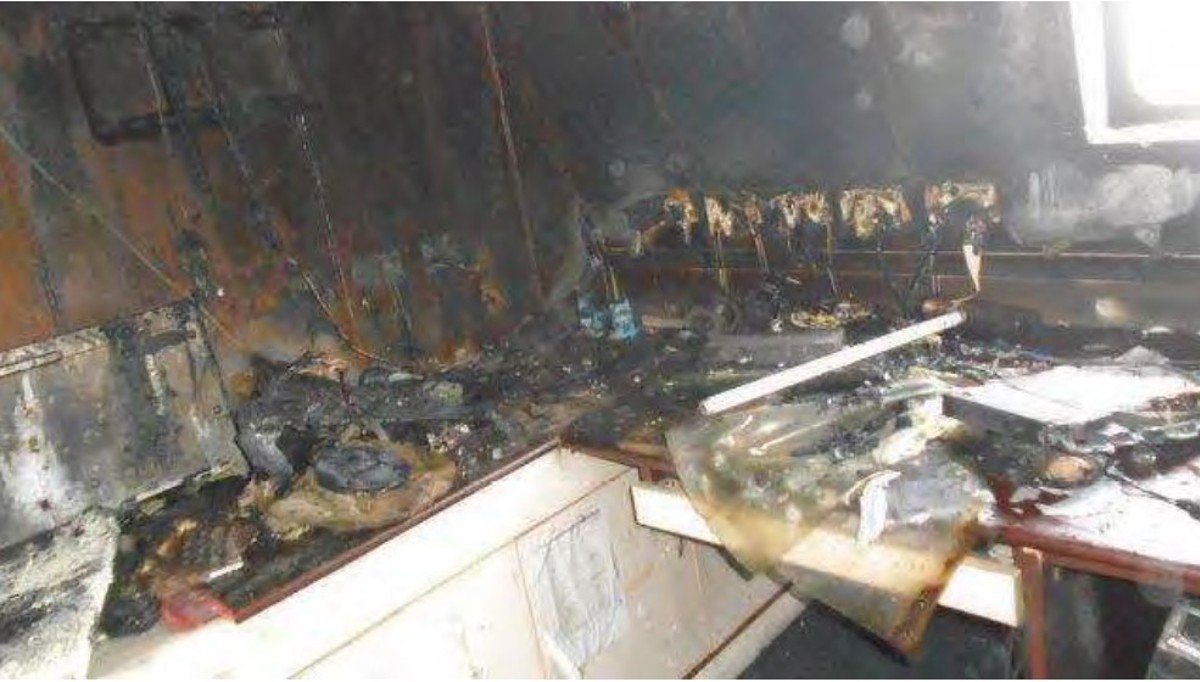
burnt out day room of cabin
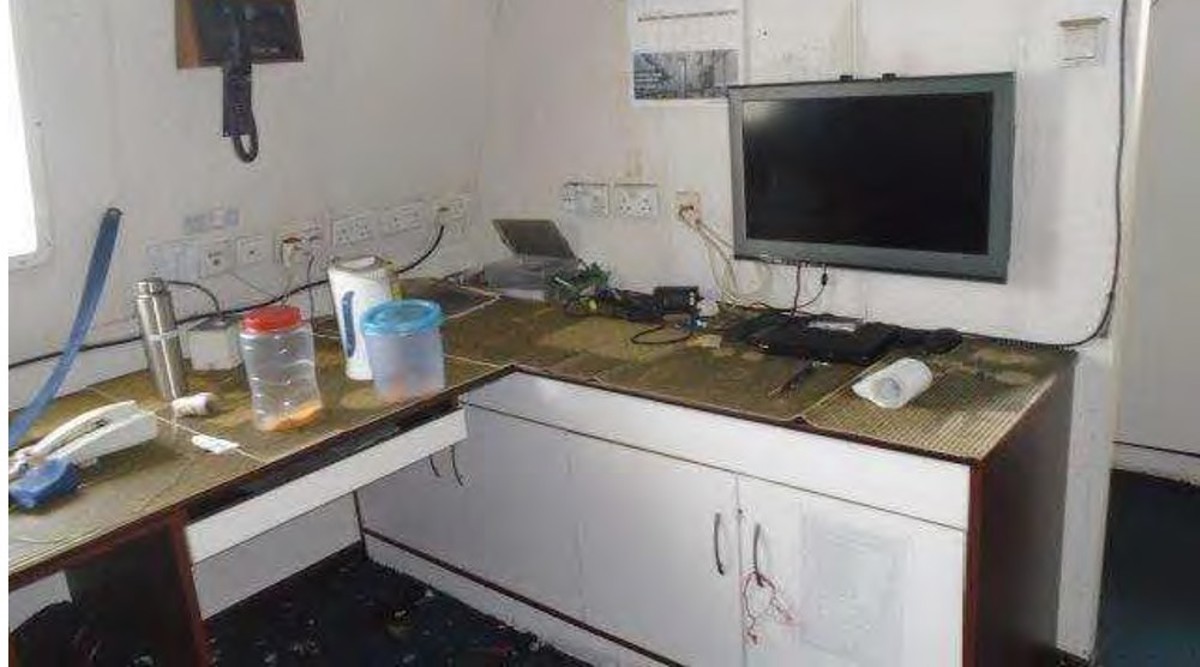
identical similar day room
Lessons learned
- Fire-fighting
- A nearby cabin was identical in plan: an understanding of this cabin made the task of the fire-fighters easier.
- The fire-fighters were unable to safely enter the burning bedroom, and the fire was attacked by breaking a port hole and inserting a fire hydrant.
- It was found that fire-fighters with full beards were less able to fight the fire effectively owing to smoke leakage into their BA sets.
- A nearby cabin was identical in plan: an understanding of this cabin made the task of the fire-fighters easier.
- Portable electrical equipment
- Consider carefully the origin and quality of permitted portable electrical equipment.
- What portable electrical equipment should, and should not, be permitted in cabins and elsewhere?
- To what extent should such equipment be left powered while the cabin is unoccupied?
- How is such equipment connected to the vessel mains (extensions, sockets etc)?
- Consider carefully the origin and quality of permitted portable electrical equipment.
Related Safety Flashes
-
IMCA SF 13/19
4 June 2019
-
-
IMCA SF 29/18
21 December 2018
-
-
IMCA SF 18/18
23 August 2018
-
-
IMCA SF 24/16
20 September 2016

IMCA Safety Flashes summarise key safety matters and incidents, allowing lessons to be more easily learnt for the benefit of the entire offshore industry.
The effectiveness of the IMCA Safety Flash system depends on the industry sharing information and so avoiding repeat incidents. Incidents are classified according to IOGP's Life Saving Rules.
All information is anonymised or sanitised, as appropriate, and warnings for graphic content included where possible.
IMCA makes every effort to ensure both the accuracy and reliability of the information shared, but is not be liable for any guidance and/or recommendation and/or statement herein contained.
The information contained in this document does not fulfil or replace any individual's or Member's legal, regulatory or other duties or obligations in respect of their operations. Individuals and Members remain solely responsible for the safe, lawful and proper conduct of their operations.
Share your safety incidents with IMCA online. Sign-up to receive Safety Flashes straight to your email.