Lost time injury – Person slipped on the stairs and broke his arm
- Safety Flash
- Published on 15 December 2017
- Generated on 1 November 2026
- IMCA SF 31/17
- 2 minute read
A member of the engine room team suffered a serious injury to his left forearm while carrying a pail of lubrication oil from the steering flat to the engine room.
What happened?
The team member was carrying the pail on his right shoulder with both arms in support, and descending some stairs. With two steps remaining, he stepped on a slippery step and his right foot became trapped between the steps. He lost his balance, slipped and fell. When he landed on the deck his left arm took most of the impact.
First aid was applied with using a splint. The injury and swelling of the affected area did not seem to be severe. However, upon arrival in port, he was referred to hospital for further treatment and it was confirmed that his left arm was broken.
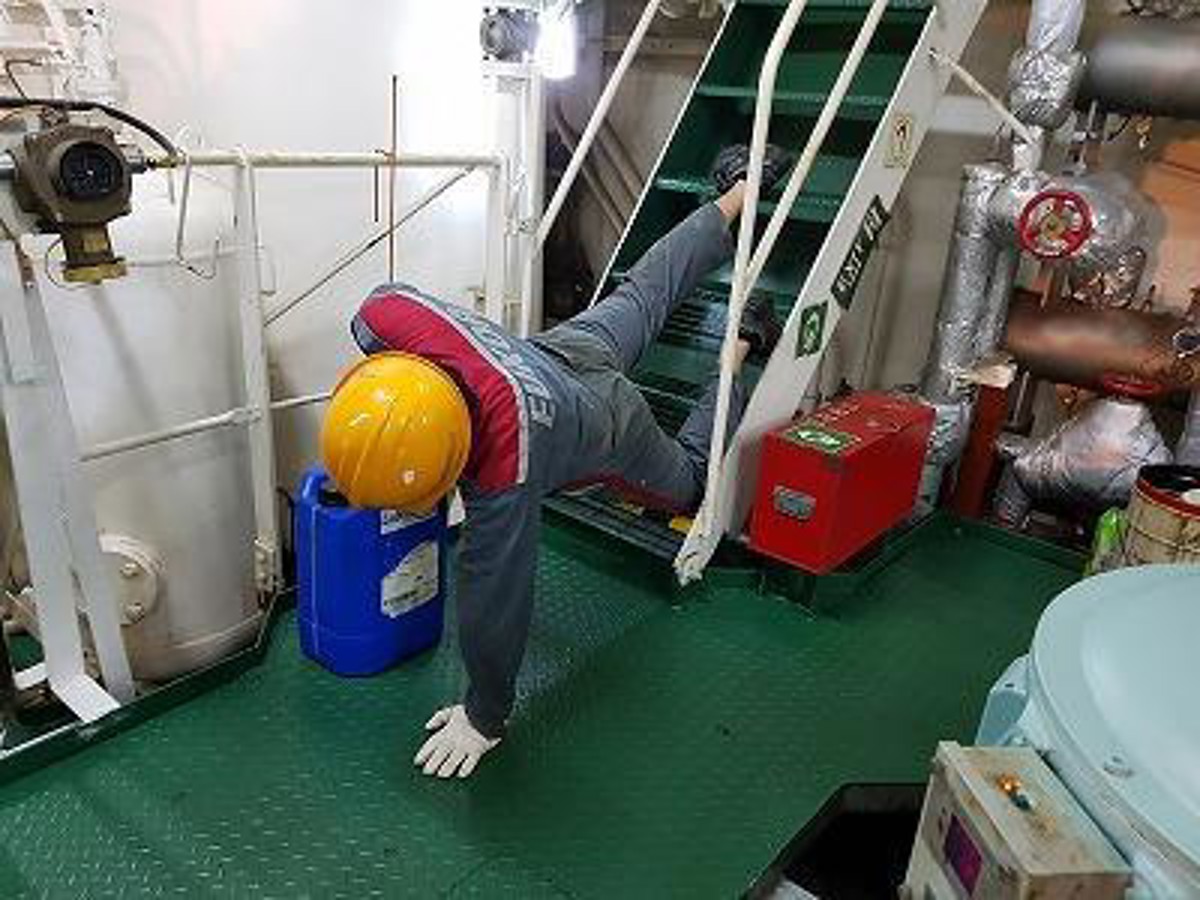
re-enactment of the incident
What went wrong? What were the causes?
The immediate causes:
- The crew member was going down the stairs without holding the handrail.
- The stairs were slippery.
- The crew member's foot got caught.
The weather was calm; the vessel was neither rolling nor pitching. The crewman involved was well rested and was wearing correct personal protective equipment (PPE).
Our Member found the root causes to be:
- Inadequate compliance with correct lifting and carrying technique – there was a right way and a wrong way to transfer this lubrication oil, and he chose the wrong way.
- Risk seen as tolerable – “complacency” – this was a routine and recurring task.
Lessons learnt / Actions taken
- Could there be a better or safer way to transfer this oil?
- All should be more safety conscious when going down the stairs, particularly if carrying things.
- Handrails should be used; correct lifting and carrying procedures should be followed.
- Good house-keeping – ensure stairs, floors, safety shoes etc. are kept free of oil and grease.
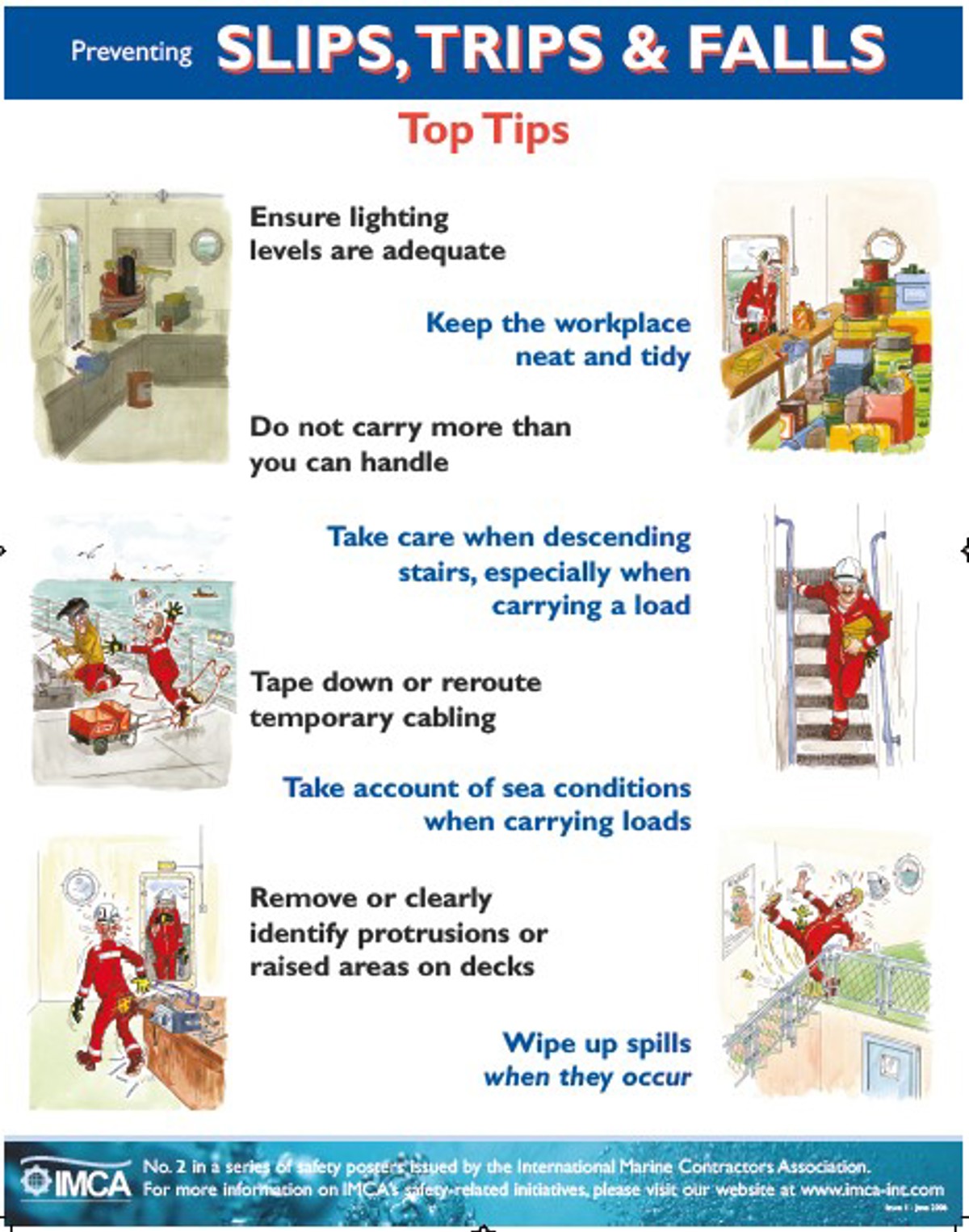
Please refer to IMCA’s safety promotional materials:
- Short video – Preventing slips and trips
- Poster – Take care on the stairs
- Poster – Preventing slips, trips and falls
Related safety flashes
-
IMCA SF 33/16
6 December 2016
-
IMCA SF 20/15
3 December 2015
-
IMCA SF 17/14
31 October 2014
IMCA Safety Flashes summarise key safety matters and incidents, allowing lessons to be more easily learnt for the benefit of the entire offshore industry.
The effectiveness of the IMCA Safety Flash system depends on the industry sharing information and so avoiding repeat incidents. Incidents are classified according to IOGP's Life Saving Rules.
All information is anonymised or sanitised, as appropriate, and warnings for graphic content included where possible.
IMCA makes every effort to ensure both the accuracy and reliability of the information shared, but is not be liable for any guidance and/or recommendation and/or statement herein contained.
The information contained in this document does not fulfil or replace any individual's or Member's legal, regulatory or other duties or obligations in respect of their operations. Individuals and Members remain solely responsible for the safe, lawful and proper conduct of their operations.
Share your safety incidents with IMCA online. Sign-up to receive Safety Flashes straight to your email.