Potential engine room flooding: maintenance and equipment failure issues on a laid-up vessel
- Safety Flash
- Published on 15 December 2017
- Generated on 23 October 2026
- IMCA SF 31/17
- 3 minute read
A seawater cooling line failed during planned maintenance on a vessel in “cold” lay-up.
What happened?
An engineer and an AB were conducting planned maintenance on vessels in “cold” lay-up. The engineer opened a sea chest and necessary cooling lines and started an auxiliary generator. After watching it run for 10 minutes, he left the engine room and carried out visual checks elsewhere on the vessel. Once these visual checks were complete, he left the vessel and went to another cold laid-up vessel to conduct similar checks. An AB was left on the main deck of the vessel with the auxiliary generator running.
After approximately one hour, the engineer returned to the vessel. On reaching the engine room he noticed a strong water spray on the engine from the sea water cooling line. He immediately activated the emergency shut-down. As the shutdown was not enough to reduce the water flow, the engineer attempted to shut off the isolating valve supplying sea water from the main sea chest – but it was seized. Finally, the valves mounted before and after the sea chest were shut off, and the water flow was stopped. Although there was no damage, this near miss had the potential for major equipment damage or loss of the vessel.
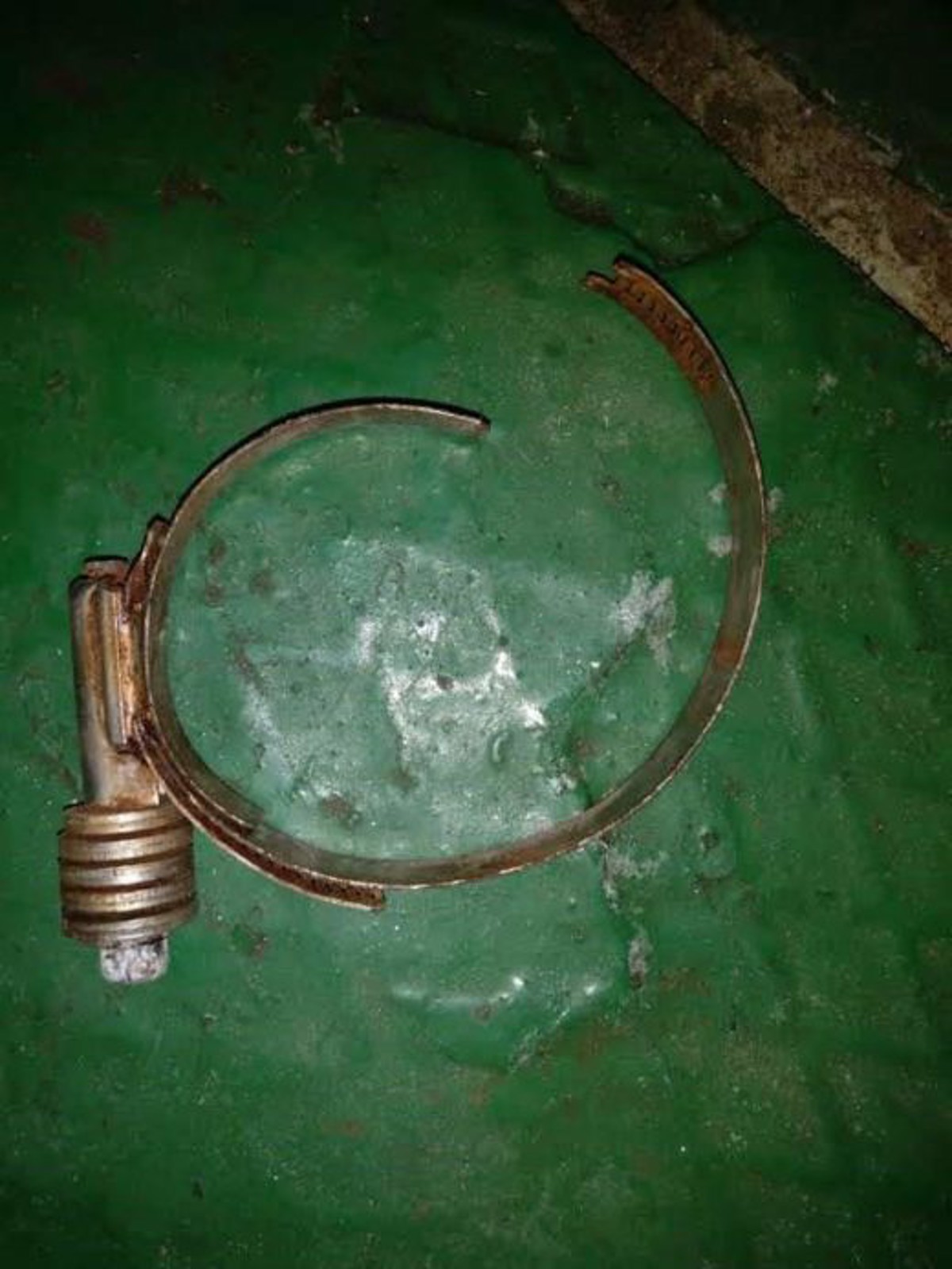
failed hose clamp, mounted on the discharge side
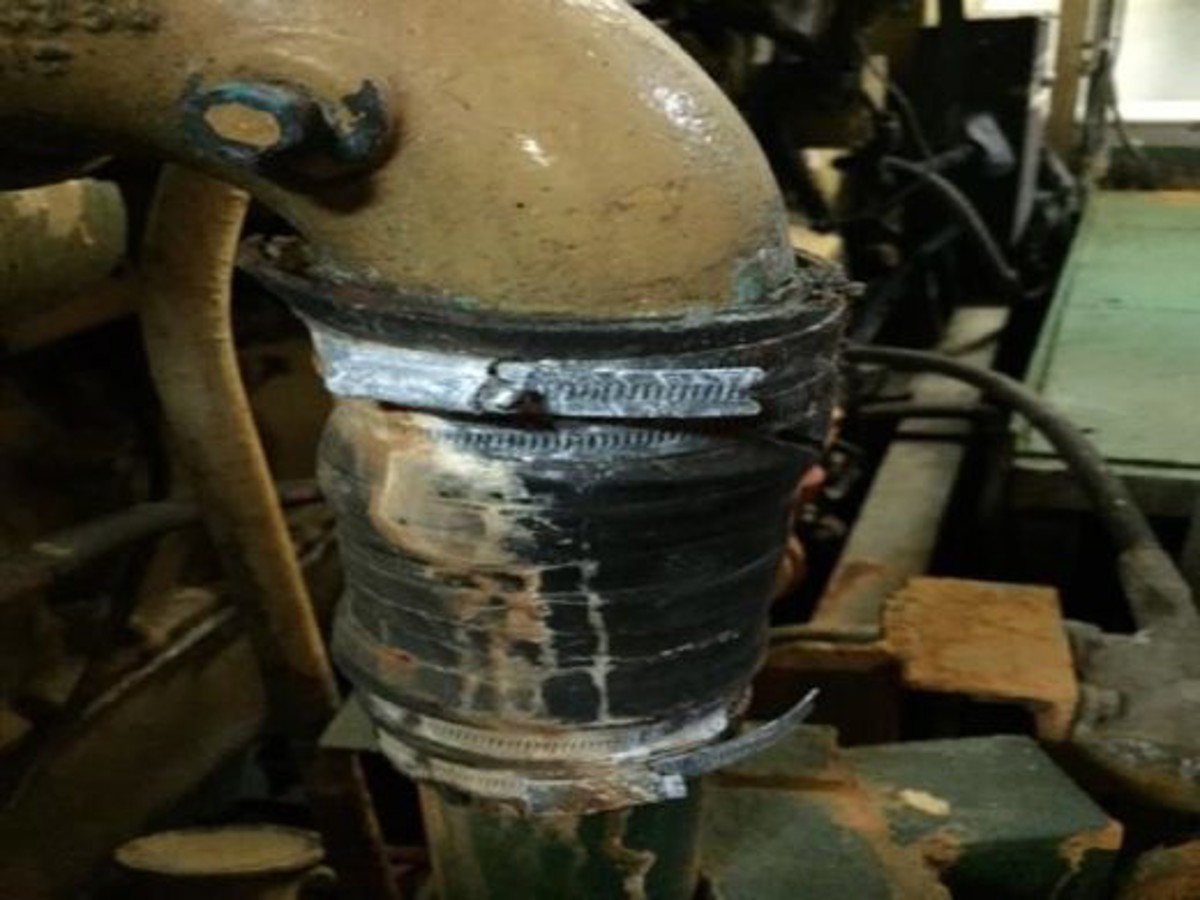
hose clamp condition – in use on suction side of sea water cooling pump, found on the day of investigation, on the same engine where the failure occurred
What went wrong? What were the causes?
Equipment failure:
- The failure on the cooling line was traced to a broken hose clamp with signs of corrosion, which allowed a flexible hose to get disconnected from the rigid connecting pipe.
- The intermediate valves from the crossover sea chest line were found to be seized;
Procedures:
- The crew did not have portable radios, so there was no remote communication between the crew members.
- Crew on laid-up vessels did not have access to the company’s document management system, and hence no access to the company safety management system (SMS) and other important information.
- Repair and maintenance conducted were not being recorded in the company planned maintenance system.
- Vessel crew were unaware of documented company emergency response plan and procedures.
- Vessel crew were unsure of whom to contact for daily operational needs.
Actions taken
- 46,000 litres of oily water were pumped out of the engine room bilges. Due to lack of information, it could not be confirmed whether this amount was all due to the incident or possibly could have been there before that.
- A new hose clamp was installed, the engine tested and all found to be in good order.
Lessons learnt
- Advanced deterioration of parts, equipment and emergency batteries on laid-up vessels suggest that there should be more rigorous inspection and control of conditions on such vessels.
- There should be better management of planned maintenance procedures, and of safety management systems on laid-up vessels, including the possibility of setting up temporary alarms as appropriate.
- It is important to ensure that appropriate communications (email etc) are maintained to and from vessels in lay-up.
Related Safety Flashes
-
IMCA SF 23/17
21 September 2017
-
IMCA Safety Flashes summarise key safety matters and incidents, allowing lessons to be more easily learnt for the benefit of the entire offshore industry.
The effectiveness of the IMCA Safety Flash system depends on the industry sharing information and so avoiding repeat incidents. Incidents are classified according to IOGP's Life Saving Rules.
All information is anonymised or sanitised, as appropriate, and warnings for graphic content included where possible.
IMCA makes every effort to ensure both the accuracy and reliability of the information shared, but is not be liable for any guidance and/or recommendation and/or statement herein contained.
The information contained in this document does not fulfil or replace any individual's or Member's legal, regulatory or other duties or obligations in respect of their operations. Individuals and Members remain solely responsible for the safe, lawful and proper conduct of their operations.
Share your safety incidents with IMCA online. Sign-up to receive Safety Flashes straight to your email.