Two incidents with electrical installations with potential for a fire
- Safety Flash
- Published on 10 November 2020
- Generated on 5 October 2026
- IMCA SF 31/20
- 3 minute read
A Member reported two incidents involving failure of electrical equipment, leading to, or potentially leading to, fire hazards
Incident 1: Earth fault and potential fire hazard
What happened?
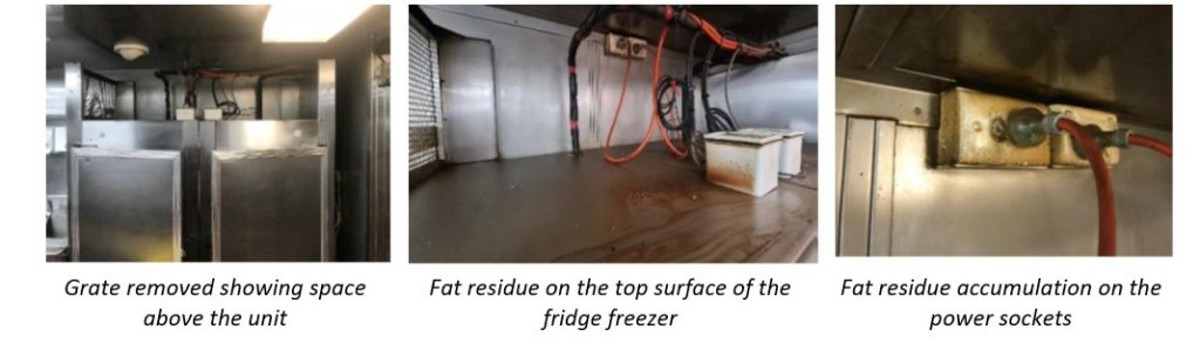
Whilst fault-finding an earth fault on the 240v mains system on a vessel, the engineers came across a pair of mains sockets installed above the galley fridge / freezer space. This space was not ventilated.
These mains sockets were discovered to be heavily soiled by the fat residue that had drifted into this space from cooking in the galley.
What were the causes?
The fat residue was the immediate cause of the earth fault. This was clearly a potential fire hazard caused by the fat dripping down into the mains sockets. Causal factors identified were:
- design flaws in the fitting of mains sockets in such a location
- ineffective extraction of fat fumes from the galley
- failure to clean the area around the mains sockets
- unclear / Inadequate instructions for galley maintenance.
Actions taken? Lessons learned?
- The entire area was cleaned comprehensively once the sockets were isolated and locked/tagged out.
- The sockets were inspected and replaced if necessary, and testing conducted.
- Checks to be made of difficult to access areas, high up areas and such in galleys to ensure nothing similar could occur elsewhere.
Incident 2: Minor electrical fire in the engine room
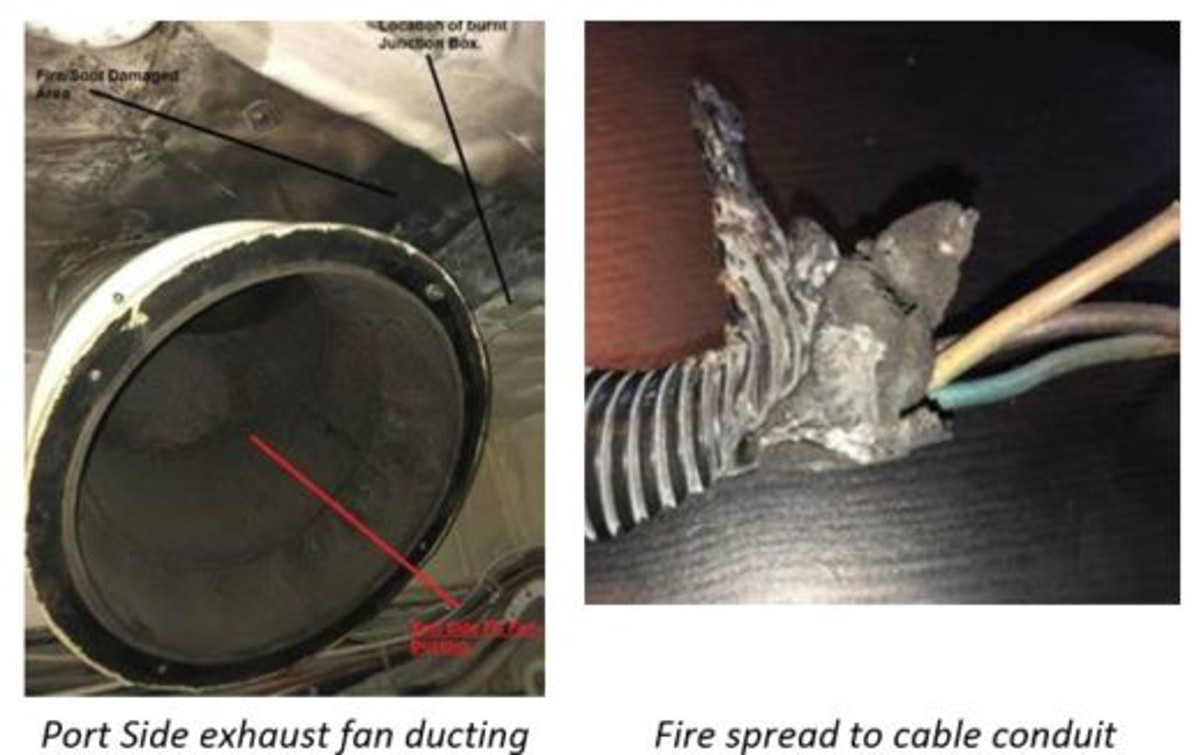
A fire alarm was activated from within the machinery space, and on investigation, a minor fire was noted on the deckhead at the port side exhaust fan junction box.
Given the limited size of the fire, it was tackled with a dry chemical powder extinguisher.
What were the causes?
Heating was caused by a breakdown in continuity in a terminal block inside a plastic junction box mounted on the machinery space deck head.
The cable possibly suffered breakdown at the termination, or the connection in the terminal block joining the supply to the consumer had weakened, leading to reduced continuity (increased resistance) and consequent heating of the wires.
Actions
- Check physical and electrical condition of connections for high load or continuously running equipment.
- All terminations to be checked as a matter of routine during forth planned maintenance.
For more information, please contact [email protected].
Related Safety Flashes
-
IMCA SF 19/14
18 December 2014
-
IMCA SF 10/14
30 June 2014
-
IMCA SF 05/10
28 July 2010
IMCA Safety Flashes summarise key safety matters and incidents, allowing lessons to be more easily learnt for the benefit of the entire offshore industry.
The effectiveness of the IMCA Safety Flash system depends on the industry sharing information and so avoiding repeat incidents. Incidents are classified according to IOGP's Life Saving Rules.
All information is anonymised or sanitised, as appropriate, and warnings for graphic content included where possible.
IMCA makes every effort to ensure both the accuracy and reliability of the information shared, but is not be liable for any guidance and/or recommendation and/or statement herein contained.
The information contained in this document does not fulfil or replace any individual's or Member's legal, regulatory or other duties or obligations in respect of their operations. Individuals and Members remain solely responsible for the safe, lawful and proper conduct of their operations.
Share your safety incidents with IMCA online. Sign-up to receive Safety Flashes straight to your email.