UHMPE pull-in rope damaged during mooring connection to buoy
- Safety Flash
- Published on 2 December 2021
- Generated on 26 October 2026
- IMCA SF 33/21
- 3 minute read
A synthetic pull-in rope used in a subsea mooring operation was violently pulled out of the control of an ROV.
What happened?
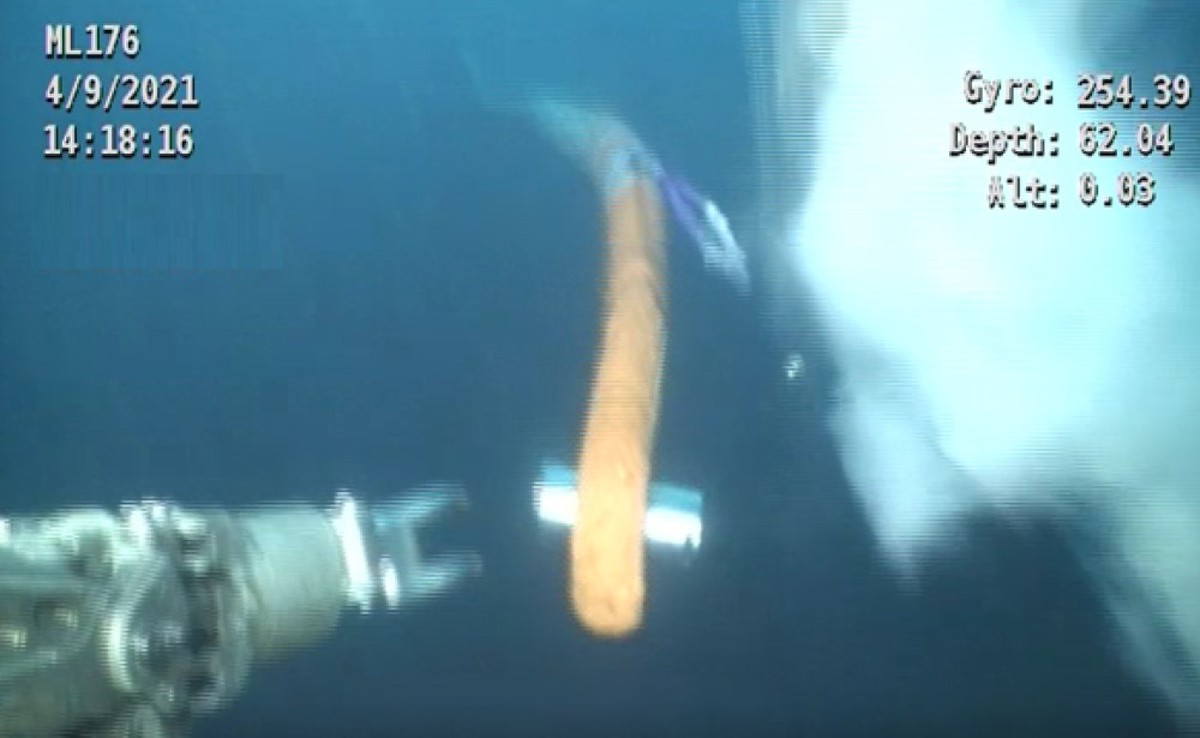
The ROV was pulling the thimble side of the rope away from a submerged turret production (STP) buoy when it lost control of the pull-in rope, causing damage to its 7-function arm. The pull-in rope was slowly paying out from a special handling winch, in combination with a capstan to overcome the friction on the full rope over the vessel deck.
Another ROV witnessed the sheave spinning very fast and the pull-in rope spooling off towards the surface, and that the thimble was stuck between the sheave and the buoy.
An ALL STOP was called on the bridge for investigation and intervention. The damaged ROV was returned to deck to carry out repairs on the damaged arm. The other ROV grabbed the loose end of the pull-in rope to keep it away from the thrusters.
What went wrong?
Slack on the pulling rope built up subsea, creating a catenary close to the vessel’s port side propeller.
A combination of the sea current, pulling force of the vessel thrusters and wash from the propulsion of another nearby vessel caused the pull rope to be ripped out of the hand of the ROV, and the other end went into the propeller which cut and damaged the rope.
What were the causes?
Our Member discerned the following causes:
- Immediate causes
- High sea current (2.8 knots) at time of incident combined with subsea conditions and the effects (wash) of nearby propulsion systems.
- There was insufficient monitoring of the pull-in rope catenary as it went over the vessel stern rollers.
- The vessel was in an unfavourable heading with respect to the direction of the current.
- High sea current (2.8 knots) at time of incident combined with subsea conditions and the effects (wash) of nearby propulsion systems.
- Underlying causes
- The friction acting on the rope from the steel deck, was higher than anticipated.
- The synthetic (UHMPE) pull-in rope was (too) light.
- The task plan did not appropriately address the environmental conditions subsea.
- The supplier providing the mooring system confirmed that they did not consider environmental conditions during the design of the equipment.
- The friction acting on the rope from the steel deck, was higher than anticipated.
- Root cause – Ineffective assessment and control of the impact the subsea environmental conditions would have on the pull-in rope during the operation, including design limitations.
Actions
The installation procedure and task plan for this work were amended, particularly with regard to the impact the subsea environmental conditions would have.
Related Safety Flashes
-
IMCA SF 07/21
4 March 2021
-
-
IMCA SF 33/20
26 November 2020
-
IMCA Safety Flashes summarise key safety matters and incidents, allowing lessons to be more easily learnt for the benefit of the entire offshore industry.
The effectiveness of the IMCA Safety Flash system depends on the industry sharing information and so avoiding repeat incidents. Incidents are classified according to IOGP's Life Saving Rules.
All information is anonymised or sanitised, as appropriate, and warnings for graphic content included where possible.
IMCA makes every effort to ensure both the accuracy and reliability of the information shared, but is not be liable for any guidance and/or recommendation and/or statement herein contained.
The information contained in this document does not fulfil or replace any individual's or Member's legal, regulatory or other duties or obligations in respect of their operations. Individuals and Members remain solely responsible for the safe, lawful and proper conduct of their operations.
Share your safety incidents with IMCA online. Sign-up to receive Safety Flashes straight to your email.