Lifejacket battery caught fire
- Safety Flash
- Published on 10 January 2022
- Generated on 26 October 2026
- IMCA SF 01/22
- 2 minute read
During an inspection on a vessel in cold lay-up, the lifejackets stored underneath a sitting bench in the wheelhouse were found burned and melted. No-one was harmed; apart from the jackets, nothing was damaged.
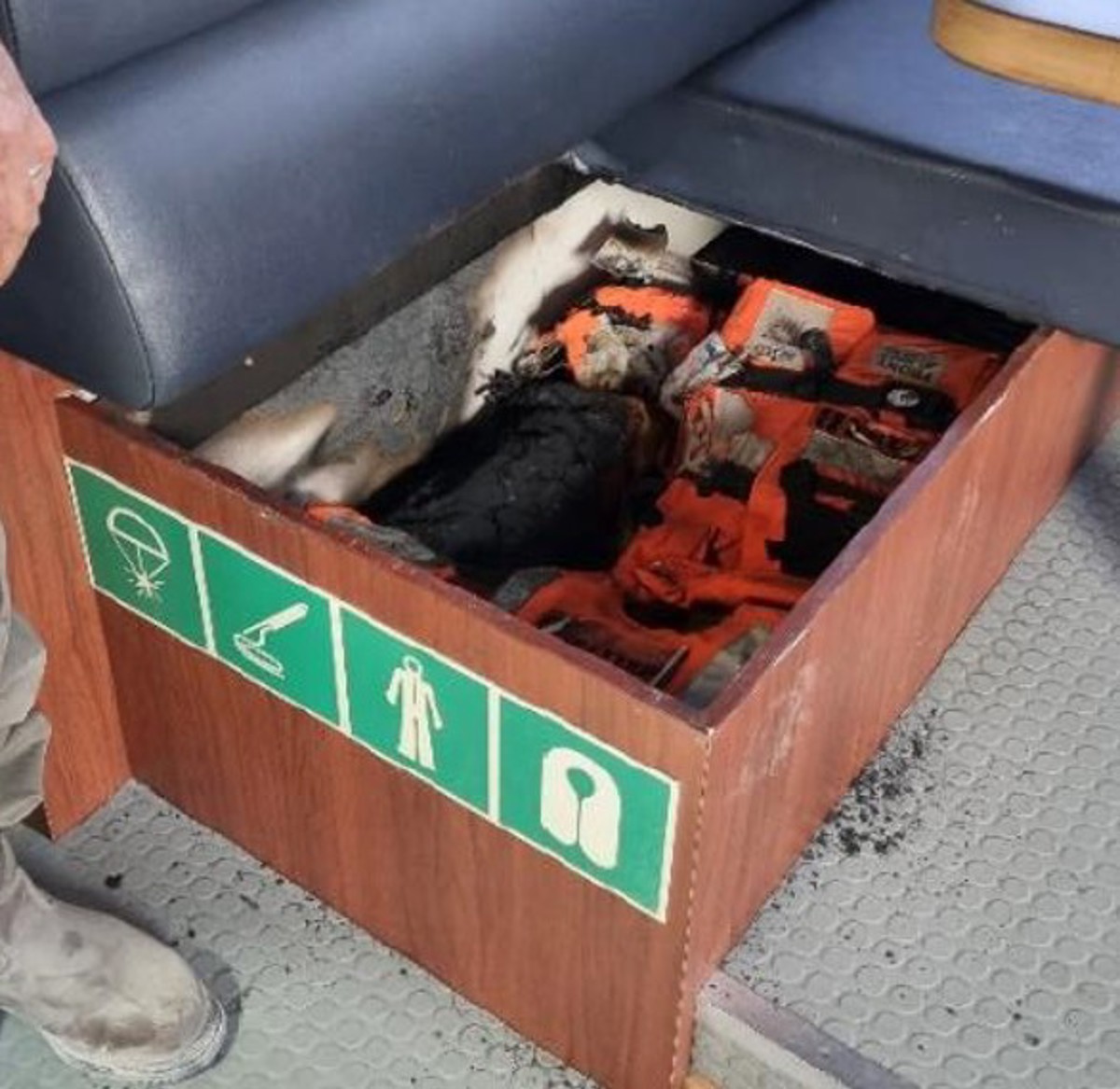
Burned lifejackets
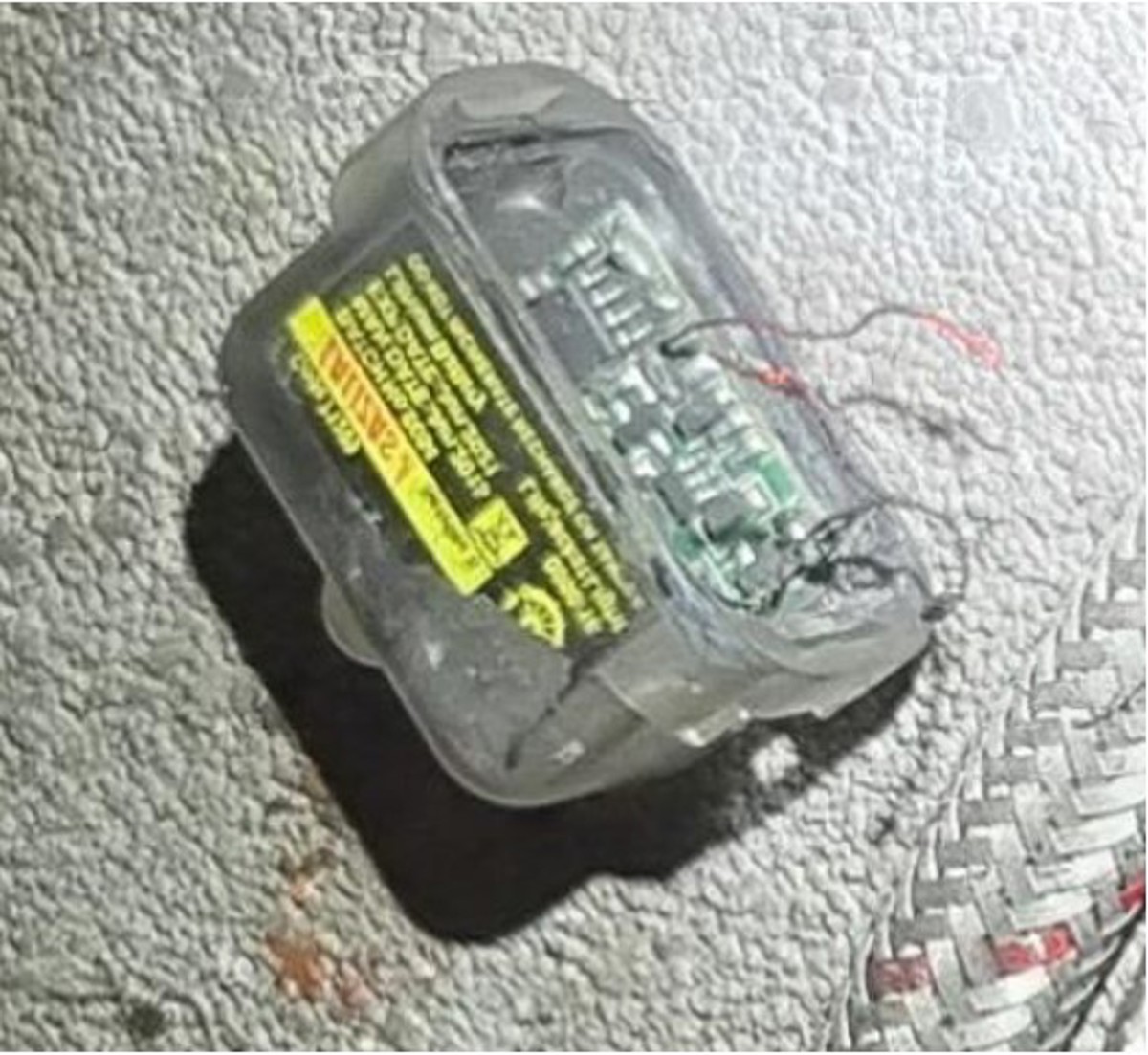
The lamp used in the lifejackets
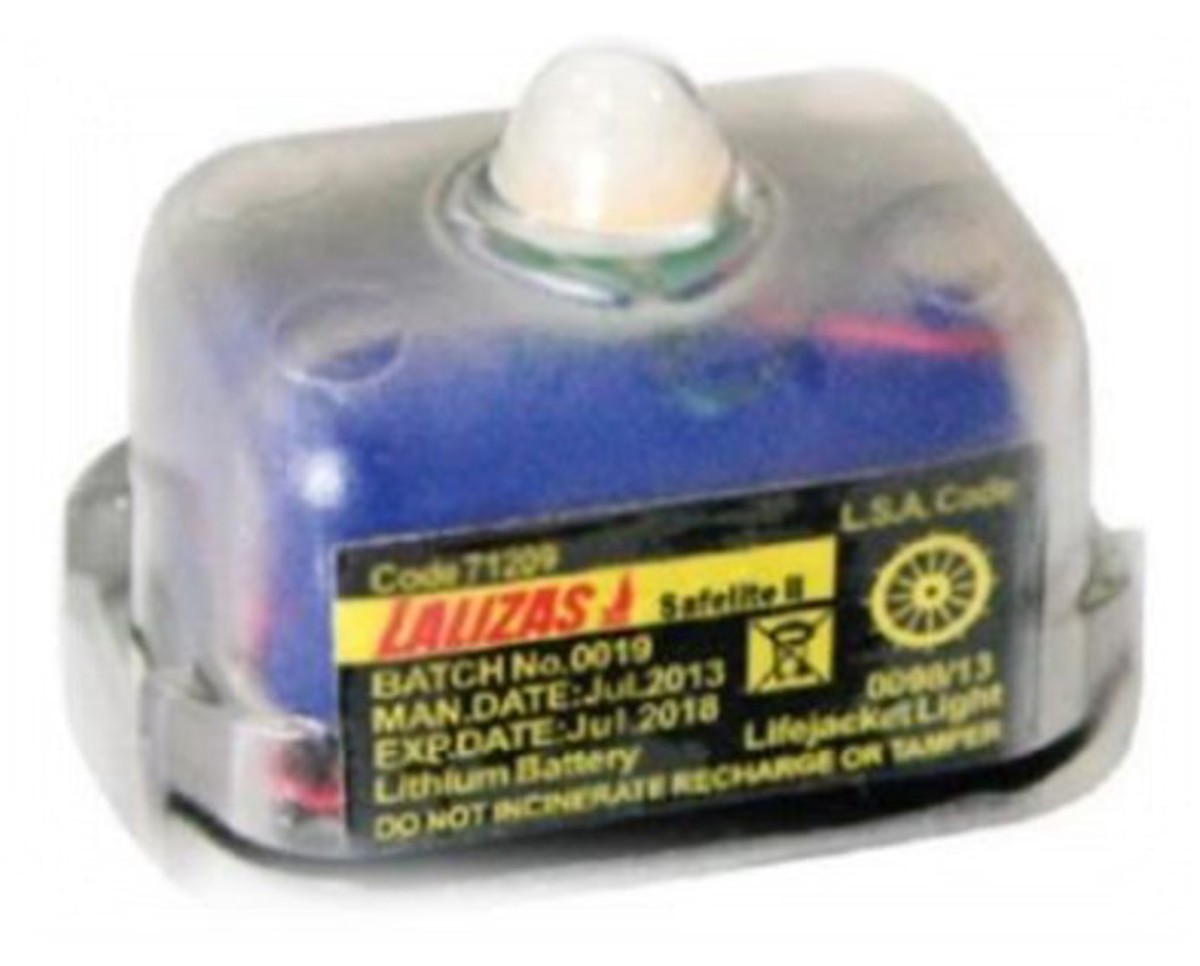
Lalizas 71209 lamp of lifejacket
What went wrong?
A Lithium battery (3.6v) had exploded in one of the self-igniting lights. As the bench was in a properly closed position, without any gaps, the fire could not spread due to a lack of oxygen. Therefore the fire was not detected and did not activate a fire alarm, as the smoke was contained inside the storage compartment. Investigation showed that the battery of the “Lalizas 71209” life jacket light had expired five months earlier.
A possible cause could be that this battery was exposed to moisture before the lay-up period and water ingress affected the battery content after the lifejacket was put back in storage.
Lessons and actions
- Store such equipment in a secure, dry and cool place away from flammable materials.
- Keep batteries of any kind away from metal objects to avoid short circuit between the terminals.
- Lithium batteries in your work place:
- Assess where Lithium batteries are present and check, if possible, the condition of the battery and cover.
- Verify the expiry date of the battery.
- Regularly inspect batteries of lifejacket lights and other devices like radios as per planned maintenance schedule.
- If batteries are expired or damaged, remove them and dispose of them properly.
- For laid-up vessels, it may be appropriate to consider whether or not to remove Lithium batteries and other hazardous materials from vessels before going onto lay-up.
Related Safety Flashes
-
IMCA SF 25/19
28 October 2019
-
-
IMCA SF 28/18
18 December 2018
-
-
IMCA SF 25/16
3 October 2016
-
IMCA SF 31/17
15 December 2017
-
-
IMCA SF 23/19
30 September 2019
-

IMCA Safety Flashes summarise key safety matters and incidents, allowing lessons to be more easily learnt for the benefit of the entire offshore industry.
The effectiveness of the IMCA Safety Flash system depends on the industry sharing information and so avoiding repeat incidents. Incidents are classified according to IOGP's Life Saving Rules.
All information is anonymised or sanitised, as appropriate, and warnings for graphic content included where possible.
IMCA makes every effort to ensure both the accuracy and reliability of the information shared, but is not be liable for any guidance and/or recommendation and/or statement herein contained.
The information contained in this document does not fulfil or replace any individual's or Member's legal, regulatory or other duties or obligations in respect of their operations. Individuals and Members remain solely responsible for the safe, lawful and proper conduct of their operations.
Share your safety incidents with IMCA online. Sign-up to receive Safety Flashes straight to your email.