Near-miss: Hyperbaric fire extinguisher incident
- Safety Flash
- Published on 4 April 2007
- Generated on 28 May 2026
- IMCA SF 03/07
- 2 minute read
A Member has reported a near-miss incident in which the safety valve assembly of a twin cylinder hyperbaric fire extinguisher blew off during ‘routine’ checks.
What happened?
A mechanical technician was carrying out regular six-monthly checks on the fire extinguisher in the base workshop. The technician opened the high pressure cylinder valve with the intention of checking the function of the unit. As per the design and functionality of the extinguisher, the gas from the high pressure cylinder passed through a step-down regulator set at 9 bar and entered the low pressure tank, which contained the fire-fighting medium, in this case an emulsifier. At this point the entire safety valve assembly blew off the top of the low pressure tank at the point of the penetration fitting. The safety valve assembly was not recovered after the incident. No-one was injured.
Other similar twin cylinder fire extinguishers were segregated and an incident investigation was started. Two probable causes were identified – either:
- the first stage regulator was not functioning properly, delivering higher pressure than the set regulated pressure, or
- the safety valve had not functioned, leading to the whole assembly bursting.
Upon checking the first stage regulator it was found to be faulty. The burst disc on the safety valve assembly was also found not to function as pressure built up due to a faulty first stage regulator.
The company noted the following positive points from the situation:
- The mechanical technician was experienced and was standing in a safe place away from possible danger when the safety valve assembly blew off.
- The checks were being made at a shore base and the incident did not occur in a saturation chamber.
However, appropriate records for a group of seven fire extinguishers were found but could not be traced to exact fire extinguishers, so there was not complete traceability of equipment.
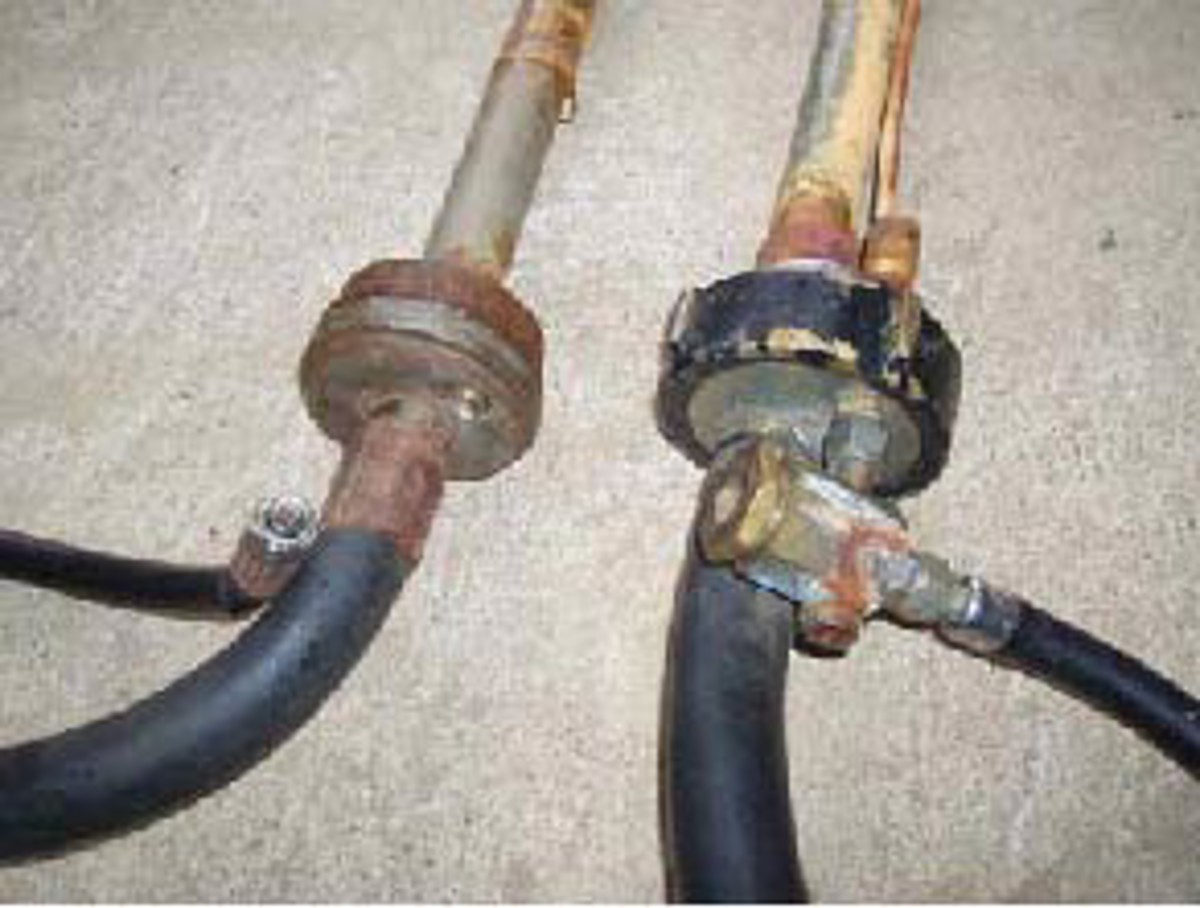
damaged safety relief valve assembly
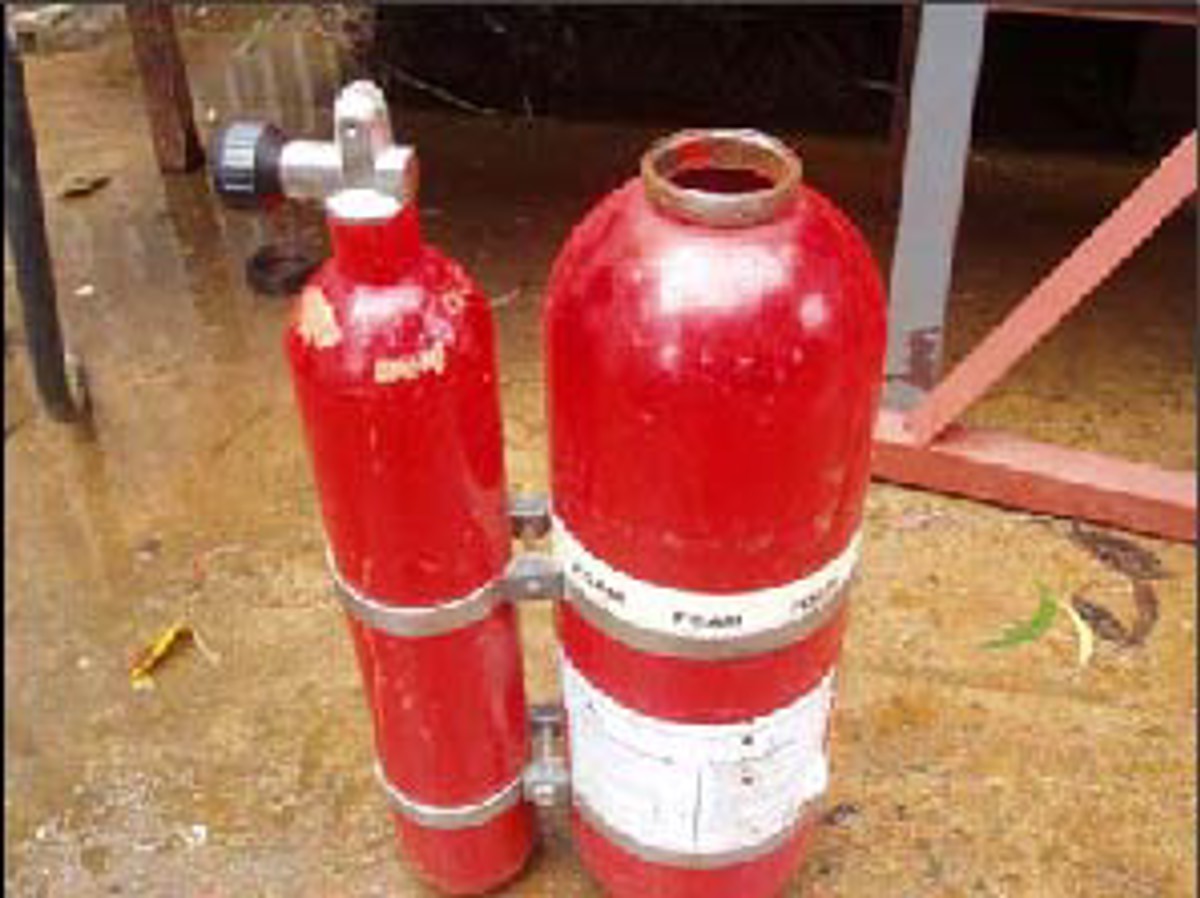
fire extinguisher
Actions
The company has noted the following future preventive pro-active actions:
- It has introduced a policy of phasing out twin gas cylinder extinguishers and replacing them with single bottle hyperbaric cylinder extinguishers, which are considered safer and are widely used in the industry.
- The burst discs on safety valves are to be replaced on yearly basis.
- It has noted that equipment tracking needs to be good enough to enable tracing back of particular pieces of equipment such as fire extinguishers.
IMCA Safety Flashes summarise key safety matters and incidents, allowing lessons to be more easily learnt for the benefit of the entire offshore industry.
The effectiveness of the IMCA Safety Flash system depends on the industry sharing information and so avoiding repeat incidents. Incidents are classified according to IOGP's Life Saving Rules.
All information is anonymised or sanitised, as appropriate, and warnings for graphic content included where possible.
IMCA makes every effort to ensure both the accuracy and reliability of the information shared, but is not be liable for any guidance and/or recommendation and/or statement herein contained.
The information contained in this document does not fulfil or replace any individual's or Member's legal, regulatory or other duties or obligations in respect of their operations. Individuals and Members remain solely responsible for the safe, lawful and proper conduct of their operations.
Share your safety incidents with IMCA online. Sign-up to receive Safety Flashes straight to your email.