Pipe stacking incident
- Safety Flash
- Published on 1 June 2004
- Generated on 25 October 2026
- IMCA SF 05/04
- 3 minute read
A Member has reported a near-miss which could have been a potentially serious incident, which occurred during the stacking of lengths of pipe.
What happened?
The pipe joints were being off-loaded from the transport vehicle, and were being stacked pending further loading into U-frames for delivery to the pipelay vessel.
The procedure specified a stack with a maximum height of 8 layers of the 10″ pipe joints. When placing the seventh layer on a stack, the front end pipe joint in the bottom layer slipped out of the restraining chock, pushing the other chocks ahead of it. This was followed by a slow slippage of the entire base layer, causing the rest of the pipe stack to slump. The slippage of pipes continued until it came to rest against a fork lift truck that was parked in front of the stack.
The area in front of the stack was used as an inspection area, but at the time of the incident no people were in the area and, as a result, nobody was injured and there was only negligible damage.
The method employed for stacking the pipe had been used on several projects without any previously recorded incidents.
The investigation showed that the pipe coating was smooth, not sintered as expected, with little or no friction. This had been noted upon reception of the pipe joints, but not considered a problem. A subsequent sensitivity analysis, conducted as part of the investigation, revealed that the smooth surface more than doubled the forces that the wooden restraining chocks would have to withstand.
The discovery of the smooth pipe coating should have resulted in the initiation of a management of change process, which would have led to further engineering and a new risk assessment for the pipe stacking. This was not done.
As a result of this incident, a new method was employed to secure the bottom layer. Four lengths of pipe were inserted into pipe joints and these were secured with chains and turnbuckles (see photo below).
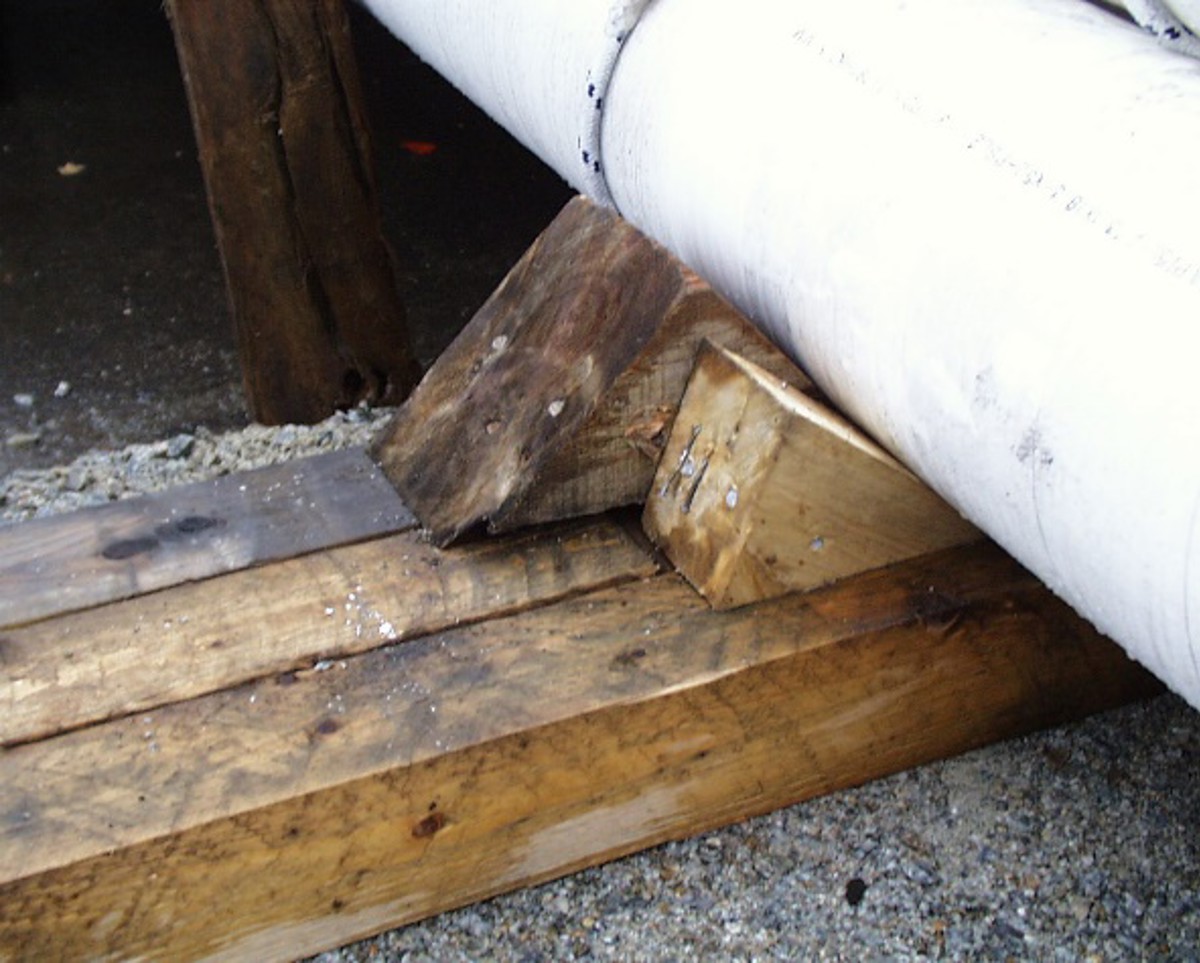
Original method

New method employed after the incident
Swipe for next image
The company involved has noted the lessons learned from this incident as including:
- Always use a management of change process when things are different than expected.
- Pipe stacks should be located so that work in front of/or behind the stack is avoided.
- The method of stacking pipe should be evaluated for each type of pipe, taking into account the coating, to determine if securing the stack with wooden chocks is sufficient or other methods have to be adopted.
IMCA Safety Flashes summarise key safety matters and incidents, allowing lessons to be more easily learnt for the benefit of the entire offshore industry.
The effectiveness of the IMCA Safety Flash system depends on the industry sharing information and so avoiding repeat incidents. Incidents are classified according to IOGP's Life Saving Rules.
All information is anonymised or sanitised, as appropriate, and warnings for graphic content included where possible.
IMCA makes every effort to ensure both the accuracy and reliability of the information shared, but is not be liable for any guidance and/or recommendation and/or statement herein contained.
The information contained in this document does not fulfil or replace any individual's or Member's legal, regulatory or other duties or obligations in respect of their operations. Individuals and Members remain solely responsible for the safe, lawful and proper conduct of their operations.
Share your safety incidents with IMCA online. Sign-up to receive Safety Flashes straight to your email.