Near miss: Fire hazard arising from failed fuel pipe connection
- Safety Flash
- Published on 21 March 2017
- Generated on 22 October 2026
- IMCA SF 06/17
- 2 minute read
A Member has reported a near miss incident involving a failed fuel pipe connection.
What happened?
The incident occurred while the vessel was full ahead in transit. Smoke was observed near the port main engine. Shortly thereafter, the smoke detection system activated, indicating smoke in the engine room, and the General Alarm sounded.
All personnel mustered at their “At Sea” emergency muster stations and fire parties were prepared. The port engine was brought to a controlled stop and its fuel supply was isolated.
The engineers identified that a fuel pipe connection had failed, and reported to the bridge that although there was slight smoke present in the engine room, there was no fire and the situation was under control.
Repairs were made, the engine run up and tested satisfactorily, and the transit continued.
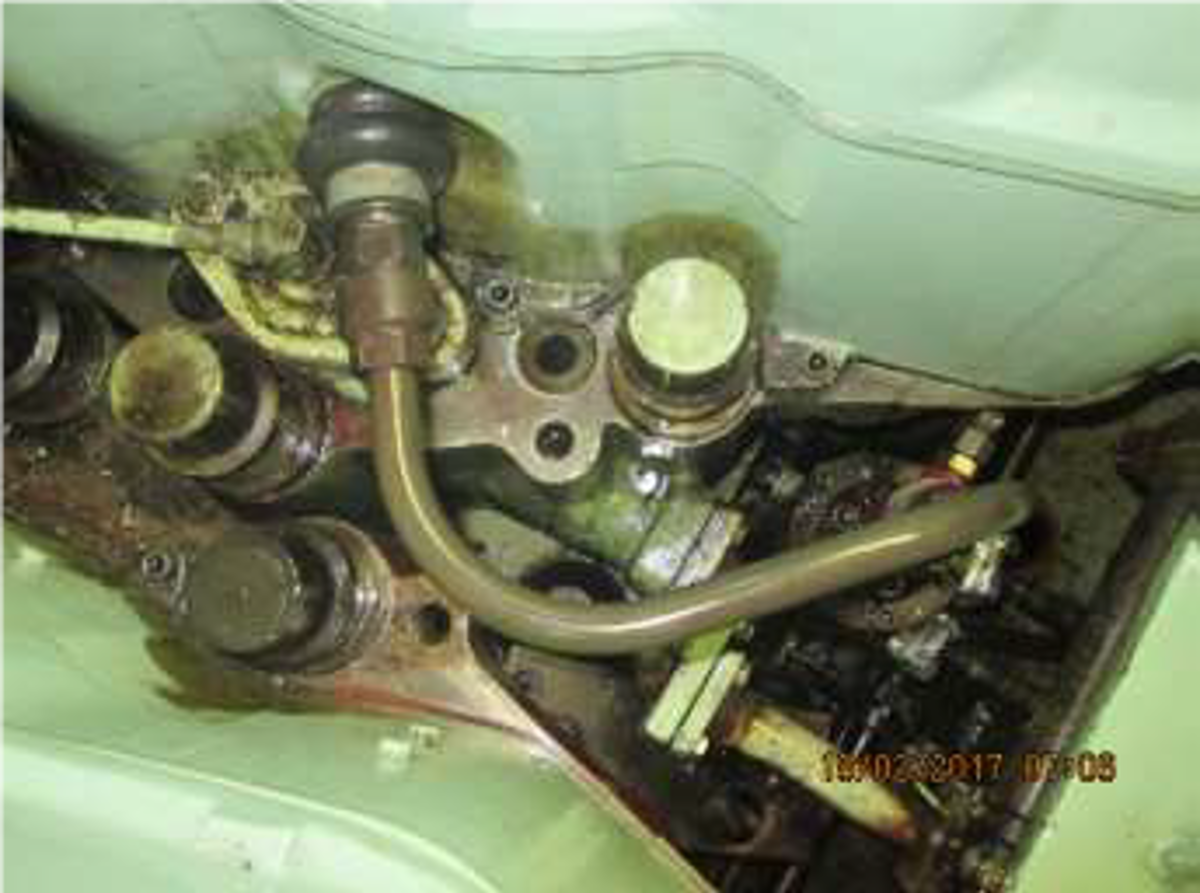
top view of the failed pipe in place
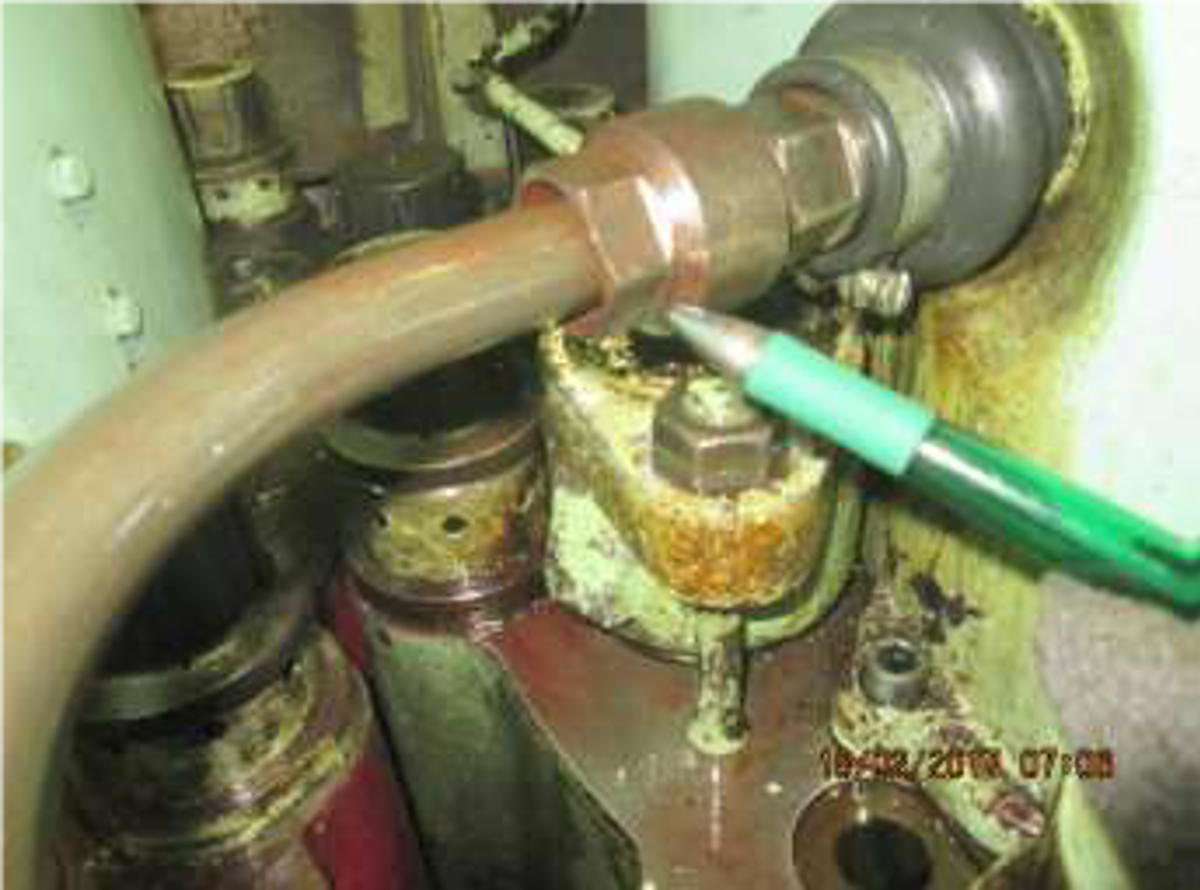
location of failure at the fuel pipe coupling
Findings
Our member’s investigation noted the following:
- The cause of the incident was a failed high pressure fuel pipe coupling between the fuel injector and delivery pipe. This caused fuel to run onto hot engine components which created smoke.
- The leak originated from the fuel coupling which contained an O-ring seal inside. Upon inspection the O-ring was not brittle or damaged.
- The pipe was inspected and showed no signs of visible damage. Further analysis would take place.
What went well?
- “Know your ship” – the on-watch engineer had good awareness and knowledge of the engine room and was able to swiftly and correctly identify the failed component and source of potential fire.
- There was swift and safe co-ordination between engine room and bridge to safely stop the port engine and isolate the fuel supply.
- The crew muster was swift and effective.
- Repair and return to operation was conducted in less than two hours after initial emergency.
- Using OEM parts, and not suspect/reconditioned parts, allowed the vessel to implement repairs quickly and effectively;
What could have gone better?
- The on-watch engineer, rather than immediately contacting the bridge and starting shut-down of the port engine, called the second engineer.
- Trends of failures – the vessel had noticed a trend developing with the failure of fuel supply piping – this was the third failure within four months.
Actions
Our Member recommends the following actions:
- Investigate similar systems to ensure no other latent failures or defects that may result in recurrence.
- Ensure main engine fuel pump overhaul to include fuel pipe pressure testing and seal renewals.
Related safety flashes
-
IMCA SF 08/15
2 June 2015
-
IMCA SF 10/14
30 June 2014
-
IMCA SF 10/14
30 June 2014
-
IMCA SF 10/14
30 June 2014
-
IMCA SF 10/14
30 June 2014
-
IMCA SF 10/05
31 October 2005
IMCA Safety Flashes summarise key safety matters and incidents, allowing lessons to be more easily learnt for the benefit of the entire offshore industry.
The effectiveness of the IMCA Safety Flash system depends on the industry sharing information and so avoiding repeat incidents. Incidents are classified according to IOGP's Life Saving Rules.
All information is anonymised or sanitised, as appropriate, and warnings for graphic content included where possible.
IMCA makes every effort to ensure both the accuracy and reliability of the information shared, but is not be liable for any guidance and/or recommendation and/or statement herein contained.
The information contained in this document does not fulfil or replace any individual's or Member's legal, regulatory or other duties or obligations in respect of their operations. Individuals and Members remain solely responsible for the safe, lawful and proper conduct of their operations.
Share your safety incidents with IMCA online. Sign-up to receive Safety Flashes straight to your email.