Non-fatal man overboard incident
- Safety Flash
- Published on 11 March 2022
- Generated on 25 June 2026
- IMCA SF 06/22
- 2 minute read
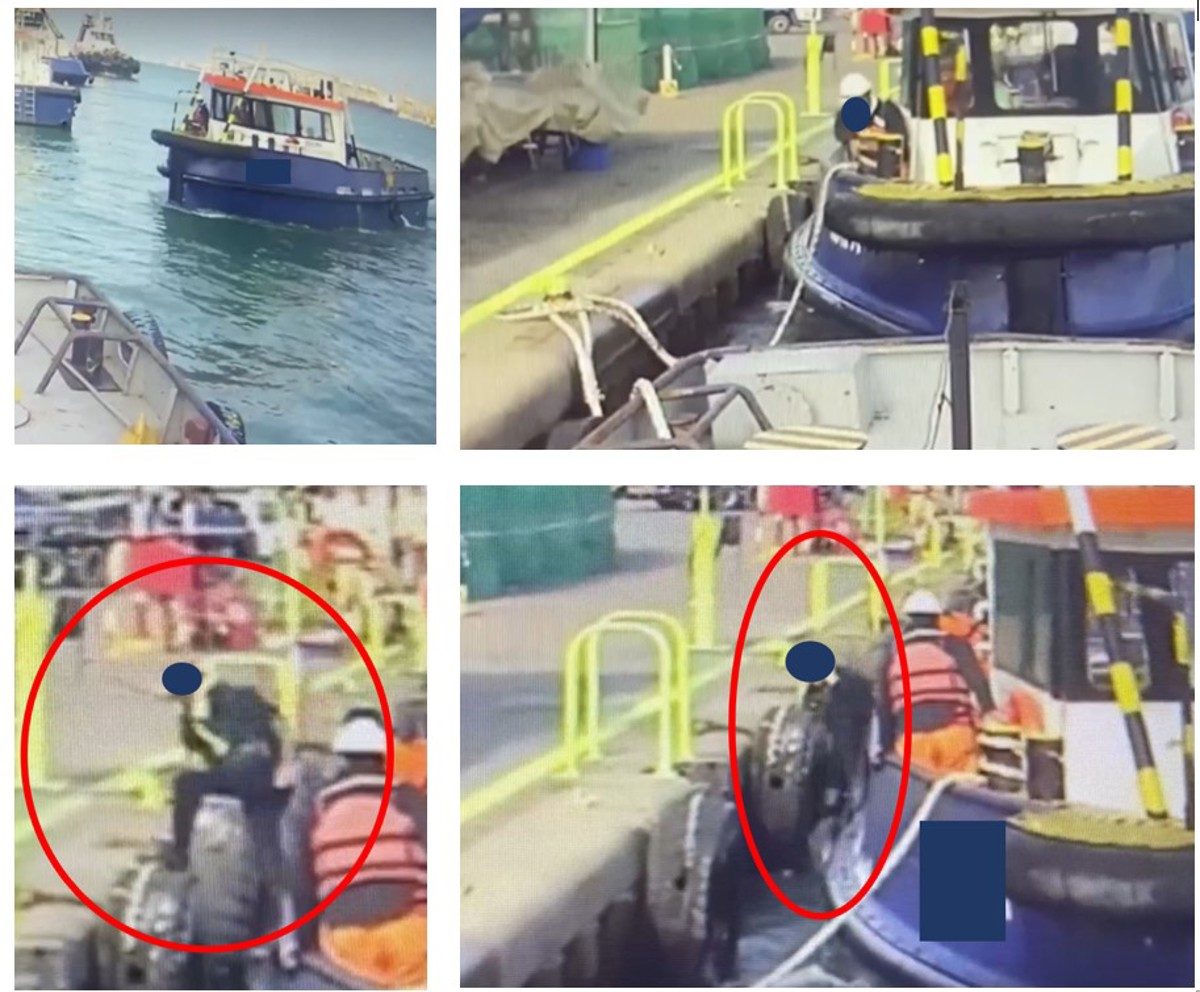
A pilot being transferred on the mooring boat attempted to disembark by jumping across the quayside fender before the vessel, missed the fender and fell into the water.
What happened?
After completing work, a small mooring (pilot) boat returned to the jetty. The AB began to secure the forward spring line of the mooring boat. The pilot being transferred on the mooring boat attempted to disembark by jumping across the quayside fender before the vessel, missed the fender and fell into the water between the mooring boat and the jetty.
The pilot was uninjured in the fall; his life jacket inflated and he was able to swim to the jetty ladder and climb up to the quayside.
What went wrong?
- The pilot attempted to disembark the vessel before the vessel was fully and securely moored.
- He was not wearing a helmet and very nearly hit his head on the jetty in the fall; had this occurred the incident may have resulted in a serious injury.
- Falling between the vessel and the quayside, he was fortunate not to be crushed.
- He was lucky: it was noted afterwards that his lifejacket had not been correctly secured; had it slipped off on impact with the water it would have failed to keep him above water.
Actions
- No one should disembark from any vessel until the vessel is completely alongside and securely moored.
- For vessels without gangways, a mandatory “buddy system” during personnel transfer was implemented, whereby another crew member on the shore side supports the crew member transferring from the vessel. Life jackets to be secured and correctly fastened before embarking/disembarking.
- For vessels with gangways, gangways should be securely fastened, and safety nets installed. After installation checks should be conducted to ensure it is secured safely, and the gangway controlled at all times.
Related Safety Flashes
-
IMCA SF 31/21
19 November 2021
-
-
IMCA SF 21/20
13 July 2020
-
-
IMCA SF 28/21
15 October 2021
-
-
IMCA SF 20/21
22 July 2021
-
-
IMCA SF 22/21
11 August 2021
IMCA Safety Flashes summarise key safety matters and incidents, allowing lessons to be more easily learnt for the benefit of the entire offshore industry.
The effectiveness of the IMCA Safety Flash system depends on the industry sharing information and so avoiding repeat incidents. Incidents are classified according to IOGP's Life Saving Rules.
All information is anonymised or sanitised, as appropriate, and warnings for graphic content included where possible.
IMCA makes every effort to ensure both the accuracy and reliability of the information shared, but is not be liable for any guidance and/or recommendation and/or statement herein contained.
The information contained in this document does not fulfil or replace any individual's or Member's legal, regulatory or other duties or obligations in respect of their operations. Individuals and Members remain solely responsible for the safe, lawful and proper conduct of their operations.
Share your safety incidents with IMCA online. Sign-up to receive Safety Flashes straight to your email.