American P&I Club: Fire Started from cutting torch work
- Safety Flash
- Published on 1 April 2022
- Generated on 14 October 2026
- IMCA SF 08/22
- 3 minute read
The excellent American P&I Club “Good Catch” safety briefing series has published a briefing on a fire that started as a result of hot work.
What happened?
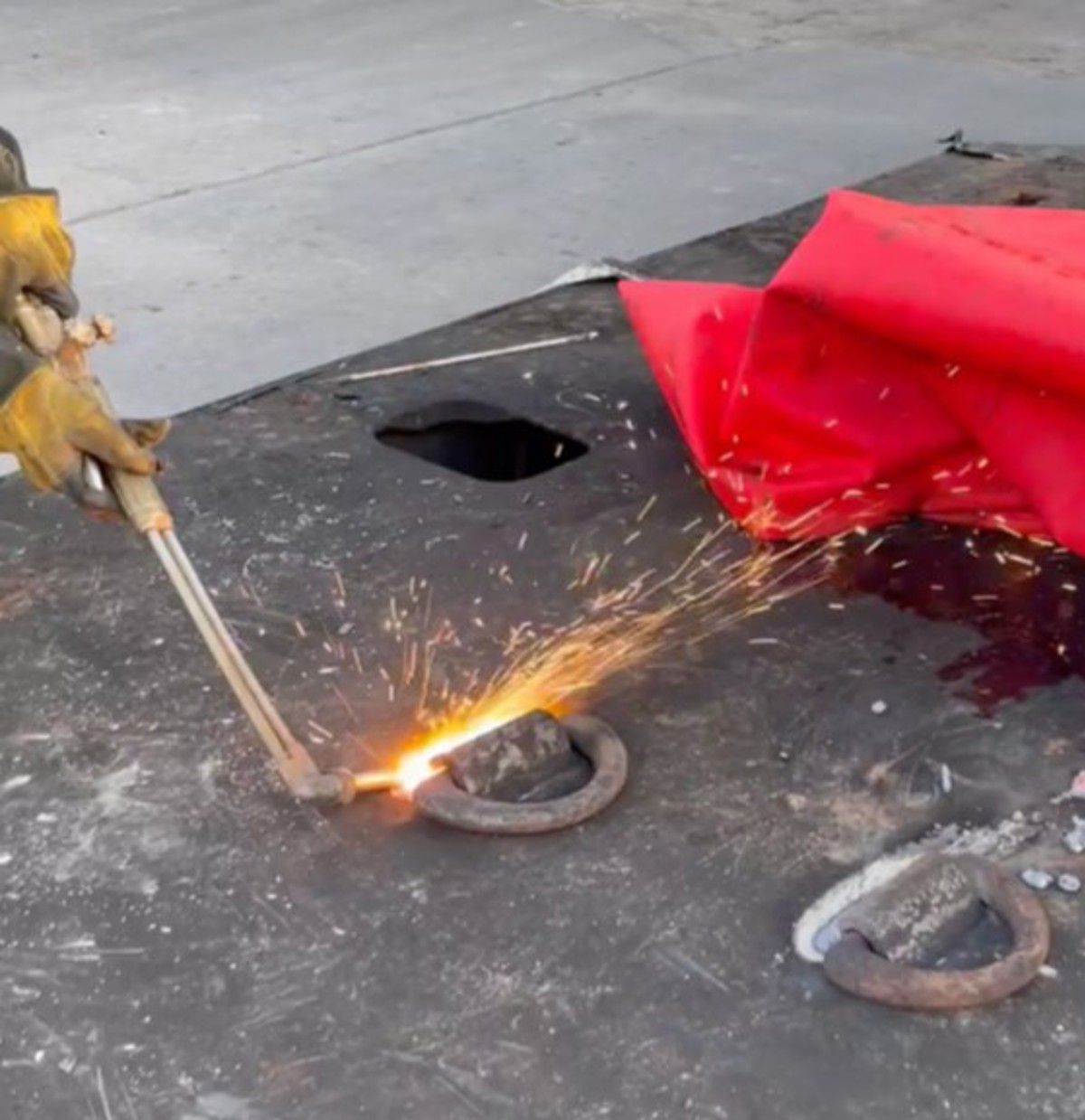
Crew members on a general cargo vessel in port were using an oxy-acetylene torch to remove various sea fastenings in a cargo hold. The hot work permit required fire blankets to be used and a fire watch. Fire blankets were placed around the work and were moved as the cutting operation progressed. As crew members were moving the fire blankets to the next work location, flames and smoke were seen from the cargo located on the tank top directly under the tween deck pontoons. The officer on watch was notified and sounded the general alarm. The crew members quickly evacuated the cargo hold. The crew was able to extinguish the fire, however, much of the cargo was damaged. Nearly $400,000 of damage was done to the cargo and the vessel itself.
What went right?
- A safety briefing was held prior to the start of the work.
- A hot work permit was obtained and reviewed by the crew involved in the work.
- The fire was discovered early, and the crew were able to quickly exit the cargo hold.
- The crew responded in a timely and professional way, saving much worse damage from otherwise occurring.
What went wrong?
Investigation determined that sparks and molten slag from the hot work had fallen through the gaps between the tween deck pontoons. The molten slag had also burned through the fire blanket and had fallen through the gap at several locations. The sparks and molten slag had landed on and ignited the plastic covering and protecting the cargo. Some of the cargo was damaged from the fire and other cargo was damaged by the smoke.
A review of the approved hot work permit indicated that while it specified the use of fire blankets in general terms, it did not specify a minimum required distance from the hot work or additional protective covering for cargo that may be exposed. More importantly, the permit did not address the specific risk from the hot work to the cargo located on the tank top under the tween deck pontoons.
Lessons to learn
- Hot work permits should be very specific to the exact risks associated with the specific hot work, specific location, specific time, and specific hazards.
- Fire watches are critically important during hot work to prevent fires. To be effective, the fire watch must be vigilant to the potential of fire in all the adjacent areas.
- Screens, shielding and fire blankets should be effectively placed to contain sparks and molten slag produced by hot work.
- Hot work permits should specifically address risks to all nearby cargo or any other flammable materials that may be exposed including the need for additional protective covers.
Related Safety Flashes
-
IMCA SF 10/21
8 April 2021
-
-
IMCA SF 25/19
28 October 2019
-
-
IMCA SF 08/13
21 May 2013
-
IMCA SF 02/10
8 April 2010
IMCA Safety Flashes summarise key safety matters and incidents, allowing lessons to be more easily learnt for the benefit of the entire offshore industry.
The effectiveness of the IMCA Safety Flash system depends on the industry sharing information and so avoiding repeat incidents. Incidents are classified according to IOGP's Life Saving Rules.
All information is anonymised or sanitised, as appropriate, and warnings for graphic content included where possible.
IMCA makes every effort to ensure both the accuracy and reliability of the information shared, but is not be liable for any guidance and/or recommendation and/or statement herein contained.
The information contained in this document does not fulfil or replace any individual's or Member's legal, regulatory or other duties or obligations in respect of their operations. Individuals and Members remain solely responsible for the safe, lawful and proper conduct of their operations.
Share your safety incidents with IMCA online. Sign-up to receive Safety Flashes straight to your email.