Dropped object – Steel deck plate falls from pipelay tower
- Safety Flash
- Published on 30 March 2021
- Generated on 16 October 2026
- IMCA SF 09/21
- 2 minute read
During testing and inspection of the pipelay tower on a vessel in dry dock, a large steel deck plate fell 9 m from the tower to deck
What happened?
A large steel deck plate fell 9 m from a pipelay tower to deck.
The incident occurred on a vessel in dry dock, during which testing and inspection of the pipelay tower was taking place.
A rope access technician stood on one of the steel deck plates located around the mid centralisers.
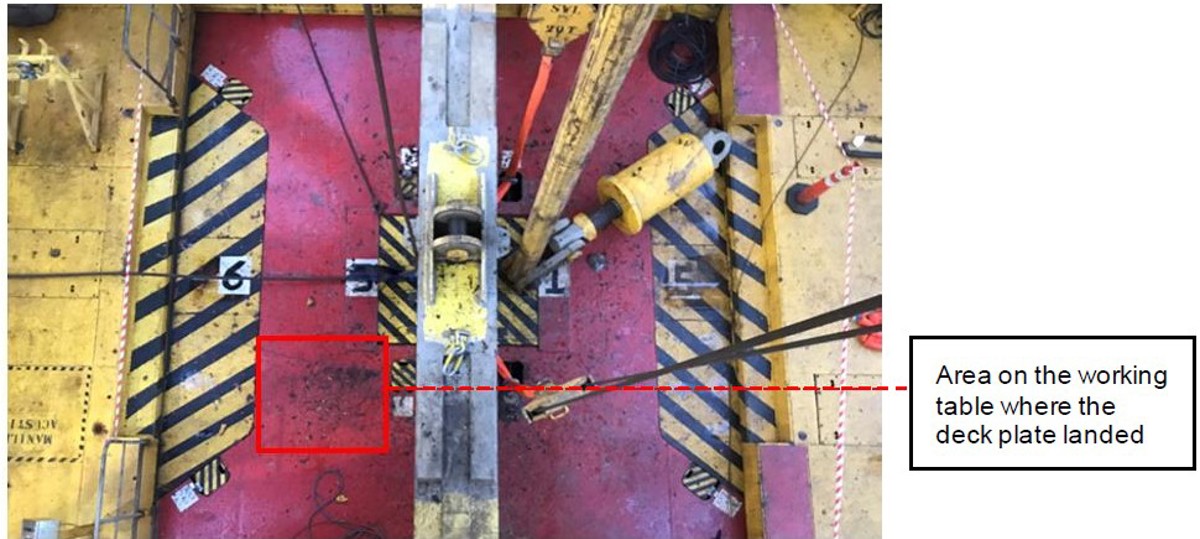
The bolts securing the deck plate failed resulting in the deck plate upending and then falling to the deck below. The area below had been barriered off before work started. No-one was hurt.
On inspection it was noticed that the deck plate fixings were heavily corroded, with three of the four securing bolts providing no support.
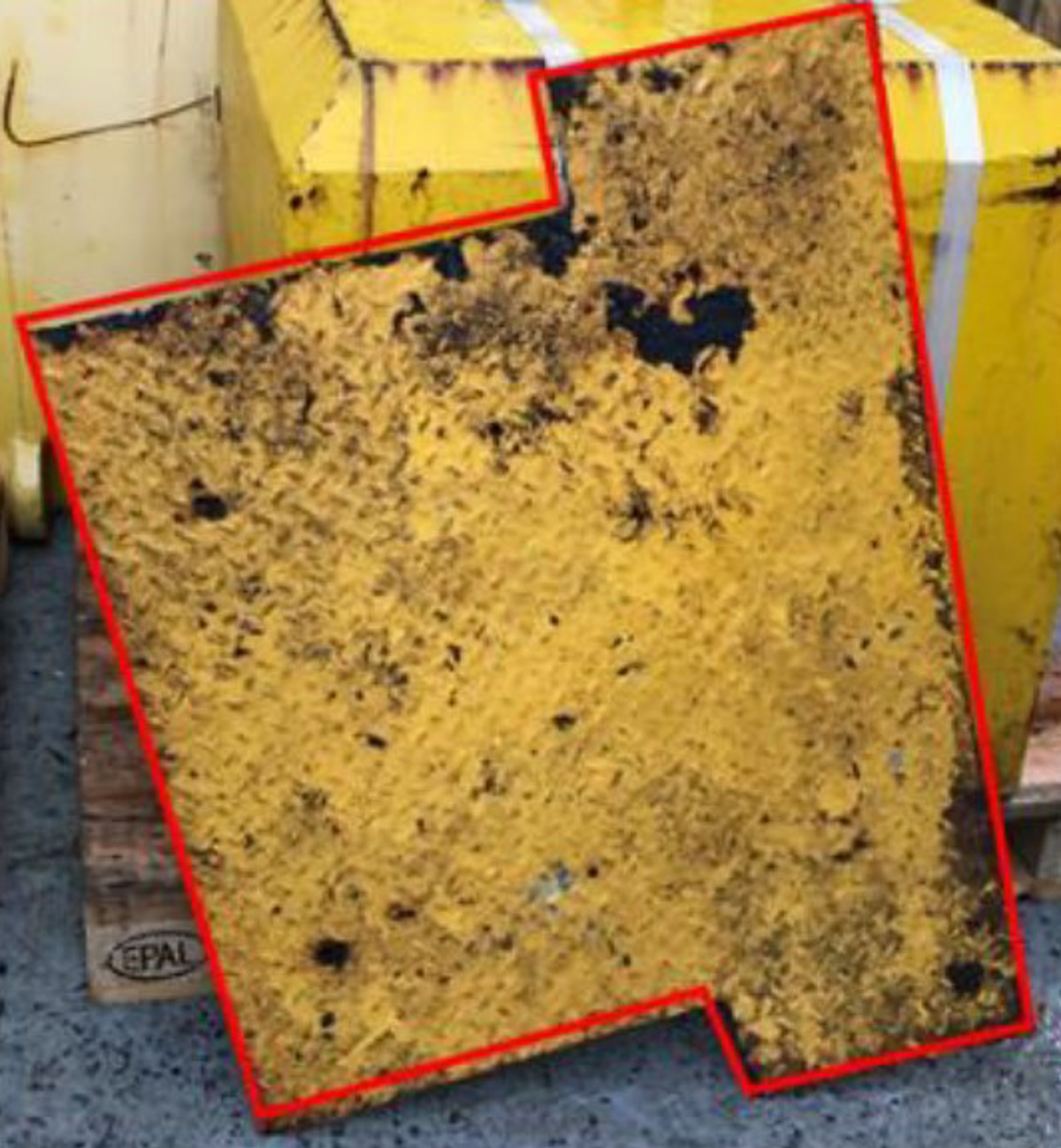
Dropped steel plate
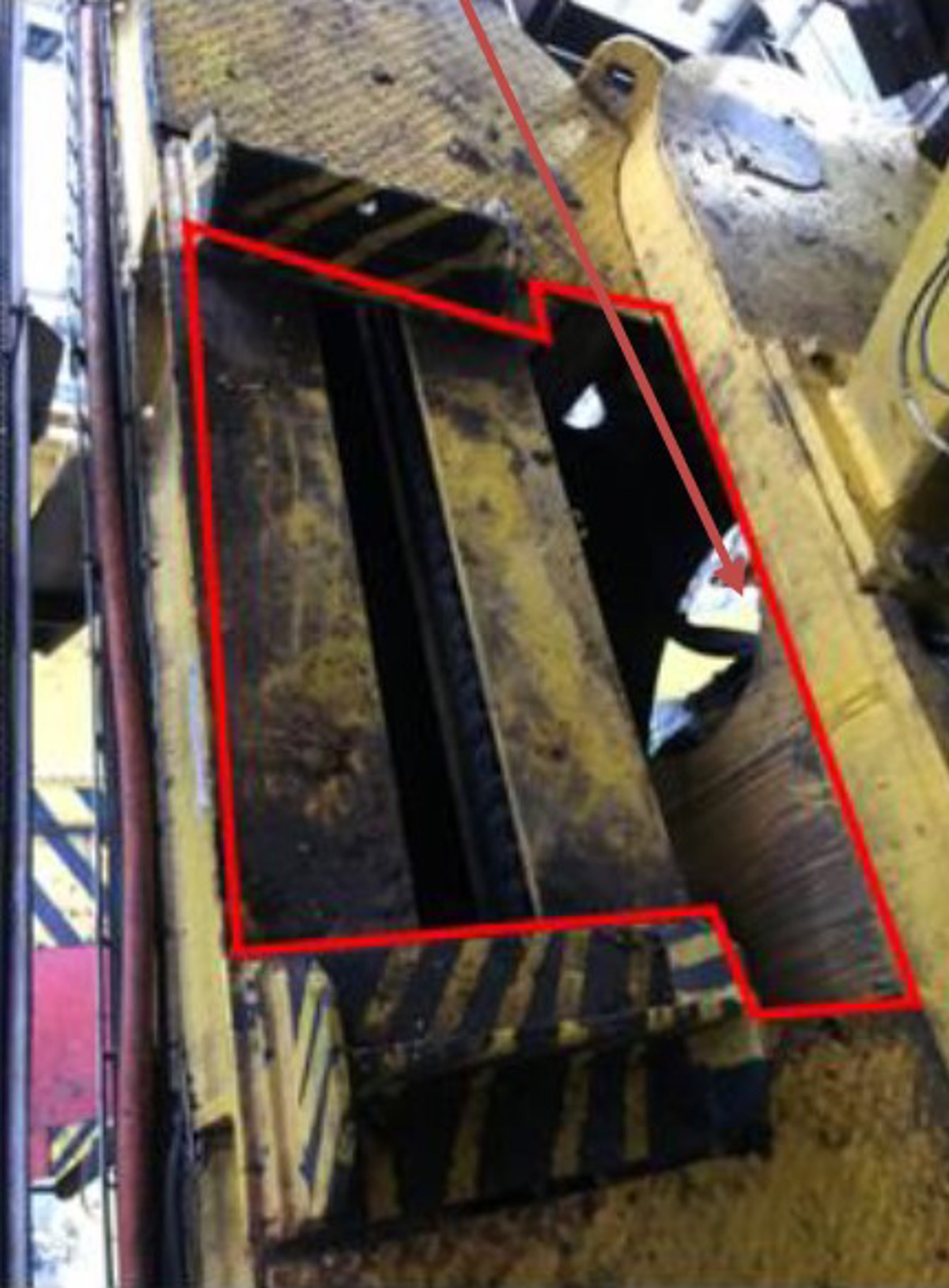
Initial location of steel plate before fall: pink line showing no support bracket installed for forward section of deck plate
What went wrong?
- This deck plate and others found were not part of the original pipelay tower structure, nor on any vessel drawings.
- No change management or design engineering was carried out.
- Incorrect size and material grade of bolts were used.
- The deck plate was only supported on the rear section, and no support bracket had been installed underneath the plate where the technician stood.
What went right?
- The task was being controlled under a Permit to Work complete with a task specific risk assessment.
- There was effective barrier management in place preventing persons from entering the Drop Zone.
- Good working at height practices were being used by the work party.
Actions
- Ensure all gratings, steel deck plates and their fixings installed at height are inspected as part of a routine inspection programme.
- Ensure equipment modifications are controlled through the change management process.
Related Safety Flashes
-
IMCA SF 22/19
17 September 2019
-
-
IMCA SF 20/18
10 September 2018
-
-
IMCA SF 24/17
5 October 2017
-

IMCA Safety Flashes summarise key safety matters and incidents, allowing lessons to be more easily learnt for the benefit of the entire offshore industry.
The effectiveness of the IMCA Safety Flash system depends on the industry sharing information and so avoiding repeat incidents. Incidents are classified according to IOGP's Life Saving Rules.
All information is anonymised or sanitised, as appropriate, and warnings for graphic content included where possible.
IMCA makes every effort to ensure both the accuracy and reliability of the information shared, but is not be liable for any guidance and/or recommendation and/or statement herein contained.
The information contained in this document does not fulfil or replace any individual's or Member's legal, regulatory or other duties or obligations in respect of their operations. Individuals and Members remain solely responsible for the safe, lawful and proper conduct of their operations.
Share your safety incidents with IMCA online. Sign-up to receive Safety Flashes straight to your email.