Floodlamp causes scaffold board to start smouldering
- Safety Flash
- Published on 11 June 2026
- Generated on 24 October 2026
- IMCA SF 11/26
- 2 minute read
Workers on the accommodation deck noticed light smoke emanating from a nearby scaffold structure.
What happened?
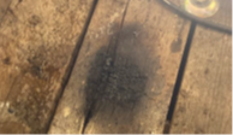
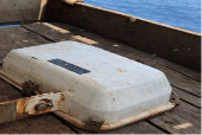
A closer inspection revealed that one of the scaffold boards was smouldering beneath an inverted floodlight. Relevant personnel were immediately informed. The floodlight was found to be positioned upside down and was subsequently isolated. The affected scaffold board was cooled using a wet rag, and the board was later removed and replaced.
 |
 |
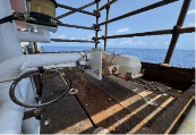 |
| Smouldered scaffold board | Showing position of floodlamp | Floodlamp repositioned |
What went right?
The scaffold boards in use were compliant with EN 13501-1 and were fire-retardant, specially treated for offshore applications. This treatment delays ignition by promoting smouldering rather than open flame development. When exposed to heat, fire-retardant chemicals activate and form a char layer on the surface, significantly slowing the potential for combustion.
What went wrong?
The floodlight had been removed for maintenance activities and was temporarily placed unsecured on the scaffold boards. It is suspected that, due to vessel movement, the floodlight shifted and tipped over. As a result, heat was directed continuously onto the scaffold board, leading to localised heating and subsequent smouldering of the scaffold board.
Making sure it doesn’t happen again
- Any equipment removed during maintenance activities on a vessel should be properly secured to prevent movement that could lead to injury or damage.
- In this case, the floodlight should have been secured in a designated location, as it is required for navigational use during hours of darkness when on location.
- Equipment capable of generating heat during operation should be positioned and handled in a manner that eliminates the risk of causing harm or damage.
- Ensure everyone understands that floodlights and similar equipment can generate heat when energised. Such equipment should not be left unattended after removal and must be properly isolated when not in use.
- Remember that scaffold boards, despite being fire-retardant treated, are still timber-based materials. They can become significantly heated, potentially leading to further damage or ignition of nearby combustible materials (e.g. rags).
Related Safety Flashes
-
IMCA SF 13/24
2 July 2024
-
IMCA SF 01/22
10 January 2022
-
IMCA SF 32/20
26 November 2020
-

IMCA Safety Flashes summarise key safety matters and incidents, allowing lessons to be more easily learnt for the benefit of the entire offshore industry.
The effectiveness of the IMCA Safety Flash system depends on the industry sharing information and so avoiding repeat incidents. Incidents are classified according to IOGP's Life Saving Rules.
All information is anonymised or sanitised, as appropriate, and warnings for graphic content included where possible.
IMCA makes every effort to ensure both the accuracy and reliability of the information shared, but is not be liable for any guidance and/or recommendation and/or statement herein contained.
The information contained in this document does not fulfil or replace any individual's or Member's legal, regulatory or other duties or obligations in respect of their operations. Individuals and Members remain solely responsible for the safe, lawful and proper conduct of their operations.
Share your safety incidents with IMCA online. Sign-up to receive Safety Flashes straight to your email.