LTI: Crewman burnt in fire following release of flammable gas from hand rail
- Safety Flash
- Published on 27 June 2017
- Generated on 23 October 2026
- IMCA SF 16/17
- 3 minute read
While drilling into a handrail, a mechanic suffered burns which required time in hospital and days away from work.
What happened
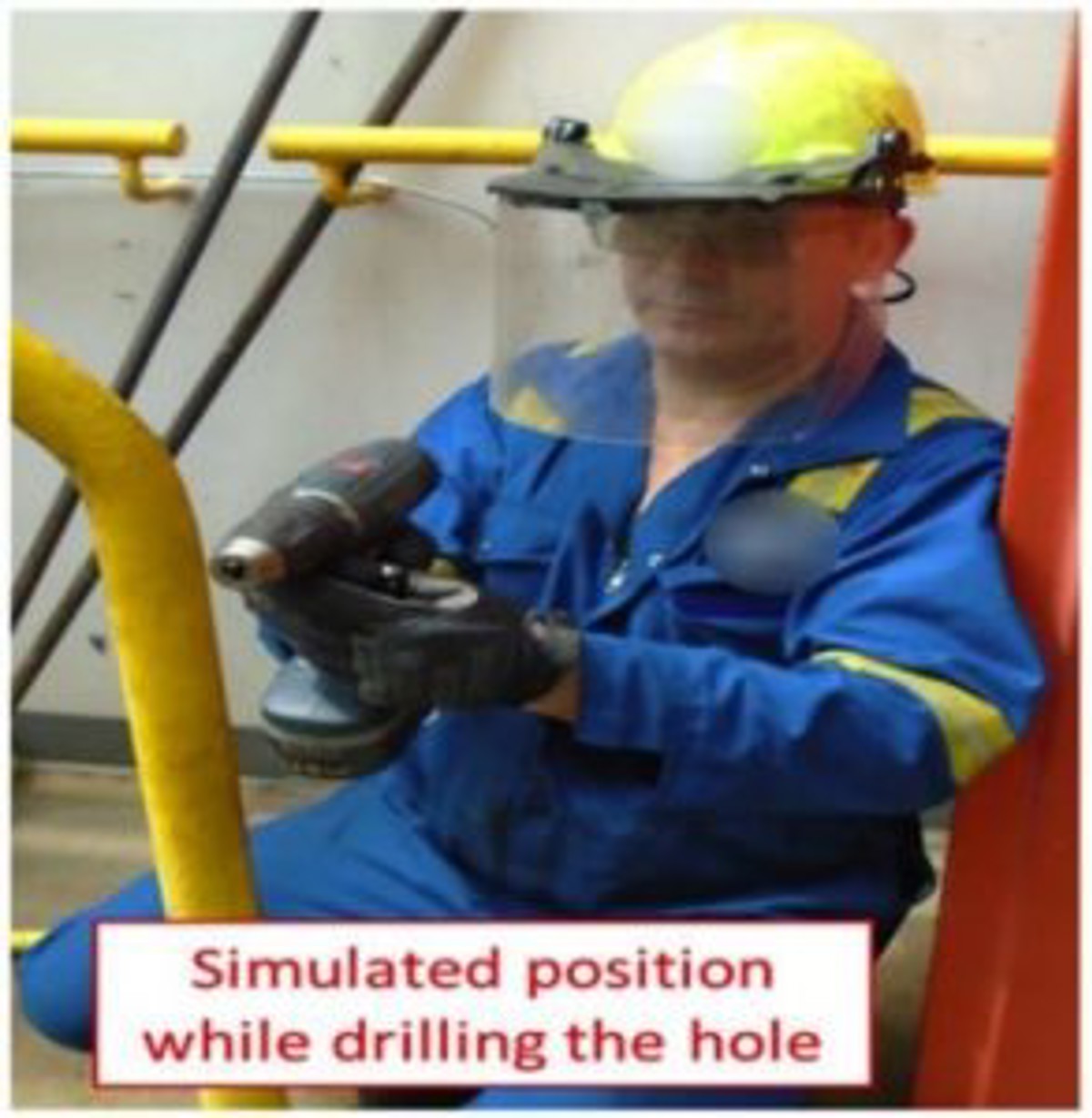
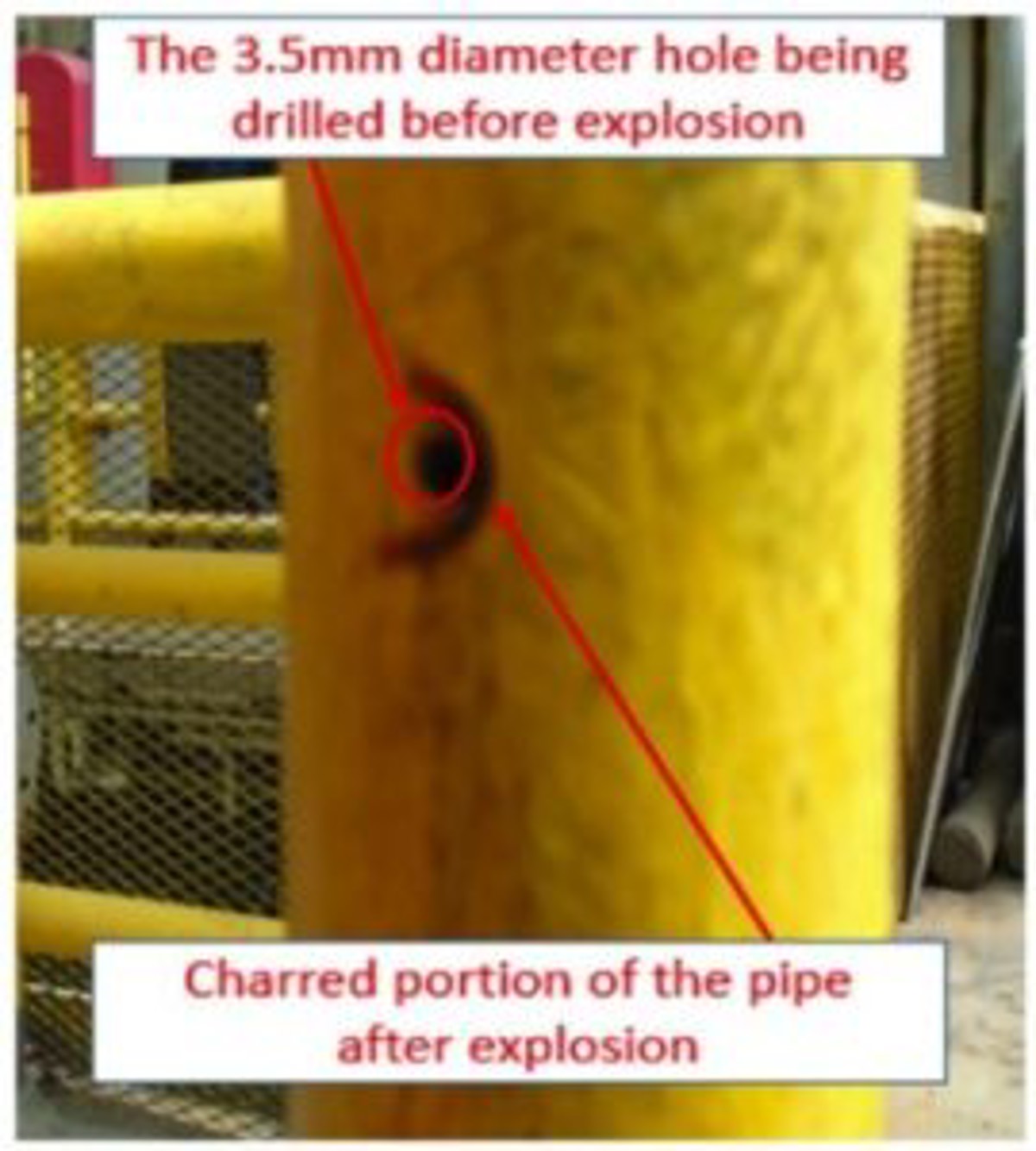
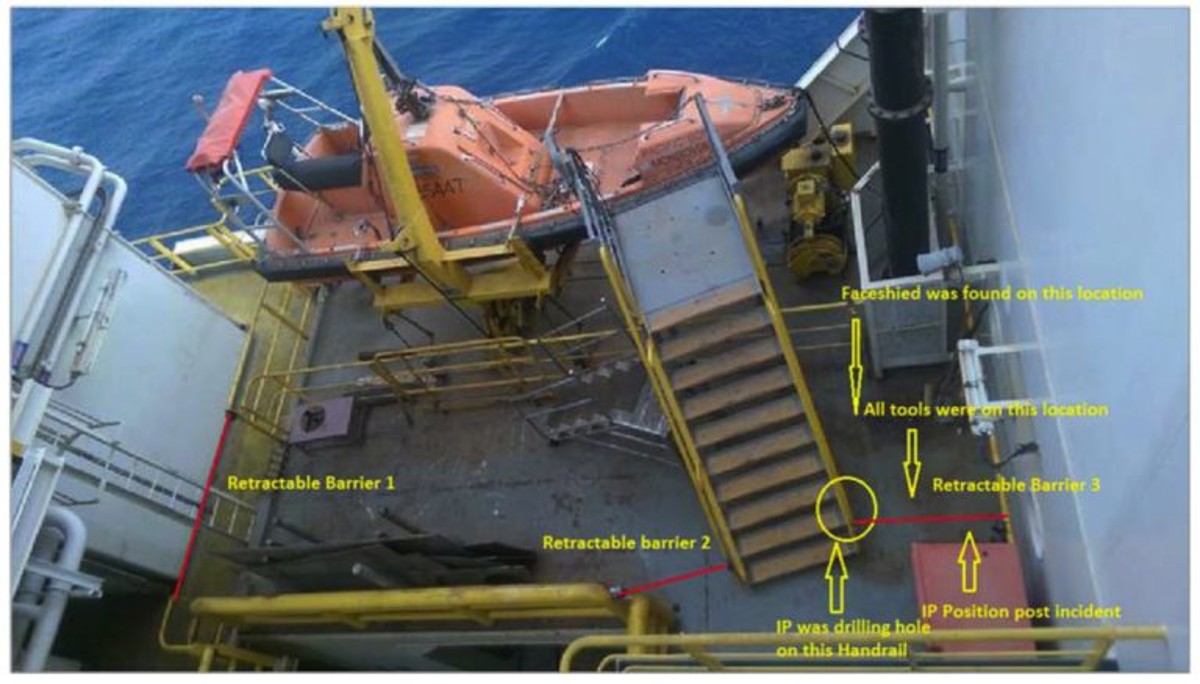
A mechanic was drilling a 3.5mm hole into the access stair handrail of a rescue craft, in order to install a safety barrier clip.
When the drill bit penetrated the wall of the handrail pipe, there was a release of an unknown flammable gas that caused a fire and subsequent injury.
The mechanic suffered burns which required recovery time in hospital and lost days from work.
What went wrong?
- The design of the handrail, using/creating hollow and enclosed structures, led to the conditions for accumulation of hazardous gas. There were no design features to allow for venting. The construction of the handrail (of low grade steel) contributed to the accumulation of a combination of hazardous gases in the hollow and enclosed structure.
- The drilling introduced a heat source for ignition of the hazardous gases when released.
- The mechanic was in the path/route of the hazardous gas release (line of fire), and was not wearing his personal protective equipment (PPE) with all fastenings secured, as was required.
- The Investigation team believes that the injured person was carrying a paper copy of the risk assessment for the job in – but sticking out of – his right side front pocket at the time of the incident. It is believed that when it burned, an intensified heat spot was created which contributed to the degree of severity of the burns suffered.
What lessons were learnt?
- The injured person and his supervisor were not aware of the presence of the hazardous gas; as such the hazard/risk was not identified nor the risks reduced before starting the job.
- Hazardous gas can be accumulated over time in hollow and enclosed structures. Specific standards/procedures should be in place for work on such structures.
- The risk assessment in place for this task did not address the potential presence of hazardous gas accumulation in a hollow and enclosed structure.
What were the actions?
- Handrail design should consider features/measures to limit or avoid the potential for accumulation of gases inside hollow and enclosed structures. Examples include using angle irons for hand rails, non-metallic tubulars, weep or vent holes in tubulars, etc.
- Establish procedures to safely tap into a hollow and enclosed structure which potentially has hazardous gas inside.
- PPE to be worn as designed, with all fastenings secured.
The reporter notes that “alerts from at least 3 known previous incidents of similar nature in the E&P industry had not been seen prior to the incident. Sharing lessons learned is important and necessary for prevention of similar incidents.”
See the Centers for Disease Control and Prevention website for an article on the explosion hazard from hydrogen gas generation inside sealed frames.
Related Safety Flashes
-
IMCA SF 10/17
12 May 2017
-
-
IMCA SF 26/16
6 October 2016

IMCA Safety Flashes summarise key safety matters and incidents, allowing lessons to be more easily learnt for the benefit of the entire offshore industry.
The effectiveness of the IMCA Safety Flash system depends on the industry sharing information and so avoiding repeat incidents. Incidents are classified according to IOGP's Life Saving Rules.
All information is anonymised or sanitised, as appropriate, and warnings for graphic content included where possible.
IMCA makes every effort to ensure both the accuracy and reliability of the information shared, but is not be liable for any guidance and/or recommendation and/or statement herein contained.
The information contained in this document does not fulfil or replace any individual's or Member's legal, regulatory or other duties or obligations in respect of their operations. Individuals and Members remain solely responsible for the safe, lawful and proper conduct of their operations.
Share your safety incidents with IMCA online. Sign-up to receive Safety Flashes straight to your email.