MSF: Grease gun hand injury
- Safety Flash
- Published on 4 September 2025
- Generated on 18 October 2026
- IMCA SF 16/25
- 3 minute read
The Marine Safety Forum have published Safety Alert 25-08 relating to a hand injury suffered when a grease gun burst.
What Happened?
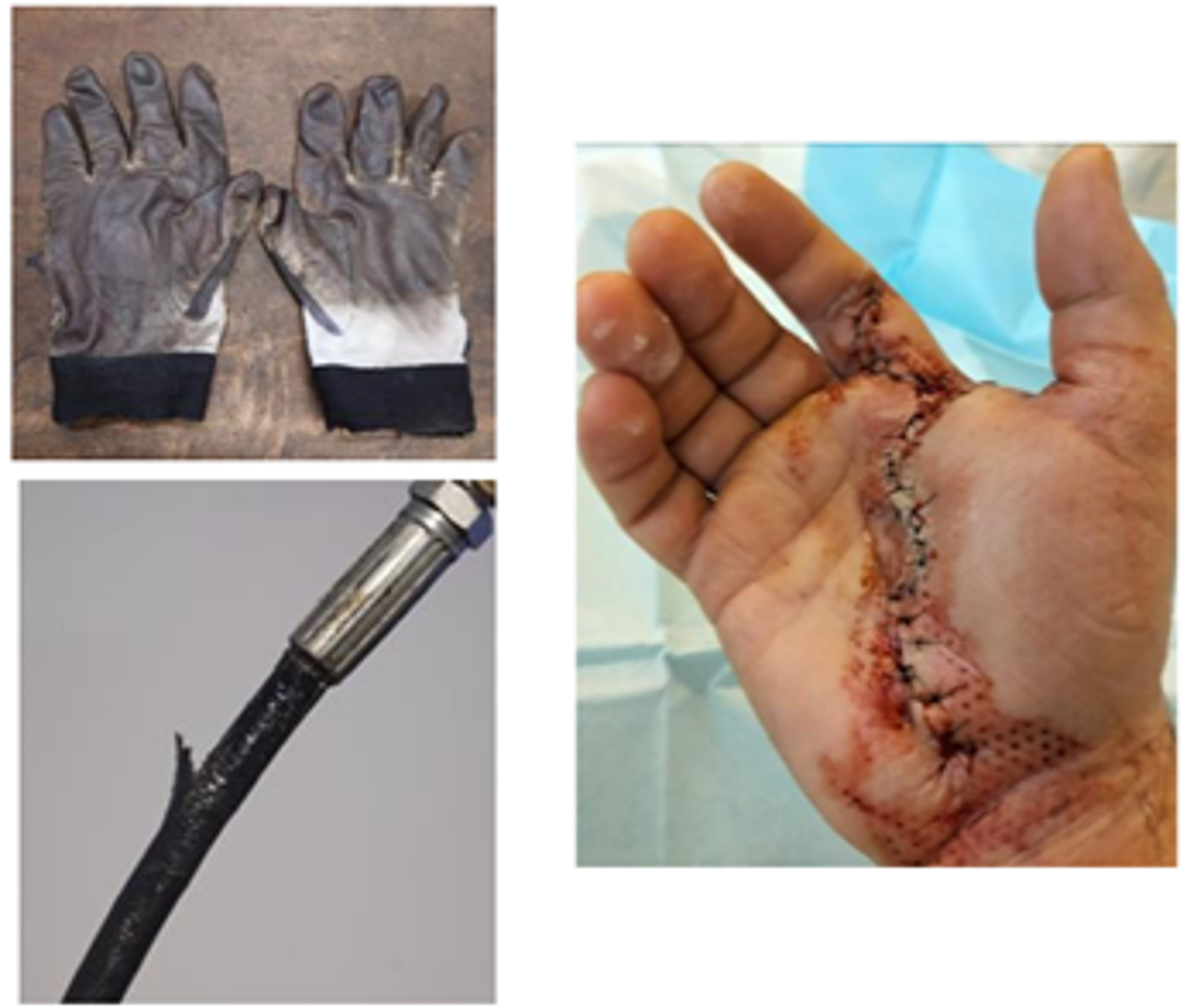
The Marine Safety Forum have published Safety Alert 25-08 relating to a hand injury suffered when a grease gun burst. The incident occurred during routine greasing of a tensioner unit using an electrically powered battery grease gun, when the hose burst and grease punctured the operator’s hand. The crew member was wearing full PPE and performing the task in accordance with safety procedures that were in place at the time. As the crew member attempted to remove the greasing hose from the greasing point, the hose burst on his right hand. The high-pressured grease passed through the damaged hose causing a penetration through his glove, leading to a small open wound on his skin. The crew person immediately attempted to remove as much grease as possible from the wound and proceeded directly to the onboard medic for evaluation and treatment. Following consultation it was decided to sail back to port for medical attention at local hospital
What went wrong?
The MSF’s member noted the following:
- Immediate Cause
- The pressure release valve in the grease gun did not function as expected, causing grease to be injected at high pressure.
- Underlying Cause
- It was possible that the grease gun was not properly or safely handled due to lack of experience, insufficient training and lack of awareness of the hazards involved.
- The injured person was unaware of the high pressure in the grease gun system at the time, therefore he began to exert effort on the grease hose to remove it from the grease nipple. The grease hose was (most likely) unable to handle the pressure and collapsed. This resulted in a grease injection through his glove and skin into his right hand.
Lessons learned and actions
- High-pressure grease guns have the potential to cause serious injury or even death if not properly used and properly maintained. Grease in this type of equipment is under pressure up to an operating pressure 69 MPa (10,000 psi).
- The velocity of grease forced through a pinhole break in a hydraulic hose can be in excess of 250 metres per second (600ft/s). This is close to the muzzle velocity of a rifle, and is sufficient to drive fluids through protective clothing, including protective gloves.
- Penetration of the skin can occur at pressures as low as 100psi - BE AWARE of the dangers of high pressure injected injuries.
- Ensure grease guns are used in compliance with equipment manufacturers instructions.
- Inspect the integrity and security of grease nipples and hoses prior to starting the task.
- Ensure correct gloves are used with grease guns.
- Can greasing be done with a different kind of tool that is safer?
Related Safety Flashes
-
IMCA SF 04/15
20 March 2015
-
IMCA SF 17/14
31 October 2014
-
IMCA SF 06/14
16 April 2014
-
IMCA SF 16/09
10 November 2009
IMCA Safety Flashes summarise key safety matters and incidents, allowing lessons to be more easily learnt for the benefit of the entire offshore industry.
The effectiveness of the IMCA Safety Flash system depends on the industry sharing information and so avoiding repeat incidents. Incidents are classified according to IOGP's Life Saving Rules.
All information is anonymised or sanitised, as appropriate, and warnings for graphic content included where possible.
IMCA makes every effort to ensure both the accuracy and reliability of the information shared, but is not be liable for any guidance and/or recommendation and/or statement herein contained.
The information contained in this document does not fulfil or replace any individual's or Member's legal, regulatory or other duties or obligations in respect of their operations. Individuals and Members remain solely responsible for the safe, lawful and proper conduct of their operations.
Share your safety incidents with IMCA online. Sign-up to receive Safety Flashes straight to your email.