High potential incident: Fast rescue craft capsized
- Safety Flash
- Published on 25 July 2017
- Generated on 11 October 2026
- IMCA SF 18/17
- 3 minute read
Four people were thrown into the sea and work equipment damaged or lost when a fast rescue craft capsized while conducting a seismic survey.
What happened?
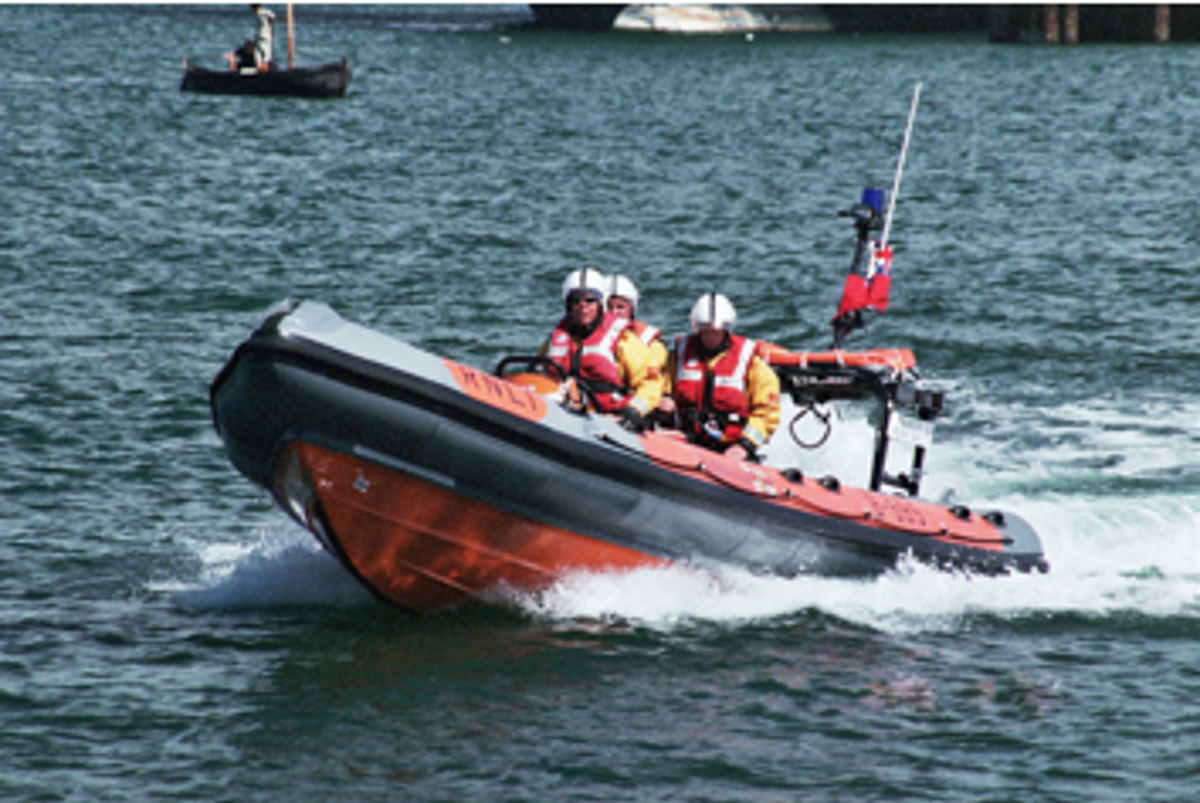
A fast rescue craft (FRC) being used in a near-shore shallow water seismic survey in tropical waters, capsized causing four people to fall into the sea.
There were no injuries, but most of the work equipment was either damaged or lost. Two of the personnel were not wearing lifejackets.
What went wrong? What were the causes?
The operation had been taking place in good weather; however, minutes before the incident the weather conditions deteriorated rapidly with the wind quickly changing direction. The coxswain recommended running for shelter, but was overruled by offshore vessel management.
Towed equipment became snagged on the seabed causing it to act as an anchor, turning the small boat stern towards the weather. The crew was not able to free the equipment, and the small boat, which was operating at its maximum load capacity, took on water over the stern and capsized.
What lessons were learned?
- Never allow production pressures to take precedence over the safety of personnel. In this instance the coxswain effectively called a ‘Stop the Job’ and was overruled.
- Small boats should be capable of operating safely in all expected weather conditions. In this case, the FRC being used for operations was loaded to capacity and had limited deck space for efficient deployment/recovery of equipment.
- Always ensure that procedures are in place for foreseeable emergency situations. This scenario (equipment snagging) had not been adequately risk assessed and mitigations were not in place. Had a system been implemented to allow the in-water equipment to be released from the vessel then it is unlikely that the situation would have resulted in a capsize.
Further small boat incidents
IMCA has received a number of further incidents involving small boats recently, which are included here:
Incident 1 – during small boat (Zodiac) operations, a boat was thrown by a long and heavy swell against the side of a boat landing on a single point mooring (SPM). As a result the Zodiac was damaged; there was an air leak to the rear end floatation collar. No one was harmed. The boat was safely recovered after operations and was examined on deck. A crack 150mm long was found on the inner face of starboard side rear floatation. Repairs were made.
Incident 2 – a small boat (Zodiac) was involved in tanker mooring operations at a single point mooring (SPM), and was dealing with attaching floating hoses. Owing to swell conditions, the rolling and pitching of the Zodiac during this operation endangered the safety of the personnel on board. The small boat was pushed under a floating hose and a rigger was hit on his shoulder with a hose chain.
IMCA reiterates the recommendations outlined by our member above, particularly encouraging members to ensure that small boats are suitable for the task and capable of working in all expected environmental conditions.
Related safety flashes
-
IMCA SF 16/16
27 June 2016
-
IMCA SF 08/11
27 July 2011
IMCA Safety Flashes summarise key safety matters and incidents, allowing lessons to be more easily learnt for the benefit of the entire offshore industry.
The effectiveness of the IMCA Safety Flash system depends on the industry sharing information and so avoiding repeat incidents. Incidents are classified according to IOGP's Life Saving Rules.
All information is anonymised or sanitised, as appropriate, and warnings for graphic content included where possible.
IMCA makes every effort to ensure both the accuracy and reliability of the information shared, but is not be liable for any guidance and/or recommendation and/or statement herein contained.
The information contained in this document does not fulfil or replace any individual's or Member's legal, regulatory or other duties or obligations in respect of their operations. Individuals and Members remain solely responsible for the safe, lawful and proper conduct of their operations.
Share your safety incidents with IMCA online. Sign-up to receive Safety Flashes straight to your email.