Third-party truck not in appropriate or safe condition
- Safety Flash
- Published on 26 July 2022
- Generated on 23 October 2026
- IMCA SF 19/22
- 2 minute read
Trucks to be used for the pipes were inspected and several defects identified.
What happened?
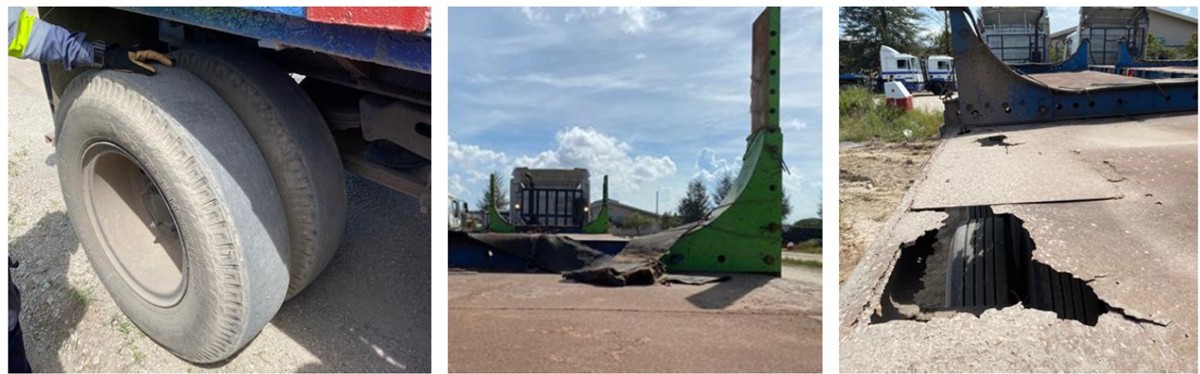
During preparation for transporting pipe sections from port to a coating supplier’s facility, trucks to be used for the pipes were inspected and several defects identified. Trucks found in an unsafe condition were rejected by the company’s site representative.
Photo
What happened cont.
Multiple trucks were deployed by the coating supplier. During preparation it had been identified by the project team that there was the potential risk for trucks to be provided in an unsafe condition. This was known from a previous project involving the same supplier at the same location.
A planned inspection of trucks was performed jointly by the coating supplier and company site representative as part of the preparation activities. Several defects across multiple trucks were identified. The supplier was instructed to remove the trucks from service until all defects were rectified.
What was wrong? The following truck defects were identified:
- Unsafe tyres (low tread levels).
- Expired vehicle registration certificate displayed on trucks.
- Heavily corroded trailer beds, including holes on surface.
- Rubber padding was found worn and detached from bolsters.
- Fuel gauge not working.
- Missing side mirrors.
- Sagging wheel fenders, contacting tyres.
Lessons learned
- Clearly define requirements and expectations relating to use of trucks with applicable 3rd parties. This should include truck condition/roadworthiness, required safety features, driver qualifications and competence, fatigue management and route planning.
- Consider adopting a specific truck inspection checklist to be used by the site team.
- Company site representative to participate in truck inspection activities and is authorised to reject any trucks considered unfit for purpose.
IMCA notes that another member has recently submitted an incident in which a third-party truck experienced a failure. In this instance, a low loader was being reversed out of a yard (after loading up from a vessel in port) when a hydraulic hose burst on the trailer resulting in approx. 10 litres of hydraulic fluid leaking onto the yard surface and rendering the vehicle inoperable.
Related Safety Flashes
-
IMCA SF 33/21
2 December 2021
-
IMCA SF 09/18
24 April 2018
-
-
IMCA SF 10/17
12 May 2017
-
-
IMCA SF 11/14
8 July 2014


IMCA Safety Flashes summarise key safety matters and incidents, allowing lessons to be more easily learnt for the benefit of the entire offshore industry.
The effectiveness of the IMCA Safety Flash system depends on the industry sharing information and so avoiding repeat incidents. Incidents are classified according to IOGP's Life Saving Rules.
All information is anonymised or sanitised, as appropriate, and warnings for graphic content included where possible.
IMCA makes every effort to ensure both the accuracy and reliability of the information shared, but is not be liable for any guidance and/or recommendation and/or statement herein contained.
The information contained in this document does not fulfil or replace any individual's or Member's legal, regulatory or other duties or obligations in respect of their operations. Individuals and Members remain solely responsible for the safe, lawful and proper conduct of their operations.
Share your safety incidents with IMCA online. Sign-up to receive Safety Flashes straight to your email.