Man overboard during motion compensated gangway transfer
- Safety Flash
- Published on 25 September 2024
- Generated on 26 October 2026
- IMCA SF 19/24
- 2 minute read
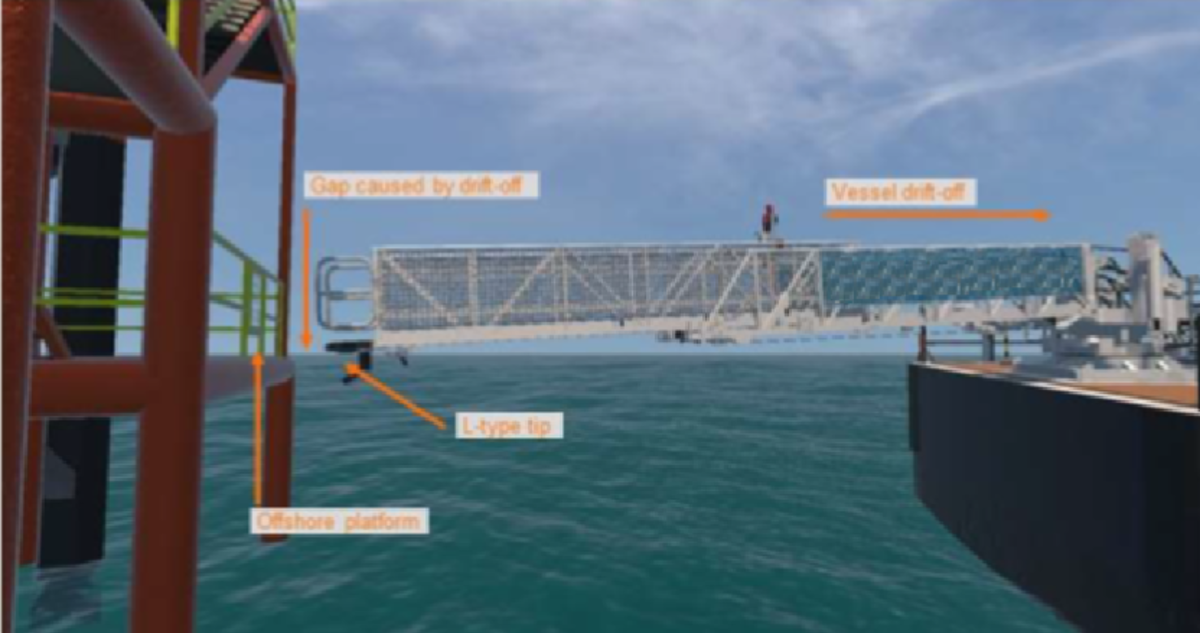
An offshore worker fell overboard from a height of one metre while transferring from a platform to a vessel (non-DP) via a motion compensated gangway.
What happened?
The incident occurred as the vessel drifted off from the platform, resulting in the gangway disconnecting from the platform and creating a gap between the gangway and the platform, through which the worker fell overboard. The worker was able to hold onto the platform’s boat landing and was safely recovered back to the platform. After a medical examination, the worker was declared fit to return to work.
What went right?
- The gangway was working correctly and was being operated according to the manufacturer’s operational procedures.
- The worker was recovered from the water within 22 seconds with the assistance of the platform’s boat landing officer, using a swing rope that was in place.
What went wrong?
- After stepping on to the gangway tip and holding the handrails, the worker heard a warning sound and simultaneously heard the voice from the platform’s boat landing officer, which caused him to take a step backward. By the time the worker had stepped back, the vessel had drifted off, resulting in the disconnection of the gangway from the platform. He lost balance and fell overboard through the gap.
- The worker’s life-jacket (personal flotation device) did not inflate when he fell into the water. However, he was able to hold on to the platform’s boat landing.
What was the cause?
- The vessel (not a DP vessel) operating on manual station keeping, as per normal mode of operation, could not keep station and fully drifted off from the platform.
- After the vessel drifted off, the worker stepped back from the tip instead of stopping and holding onto the railing.
Lessons and actions
- Ensure you have a clear understanding of the emergency procedures for the gangway before crossing.
- Other workers transferring should not interfere with the ongoing operation.
- Vessel crew and gangway operator should be well prepared on how to prevent/manage drift off situations through familiarisation of procedures and assessments.
- Ensure that life-jackets and Personal Flotation Devices are checked regularly as fit for purpose.
- Safety induction video should cover all relevant emergency scenarios – the safety induction video was updated.
IMCA Safety Flashes summarise key safety matters and incidents, allowing lessons to be more easily learnt for the benefit of the entire offshore industry.
The effectiveness of the IMCA Safety Flash system depends on the industry sharing information and so avoiding repeat incidents. Incidents are classified according to IOGP's Life Saving Rules.
All information is anonymised or sanitised, as appropriate, and warnings for graphic content included where possible.
IMCA makes every effort to ensure both the accuracy and reliability of the information shared, but is not be liable for any guidance and/or recommendation and/or statement herein contained.
The information contained in this document does not fulfil or replace any individual's or Member's legal, regulatory or other duties or obligations in respect of their operations. Individuals and Members remain solely responsible for the safe, lawful and proper conduct of their operations.
Share your safety incidents with IMCA online. Sign-up to receive Safety Flashes straight to your email.