High potential near-miss: SWL plate fell from crane auxiliary block
- Safety Flash
- Published on 7 December 2015
- Generated on 14 October 2026
- IMCA SF 21/15
- 2 minute read
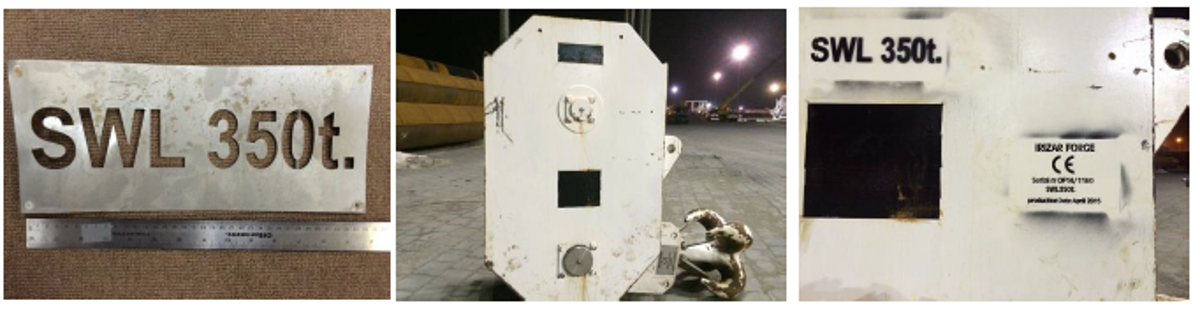
A Member has reported a near miss incident in which an object – a steel SWL plate weighing 0.7 kg -fell from a crane block onto the deck.
What happened?
The incident occurred when a crane fast line was being used for loading operations from the quayside. A banksman and two riggers were on the quay in the process of choking off the lifting slings and connecting them to the crane fast line hook. During this task a steel SWL plate (0.7 kg) fell from the Crane Auxiliary Block which was not being used at that time.
The SWL plate fell from approximately 71 m in height and landed at approximately 5 m away from the working party. The DROPS calculator tells us that such an object falling from such a height could have caused a fatality had it hit someone.
An all stop was called immediately and the crane was taken out of service.
Findings
Our member noted that:
- The SWL plate fell from the crane auxiliary block and there were similar plates still on this block and on the main block. Both these blocks, and the whip line block, had all been replaced during the re-fit period to enable the crane to operate subsea for a particular project.
- The means of securing the plates was of poor design – several plates including the one dropped were attached by four rivets of dissimilar metals (aluminium vs steel) promoting galvanic corrosion process and salt water corrosion.
- All plates showed signs of corrosion behind the plate – however deterioration of the rivets was not visible on the plate surface.
- All plates were flush against their fixings and looked secure to any visual inspection.
- There was no significant weather at the time of the incident.
Actions
- The plates were removed.
- SWL and other identifying information was stencilled on the crane instead.
- There was an inspection of similar hook blocks elsewhere to verify that there were no loose objects or unsecured plates.
- The crane supplier/manufacturer was informed of the incident (lessons learnt to prevent further reoccurrence).
There had been a rash of similar incidents in recent years where objects not relating to the load have fallen from cranes.
Members are reminded of Guidelines for lifting operations.
Related safety flashes
-
IMCA SF 10/15
16 July 2015
-
IMCA SF 02/15
5 February 2015
-
IMCA SF 15/14
8 September 2014
-
IMCA SF 04/11
19 April 2011
IMCA Safety Flashes summarise key safety matters and incidents, allowing lessons to be more easily learnt for the benefit of the entire offshore industry.
The effectiveness of the IMCA Safety Flash system depends on the industry sharing information and so avoiding repeat incidents. Incidents are classified according to IOGP's Life Saving Rules.
All information is anonymised or sanitised, as appropriate, and warnings for graphic content included where possible.
IMCA makes every effort to ensure both the accuracy and reliability of the information shared, but is not be liable for any guidance and/or recommendation and/or statement herein contained.
The information contained in this document does not fulfil or replace any individual's or Member's legal, regulatory or other duties or obligations in respect of their operations. Individuals and Members remain solely responsible for the safe, lawful and proper conduct of their operations.
Share your safety incidents with IMCA online. Sign-up to receive Safety Flashes straight to your email.