AC vent unit cover dislodged and fell 1.7m
- Safety Flash
- Published on 24 October 2024
- Generated on 25 October 2026
- IMCA SF 21/24
- 2 minute read
The AC cover of a capstan electrical cabinet became detached and fell approximately 1.7 metres.
What happened?
On a pipelay tower, the AC cover of a capstan electrical cabinet became detached and fell approximately 1.7 metres. The cover was found resting on a cable attached to the platform and diagonal tubular brace. There were no injuries. However, there was potential risk to individuals working nearby. Our member, based on information from the industry "DROPS calculator", has treated the incident as it if were a Lost Time Injury (LTI).
Crew were working in the pipelay tower when they heard an unknown noise. They stopped to investigate the source of the noise and found that an AC unit vent cover had become detached from the capstan winch PLC cabinet.

Cover in its final resting place
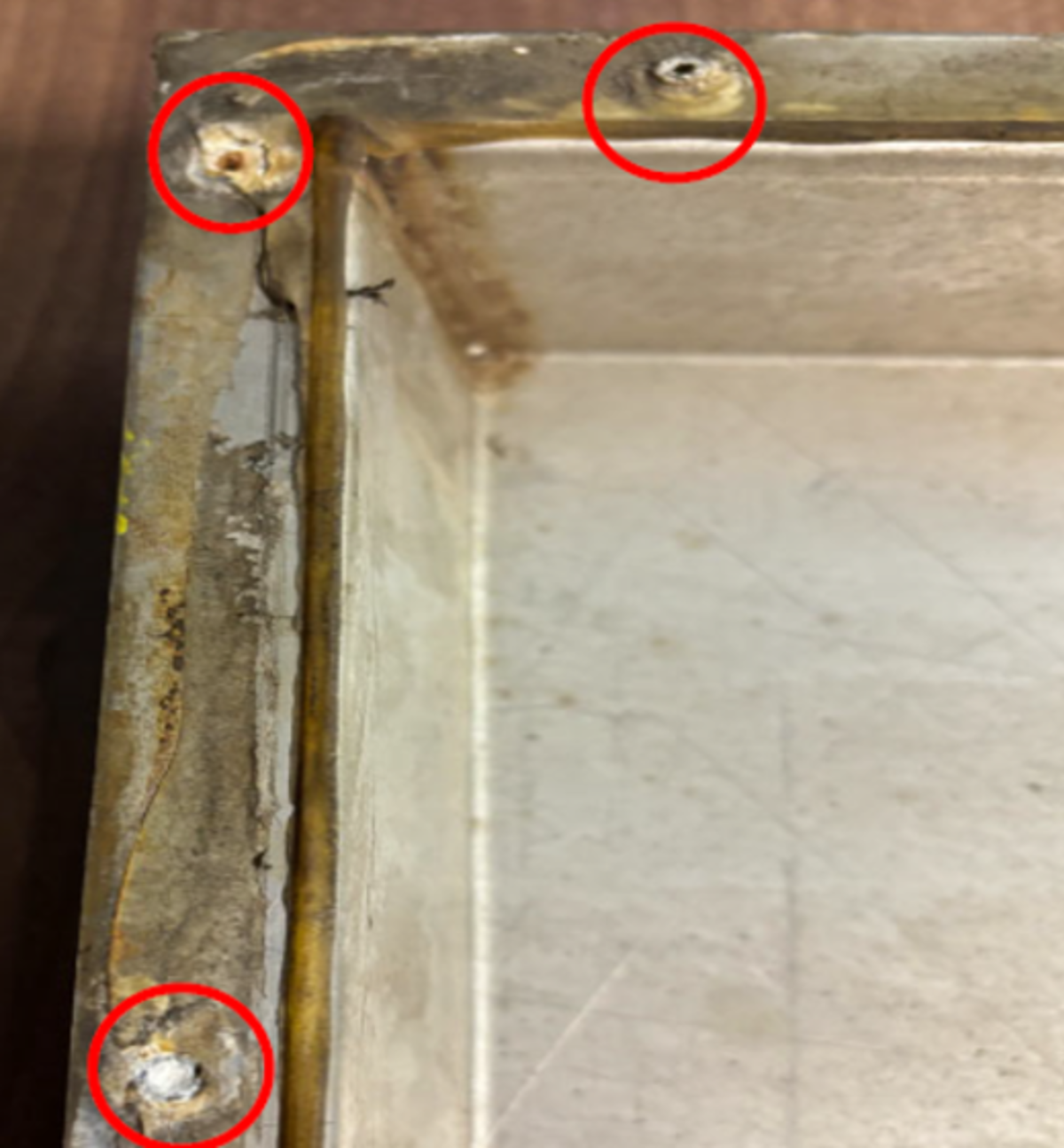
Failed Aluminium rivets
Work was stopped immediately under “Stop Work Authority”. The integrity and rivets of the remaining air conditioning units on the tower were inspected, along with a security assessment of the remaining covers. It was also confirmed that there was no damage to the electrical cable the cover contacted.
What went wrong?
Initial investigations detected a failure of the securing rivets caused by galvanic corrosion. When aluminium and stainless steel are combined in an assembly, electrons from the aluminium migrate into the stainless steel causing the aluminium to weaken and deteriorate at an accelerated rate.
Actions
There is potential for a similar incident to occur on similar vessels.
- Inspect all similar cabinets / equipment and change out any incompatible fixings.
- Review existing dropped object checklists and/or work orders and update as required.
- Verify during routine dropped object inspections of equipment at height, that primary and secondary fixings and safety securing lanyards are all compatible.
- Update Planned Maintenance work orders where required.
Members may wish to refer to:
Related Safety Flashes
-
IMCA SF 11/22
4 May 2022
-
-
IMCA SF 03/24
12 February 2024
-
IMCA SF
9 February 2023
IMCA Safety Flashes summarise key safety matters and incidents, allowing lessons to be more easily learnt for the benefit of the entire offshore industry.
The effectiveness of the IMCA Safety Flash system depends on the industry sharing information and so avoiding repeat incidents. Incidents are classified according to IOGP's Life Saving Rules.
All information is anonymised or sanitised, as appropriate, and warnings for graphic content included where possible.
IMCA makes every effort to ensure both the accuracy and reliability of the information shared, but is not be liable for any guidance and/or recommendation and/or statement herein contained.
The information contained in this document does not fulfil or replace any individual's or Member's legal, regulatory or other duties or obligations in respect of their operations. Individuals and Members remain solely responsible for the safe, lawful and proper conduct of their operations.
Share your safety incidents with IMCA online. Sign-up to receive Safety Flashes straight to your email.