Dropped sheave and clump weight
- Safety Flash
- Published on 24 October 2024
- Generated on 22 October 2026
- IMCA SF 21/24
- 2 minute read
A high potential dropped object incident occurred when a sheave weighing 204kg fell 64m to deck.
What happened?
A high potential dropped object incident occurred when a sheave weighing 204kg fell 64m to deck, and a clump weight weighing 700kg fell onto equipment causing damage. There were no injuries. The incident occurred during routine installation activities for a wind turbine monopile. A spreader bar with lift tools was disconnected from the main block and tuggers, and preparations for lifting a Transition Piece then began. The deck operations involved tasks for three rigger teams and a forklift operator. The rigger teams unhooked the rigging and connected the clump weight to winch #5. The foreman instructed the crane operator to hoist winch wire #5 into a storage position and to lift up the main block. Shortly after that, a request was made to lower winch wire #1 to the main deck. Thus, three different winches were operating simultaneously.
During the hoisting of the winch wire #5, the clump weight was pulled into the sheave, causing activation of the winch overload alarm. Although the crane operator promptly moved the joystick to the “0” position, it was too late. The clump weight had already been pulled into the sheave causing the sheave to break; both the sheave and the clump weight then dropped to deck. The sheave (204 kg) dropped from 64m and bounced, narrowly missing a forklift truck. Nearby crew found it necessary to take cover. The clump weight (approximately 700 kg) dropped onto the umbilical winch, resulting in a hydraulic oil spill on the main deck.
Both dropped objects could have resulted in a fatality or multiple fatalities.
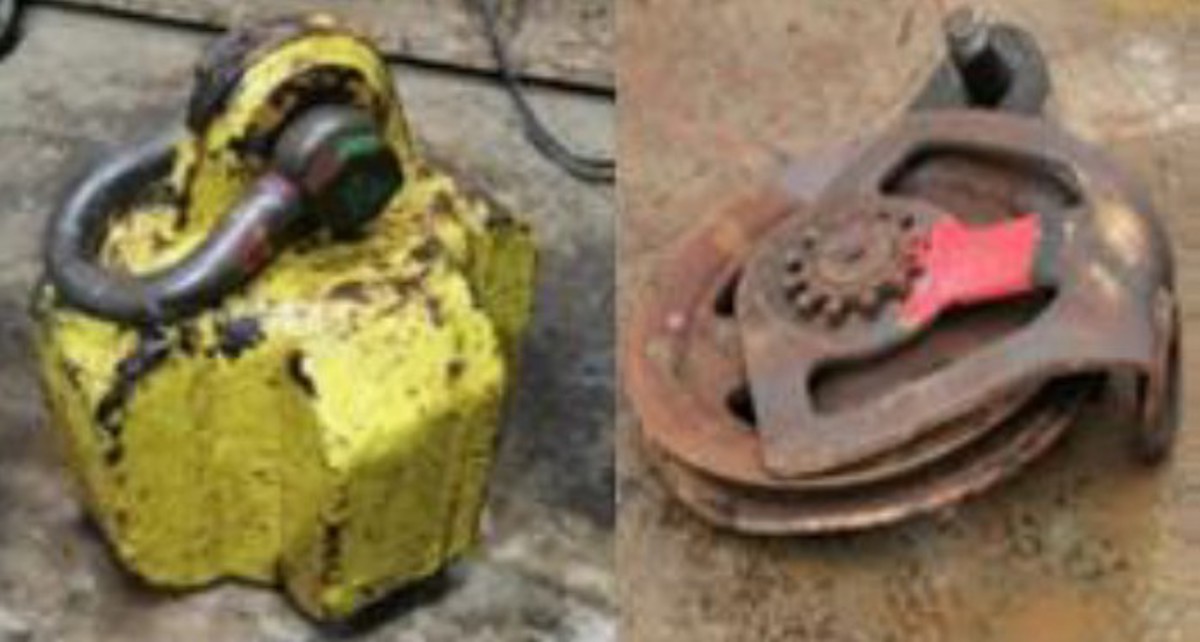
Clump weight and sheave
What went wrong?
The investigation revealed that:
- The Crane Operator was performing simultaneous tasks requiring full concentration.
- Neither the Crane Operator nor the Rigger foreman had eyes on the tugger wire / clump weight.
- The tugger winches had no automatic alarm settings with automatic stops.
What are the lessons?
- Doing more than one thing at once – DON’T!
- When performing lifting operations, the banksman should always have eyes on the lift and make sure the area below the lift is clear of people.
- Be aware of the limitations of your equipment and stop the job when it cannot be performed safely.
Related Safety Flashes
-
IMCA SF 14/20
28 April 2020
-
-
IMCA SF 23/21
19 August 2021
-
IMCA SF 08/09
19 June 2009
IMCA Safety Flashes summarise key safety matters and incidents, allowing lessons to be more easily learnt for the benefit of the entire offshore industry.
The effectiveness of the IMCA Safety Flash system depends on the industry sharing information and so avoiding repeat incidents. Incidents are classified according to IOGP's Life Saving Rules.
All information is anonymised or sanitised, as appropriate, and warnings for graphic content included where possible.
IMCA makes every effort to ensure both the accuracy and reliability of the information shared, but is not be liable for any guidance and/or recommendation and/or statement herein contained.
The information contained in this document does not fulfil or replace any individual's or Member's legal, regulatory or other duties or obligations in respect of their operations. Individuals and Members remain solely responsible for the safe, lawful and proper conduct of their operations.
Share your safety incidents with IMCA online. Sign-up to receive Safety Flashes straight to your email.