Fingertip crush injury sustained during lifting operation
- Safety Flash
- Published on 17 November 2025
- Generated on 6 October 2026
- IMCA SF 21/25
- 2 minute read
A rigger sustained crush injuries to several fingertips working on deck during the relocation of a pressure cap (a structure weighing over 2000 kg).
What happened?
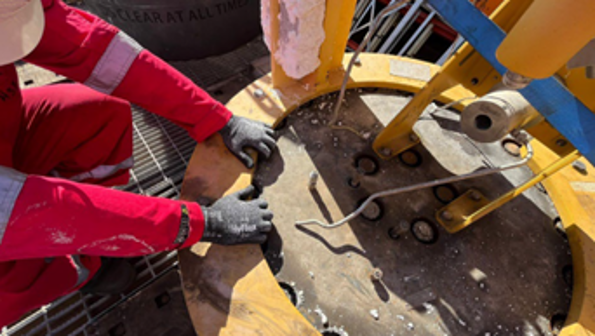
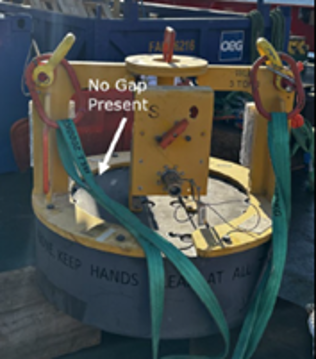
At the time of the event, the rigger was holding the top section of the pressure cap collar to guide and land the cap onto grillage. As the inner section of the cap landed, the collar automatically lowered (as designed), trapping several of the rigger’s fingertips between the collar and the inner section. The crane operator was immediately instructed to raise the load, allowing the rigger’s fingers to be released. The rigger was evacuated to an onshore medical facility and underwent surgery on two fingertips.
NB: At this time, our members’ findings are preliminary pending completion of an investigation.
 |
|
 |
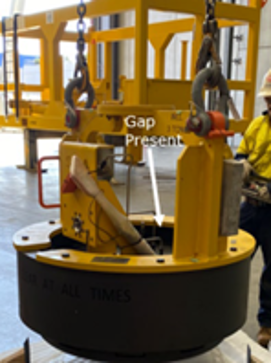 |
| Showing pressure cap in this incident | |
What can we learn?
- Opportunities always exist for improving pre-task planning and enhancing awareness of equipment-specific hazards.
- The incident highlights the importance of consistently applying hands-free lifting principles.
- Don’t touch the load during crane operations.
- Ensure there are sufficient lifting aids in place and that they are being used.
- Before starting the lift, make sure there is discussion of the load hazards and of any appropriate actions to take to prevent entrapment of any body parts.
- Remember you have STOP WORK authority. Ask questions, avoid complacency. “Hold on a minute…what’s going on here?”
Members may wish to refer to
· IMCA video – watch your hands
· IMCA videos – In the line of fire
Related Safety Flashes
-
IMCA SF 17/23
13 July 2023
-
IMCA Safety Flashes summarise key safety matters and incidents, allowing lessons to be more easily learnt for the benefit of the entire offshore industry.
The effectiveness of the IMCA Safety Flash system depends on the industry sharing information and so avoiding repeat incidents. Incidents are classified according to IOGP's Life Saving Rules.
All information is anonymised or sanitised, as appropriate, and warnings for graphic content included where possible.
IMCA makes every effort to ensure both the accuracy and reliability of the information shared, but is not be liable for any guidance and/or recommendation and/or statement herein contained.
The information contained in this document does not fulfil or replace any individual's or Member's legal, regulatory or other duties or obligations in respect of their operations. Individuals and Members remain solely responsible for the safe, lawful and proper conduct of their operations.
Share your safety incidents with IMCA online. Sign-up to receive Safety Flashes straight to your email.