Snagging hazards
- Safety Flash
- Published on 11 November 2024
- Generated on 27 October 2026
- IMCA SF 22/24
- 2 minute read
A member reports two unrelated incidents in which a causal factor was something getting caught or snagged in an unplanned way.
Incident 1: Corner of a container got snagged
On a vessel engaged in deck cargo operations offshore, a number of lifts had been successfully discharged and backloaded, which led to limited space on deck. The crane operator had landed a 3m cargo container on deck, and while he was trying to re-position the lift for easy disconnection by the deck crew, the corner of the container became snagged on the side of a deck light guard resulting in the parting of one of the slings. The container with broken slings was safely stowed on deck. There were no injuries, no damage and no environmental impact.

Deck light guard

Damaged sling
What went wrong?
- The crane operator did not notice the potential snagging point, so continued the operation.
- The deck crew did not recognize hazard and did not stop the activity.
- Owing to the colour it was painted, the deck light guard may have been difficult for the crane operator to see and identify as a potential snagging point.
Lessons
The importance of the crane operator being able to see the job, and to have good communications with the deck crew, cannot be overstated.
Related Safety Flashes
-
IMCA SF 23/18
2 October 2018
-
-
IMCA SF 15/17
15 June 2017
-
Incident 2: Anchor chain parted after snagging on PPE
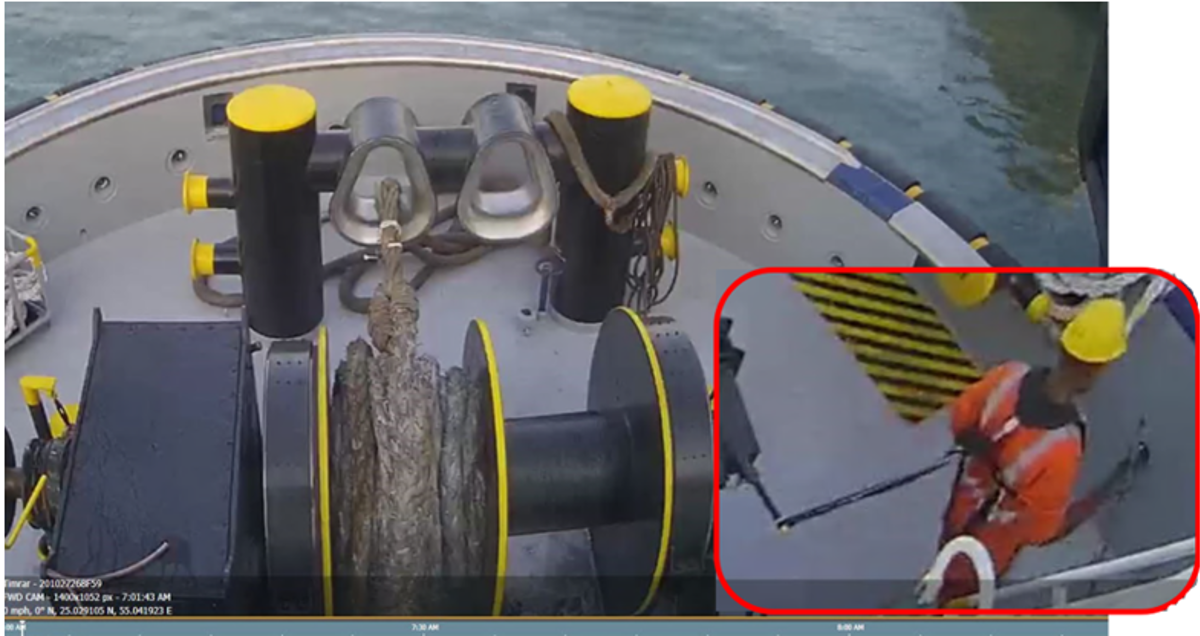
The starboard anchor chain of a tug boat snapped, causing loss of the anchor. CCTV footage reveals that during mooring operations, the crotch strap of a worker’s lifejacket got caught on the lever of the anchor clutch, slightly engaging it. This put tension on the anchor chain during the operation of the winch, which subsequently caused it to part. There were no injuries and no other property damage.
What went wrong?
- There was no “securing pin” that would have prevented the clutch from engaging.
- A pre-use check inspection had not been carried out.
Actions
- Inspect all vessels’ anchor winches to confirm the availability of securing pins.
- Ensure pre-inspection takes place on all similar winches to ensure they are disengaged prior to operation.
- Ensure that the securing pin size is adequate and not undersized, to prevent the clutch from engaging unintentionally.
Related Safety Flashes
-
IMCA SF 10/24
22 May 2024
-
IMCA SF 10/24
22 May 2024
-
IMCA Safety Flashes summarise key safety matters and incidents, allowing lessons to be more easily learnt for the benefit of the entire offshore industry.
The effectiveness of the IMCA Safety Flash system depends on the industry sharing information and so avoiding repeat incidents. Incidents are classified according to IOGP's Life Saving Rules.
All information is anonymised or sanitised, as appropriate, and warnings for graphic content included where possible.
IMCA makes every effort to ensure both the accuracy and reliability of the information shared, but is not be liable for any guidance and/or recommendation and/or statement herein contained.
The information contained in this document does not fulfil or replace any individual's or Member's legal, regulatory or other duties or obligations in respect of their operations. Individuals and Members remain solely responsible for the safe, lawful and proper conduct of their operations.
Share your safety incidents with IMCA online. Sign-up to receive Safety Flashes straight to your email.