Injuries to the eyes and face
- Safety Flash
- Published on 30 April 2024
- Generated on 27 October 2026
- IMCA SF 09/24
- 3 minute read
A member reports a number of incidents where crew have sustained injuries to the face.
Incident one – Self-inflicted wound from a screwdriver
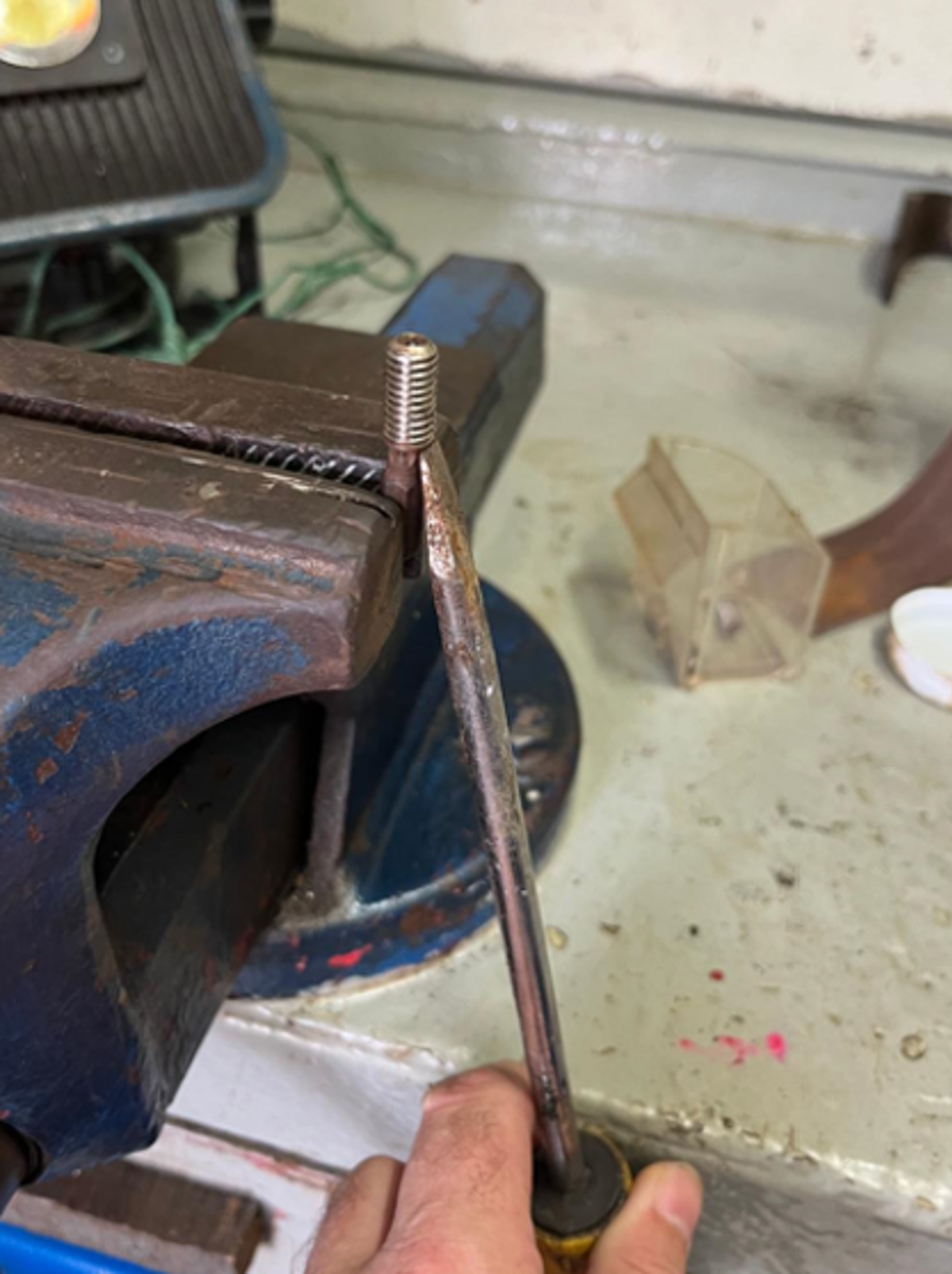
A crew member was using a large screwdriver to pry out a jammed bit from a grub screw. The prying was done upwards; the screwdriver slipped and hit the person in his left cheek. He sustained a 30-40 mm cut, 4-5 mm deep.
What went wrong?
The wrong tool was used; the injured person made no ongoing or continuous assessment of the risk involved of the screwdriver slipping.
Actions
Just stop and think for a minute before applying force to tools that could slip and fly back into your face. Could you get this task done in a different and more safe way? If not – consider your position – have some “spatial awareness”, and wear appropriate PPE.
Incident two – LTI: face injury from unplanned release of hydraulic fluid
On a vessel alongside, the vessel crane driver suffered an injury to his face and left eye while in the process of setting up to remove a 8 cm (3-inch) hydraulic accumulator pressure hose. The injury occurred as a result of an unplanned release of pressurized hydraulic fluid from that hose flange.
The injured crane driver received first aid on board; the leak was stopped. The client was informed, and the injured person was taken to hospital ashore.
What went wrong?
Our member discerned the following causes:
- Failure to follow rules and regulations.
- Failure to follow repair/ maintenance instructions.
- Operating equipment or machinery without authority.
Actions
- Ensure there are clear and concise written instructions for planned work.
- Refresher training on Permit to Work awareness and Hazard Identification for all crew.
This incident may be dealt with in more detail in a later Safety Flash.
Incident three – Left eye irritation from airborne foreign object
On a vessel alongside, a crew person felt an irritation in the left eye, while working on the back deck in windy conditions. Appropriate eye protection was worn (prescription safety glasses with side protection). He reported vessel medic and was assessed. A small speck of debris was identified, which could not be safely flushed or removed with the equipment available on board. The crew member was sent to the local emergency room for further assessment and treatment.
What went wrong?
- Conditions were very windy; this had already been noted and work stopped under the “Stop Work Authority”.
- Although the crew member was wearing compliant safety glasses, a foreign object still got into his eye.
Lessons learned
- Never take shortcuts and perform a task that you know requires eye protection, without wearing it – at all times, wear the appropriate eye protection for the job in hand.
- Use machine guarding, work screens or other engineering controls as applicable.
- Know the location of first aid equipment and eye wash station.
- Exercise Stop Work Authority – raise your voice if you see a potential risk.
Related Safety Flashes (Incident 1)
-
IMCA SF 30/21
8 November 2021
-
IMCA SF 16/15
22 October 2015
-
IMCA SF 02/06
27 February 2006
Related Safety Flashes (Incident 1 and 2)
-
IMCA SF 22/19
17 September 2019
-
-
IMCA SF 03/16
27 January 2016
Related Safety Flashes (Incident 3)
-
IMCA SF 02/20
10 January 2020
-
-
IMCA SF 08/17
12 April 2017
-
IMCA Safety Flashes summarise key safety matters and incidents, allowing lessons to be more easily learnt for the benefit of the entire offshore industry.
The effectiveness of the IMCA Safety Flash system depends on the industry sharing information and so avoiding repeat incidents. Incidents are classified according to IOGP's Life Saving Rules.
All information is anonymised or sanitised, as appropriate, and warnings for graphic content included where possible.
IMCA makes every effort to ensure both the accuracy and reliability of the information shared, but is not be liable for any guidance and/or recommendation and/or statement herein contained.
The information contained in this document does not fulfil or replace any individual's or Member's legal, regulatory or other duties or obligations in respect of their operations. Individuals and Members remain solely responsible for the safe, lawful and proper conduct of their operations.
Share your safety incidents with IMCA online. Sign-up to receive Safety Flashes straight to your email.