Near-miss incident involving insecure load
- Safety Flash
- Published on 1 February 2002
- Generated on 29 June 2026
- IMCA SF 02/02
- 2 minute read
A Member has reported the following incident which occurred on one of its vessels.
What happened?
A deck crew had picked up a pallet of rollers from the aft deck and was moving them to the designated storage area, above the welding fabrication shop. Whilst slewing the crane into the storage area, one of the pallet chains struck the crane boom rest, resulting in the rollers falling from the pallet. The rollers fell to ‘D’ deck level and one roller fell to the main deck level, just outside the fabrication shop area.
The pallet contained six rollers, each weighing approximately 80kg. The weather conditions at the time were a wind speed of 28-30 knots, with 2-2.5 metre sea swell.
Nobody was injured and no equipment was damaged.
The pictures show the result of the incident.
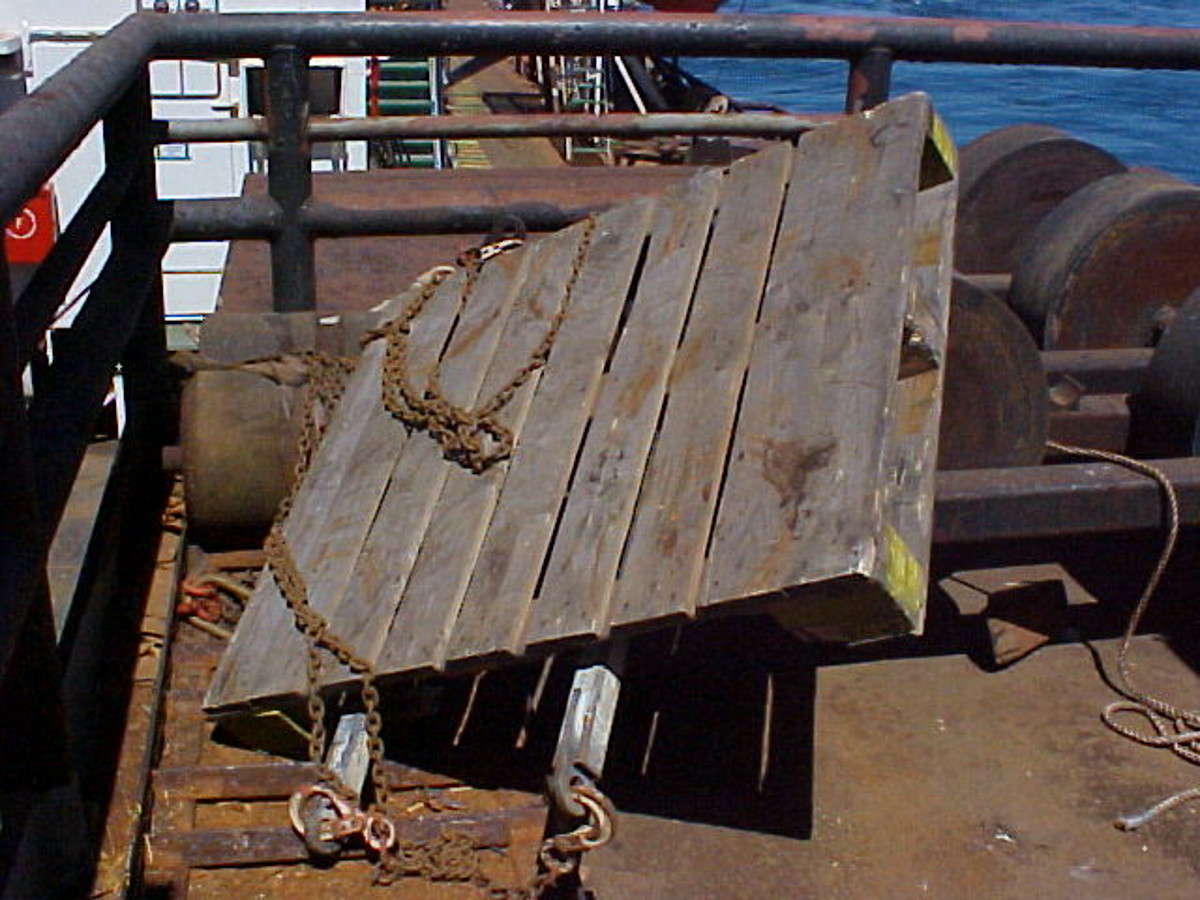
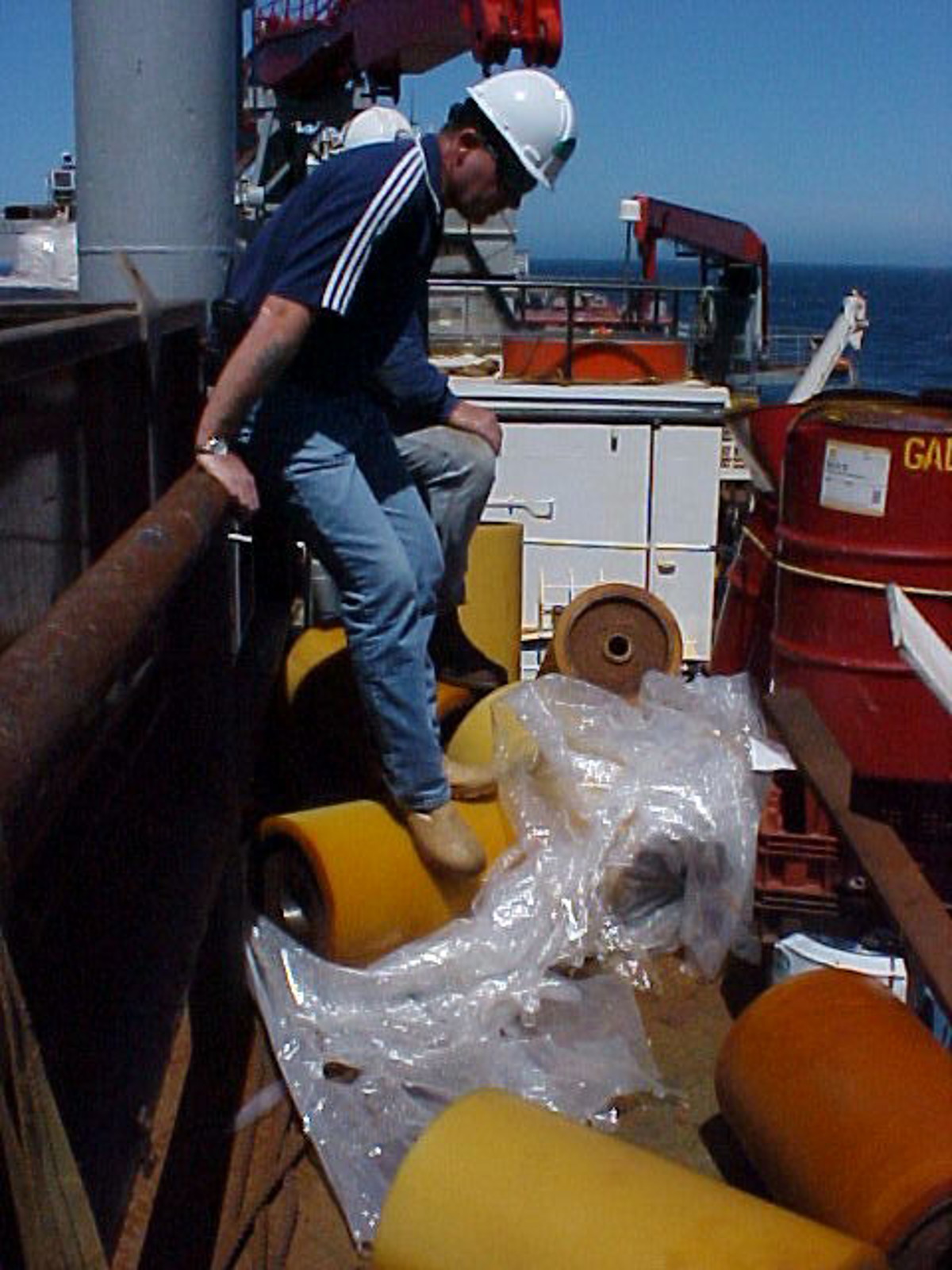
The Member involved has proposed the following corrective action:
- When using cranes to move loads on pallets, the load must be checked to ensure that it is banded or strapped. If not, the load must be made secure by other means, or the loads should be split and lifted separately, using webbing or steel slings.
- The area where the loads are to be lifted to is to be barriered off, with a crew member present to prevent unauthorised entry to the lifting area. Signs are to be posted in the relevant area, warning of overhead crane operations.
IMCA Safety Flashes summarise key safety matters and incidents, allowing lessons to be more easily learnt for the benefit of the entire offshore industry.
The effectiveness of the IMCA Safety Flash system depends on the industry sharing information and so avoiding repeat incidents. Incidents are classified according to IOGP's Life Saving Rules.
All information is anonymised or sanitised, as appropriate, and warnings for graphic content included where possible.
IMCA makes every effort to ensure both the accuracy and reliability of the information shared, but is not be liable for any guidance and/or recommendation and/or statement herein contained.
The information contained in this document does not fulfil or replace any individual's or Member's legal, regulatory or other duties or obligations in respect of their operations. Individuals and Members remain solely responsible for the safe, lawful and proper conduct of their operations.
Share your safety incidents with IMCA online. Sign-up to receive Safety Flashes straight to your email.