MSF: Cargo Snagging
- Safety Flash
- Published on 4 January 2021
- Generated on 27 October 2026
- IMCA SF 02/21
- 3 minute read
The Marine Safety Forum (MSF) have published Safety Alert 20-08 relating to the snagging of cargo during lifting operations.
What happened?
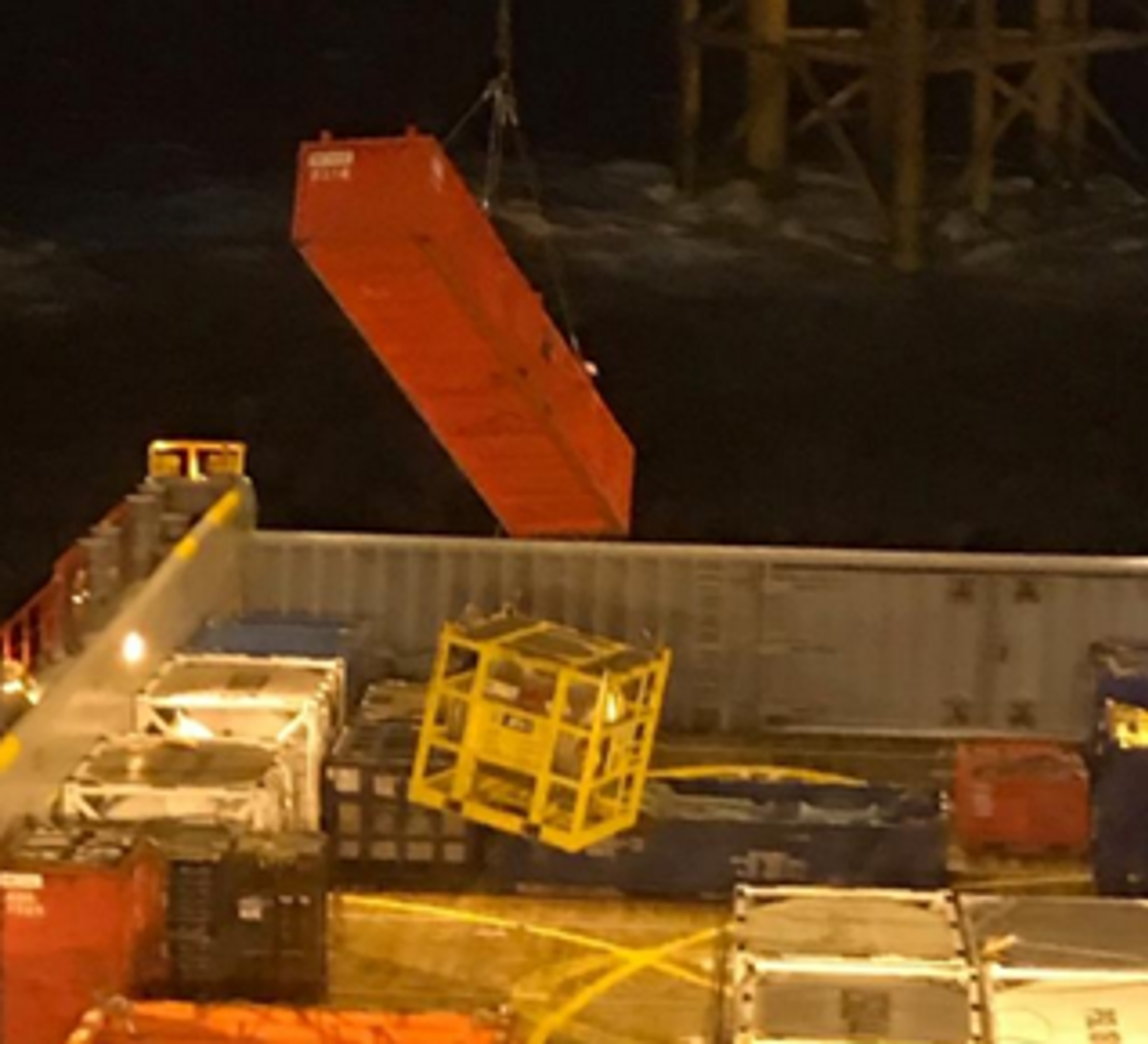
A vessel was engaged in deck cargo operations at an offshore location. A number of lifts had been successfully discharged and backloaded which led to limited space on deck. The crane operator advised the next lift would be the 25ft basket on the starboard side which was duly connected to the crane hook. The vessel deck crew moved to a safe place and confirmed to the crane operator that he was clear to hoist. As the crane operator began to lift the basket off the deck, the vessel bridge team noticed a corner of the basket had become snagged on a heli-tank and called an ALL STOP.
The call was not acknowledged, and the crane operator continued to hoist. As the 25ft basket was raised approximately 3m above the deck, the snagged lift was suspended approximately 0.5m and the ‘Stop’ call was given again by the bridge team. The crane operator continued to hoist causing the basket to rotate over the adjacent cargo and a third ‘Stop’ call was issued by the bridge team. The crane operator acknowledged the third stop call and began to take avoiding action. The crane operator was able to successfully land the snagged helitank in a clear area of the deck. The snagged lift was naturally freed, the vessel deck crew remained in a safe location and the basket successfully offloaded without further incident.
What was the cause?
- The vessel deck crew did not ‘tuck in’ the heli-tank bridle on completion of backload.
- The crane operator missed two opportunities to stop the job when the call was given.
The vessel Master failed to report the incident in accordance with the company and charterers reporting procedure In this case, there were no personnel injuries or property damage however the potential for harm still existed where it could have been prevented.
Actions
- Reinforce the need for good communication between vessel and platform crew during lifting operations, particularly in relation to ‘stop the job’.
- Improve deck space management and planning. Vessel crew are encouraged to pro-actively give feedback in this area where possible.
- All crew are reminded to always be aware of potential snagging hazards and proactively take avoiding action where possible.
- Where possible, containerised cargo bridles should be stowed or tucked into the framework or basket to prevent snagging.
Members may wish to review:
- IMCA HSS019 – Guidelines for lifting operations
- IMCA short video on lifting operations – Are YOU prepared to work safely?
- A list of events involving snagging and cargo – legacy.imca-int.com/safety-events/?searchitem=snagging+cargo
For more information, please contact [email protected].
IMCA Safety Flashes summarise key safety matters and incidents, allowing lessons to be more easily learnt for the benefit of the entire offshore industry.
The effectiveness of the IMCA Safety Flash system depends on the industry sharing information and so avoiding repeat incidents. Incidents are classified according to IOGP's Life Saving Rules.
All information is anonymised or sanitised, as appropriate, and warnings for graphic content included where possible.
IMCA makes every effort to ensure both the accuracy and reliability of the information shared, but is not be liable for any guidance and/or recommendation and/or statement herein contained.
The information contained in this document does not fulfil or replace any individual's or Member's legal, regulatory or other duties or obligations in respect of their operations. Individuals and Members remain solely responsible for the safe, lawful and proper conduct of their operations.
Share your safety incidents with IMCA online. Sign-up to receive Safety Flashes straight to your email.