MAIB: Very serious leg injury during crane operations
- Safety Flash
- Published on 6 March 2025
- Generated on 27 October 2026
- IMCA SF 04/25
- 2 minute read
The UK Marine Accident Investigation Branch (MAIB) published Accident Investigation Report 11/2024 into an incident where a crew person was seriously injured while operating a crane.
What happened?
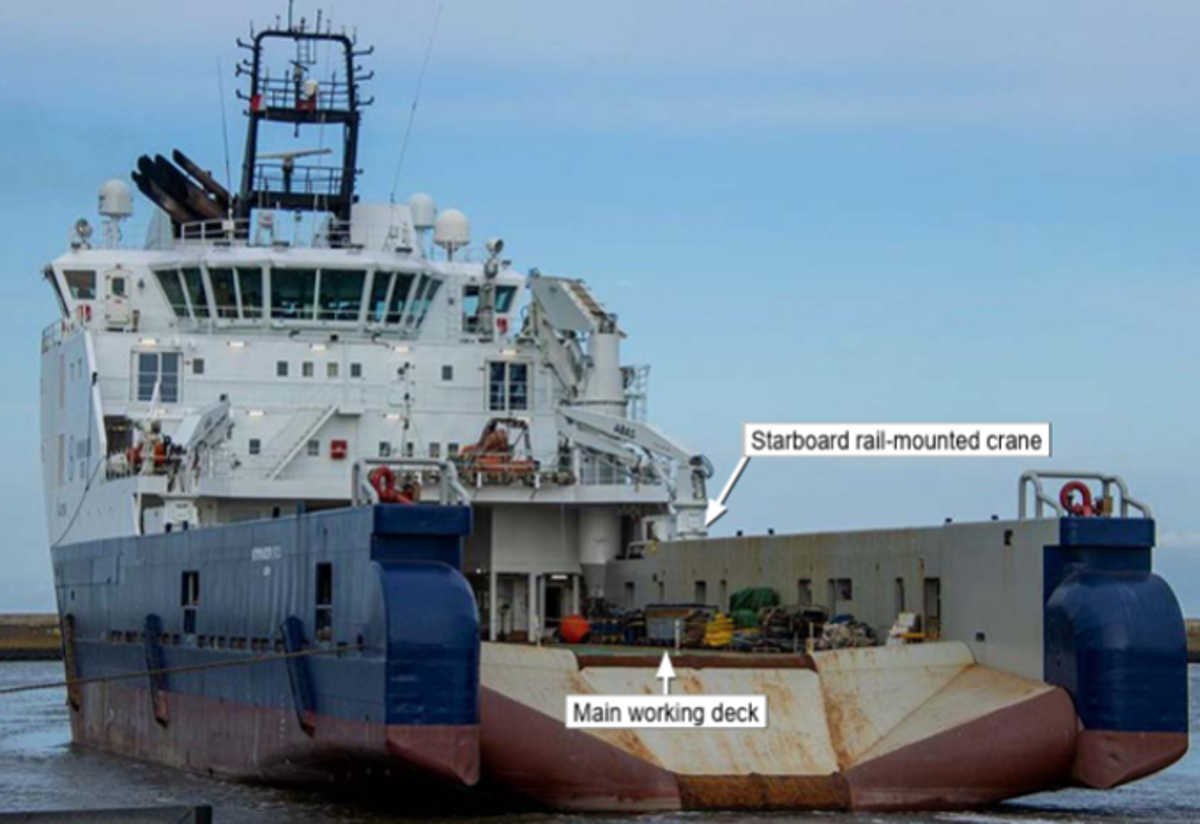
On 16 August 2022, the second officer of the UK registered survey and supply vessel Kommandor Orca sustained crush injuries to his lower left leg while operating one of the rail-mounted deck cranes.
While operating the crane, the second officer stood with his left foot on the inboard bulwark and his right foot on the crane drive motor casing; this enabled him to see both the fitter and the load positioned 4m below on the main deck. Operating the crane from the local controls in the pedestal was unsafe. The 2/O’s lower left leg became caught in the crane’s rack and pinion traversing mechanism when he moved the crane aft for a lifting operation, and was crushed. A helicopter transferred the second officer to hospital, where his leg required amputation below the knee.
A thorough review of the report is recommended.
What went wrong?
- The crane was not being operated in line with the manufacturer’s instructions;
- The method of operation of the crane was unsafe;
- The permit to work did not include the hazards of working at height or working near unguarded machinery;
- There were no onboard procedures for operating the crane and the training given for its operation was consequently flawed;
- The SMS made no reference to ship-specific operating instructions – reference section 7 of the ISM Code.
IMCA Safety Flashes summarise key safety matters and incidents, allowing lessons to be more easily learnt for the benefit of the entire offshore industry.
The effectiveness of the IMCA Safety Flash system depends on the industry sharing information and so avoiding repeat incidents. Incidents are classified according to IOGP's Life Saving Rules.
All information is anonymised or sanitised, as appropriate, and warnings for graphic content included where possible.
IMCA makes every effort to ensure both the accuracy and reliability of the information shared, but is not be liable for any guidance and/or recommendation and/or statement herein contained.
The information contained in this document does not fulfil or replace any individual's or Member's legal, regulatory or other duties or obligations in respect of their operations. Individuals and Members remain solely responsible for the safe, lawful and proper conduct of their operations.
Share your safety incidents with IMCA online. Sign-up to receive Safety Flashes straight to your email.