Lost time injury (LTI): Crewman’s finger pinched when moving the gangway
- Safety Flash
- Published on 8 June 2012
- Generated on 27 October 2026
- IMCA SF 05/12
- 2 minute read
A Member has reported an incident in which a crewman suffered a serious pinch injury to his finger whilst moving a gangway.
What happened?
The incident occurred during preparation for departure from port when two crewmen and the second officer were removing and stowing the ship’s gangway. The gangway was lifted onboard and whilst it was being slid along the deck for stowage, one crewman had his finger pinched between the gangway frame and an isolation valve on deck resulting in a deep cut to his finger.
The chief officer started to carry out first aid to stop the bleeding. The crewman was subsequently transferred to hospital where he received further treatment before returning to the ship. On his return, the decision was taken that the crewman would not be fit for duty and that he should return home to recover fully. An extended period of healing was necessary and the crewman was off work for five weeks.

Pinch-point between gangway frame and valve
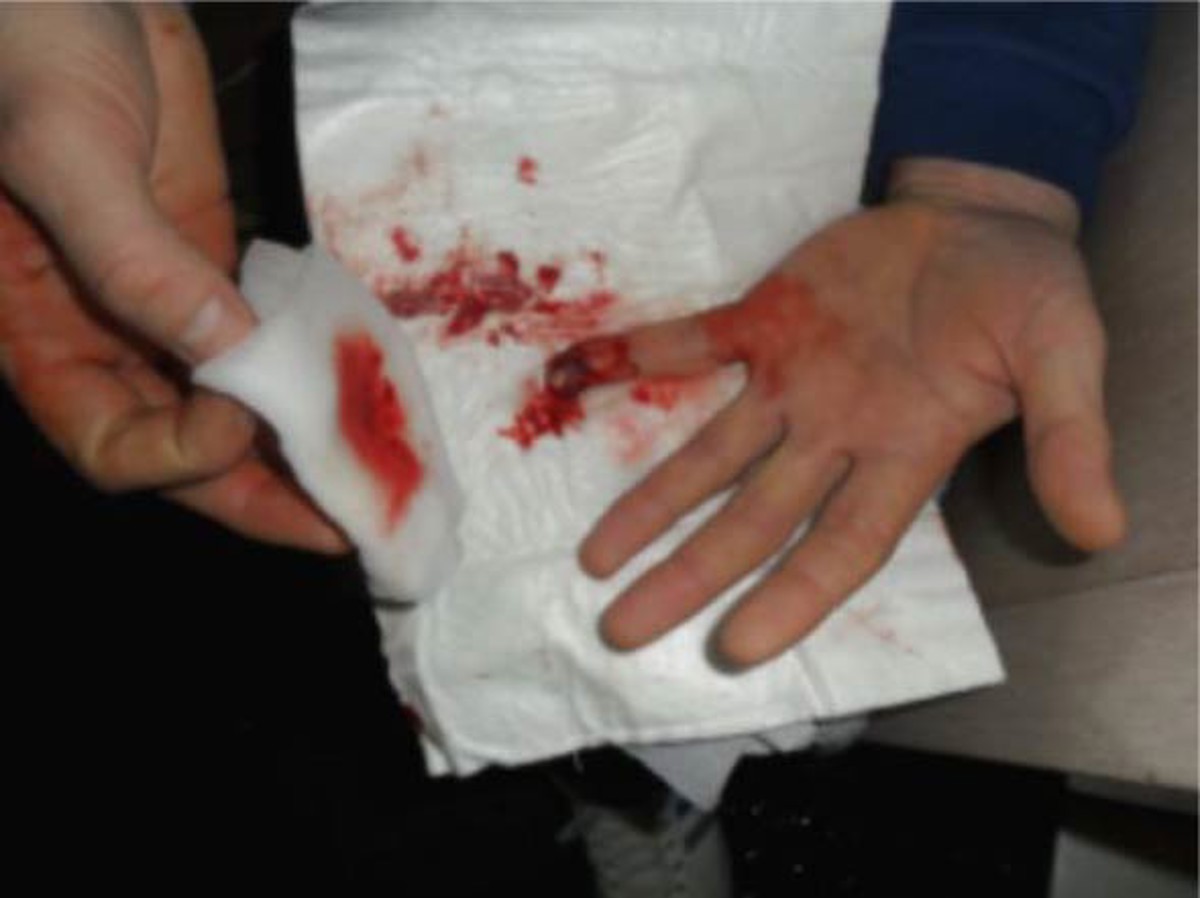
Injured finger
The investigation revealed the following:
- The crane normally used for moving the gangway was out of order and awaiting repairs. Therefore a smaller gangway was used that allowed for crew members to manually handle it into position.
- This smaller gangway was normally stored on the cargo deck but was in the way during cargo operations and had been removed.
- The risk assessment was not adequate:
- it did not adequately cover the gangway being manually handled
- it did not identify the possibility of pinch points
- other structures such as the isolation valve had not been highlighted as a potential danger
- A toolbox meeting was held, but did not identify the additional risks involved with the manual handling of the gangway.
- No management of change was carried out for the change of gangway.
The following corrective actions were taken:
- Reviewed the risk assessment for this operation.
- Made engineering changes to the isolation valve so that it cannot become a pinch point.
- Investigated alternative gangway storage facility.
- Alter positioning of gangway to establish easy handling and positioning of the gangway by the crane.
- Introduce and require use of a management of change procedure.
IMCA Safety Flashes summarise key safety matters and incidents, allowing lessons to be more easily learnt for the benefit of the entire offshore industry.
The effectiveness of the IMCA Safety Flash system depends on the industry sharing information and so avoiding repeat incidents. Incidents are classified according to IOGP's Life Saving Rules.
All information is anonymised or sanitised, as appropriate, and warnings for graphic content included where possible.
IMCA makes every effort to ensure both the accuracy and reliability of the information shared, but is not be liable for any guidance and/or recommendation and/or statement herein contained.
The information contained in this document does not fulfil or replace any individual's or Member's legal, regulatory or other duties or obligations in respect of their operations. Individuals and Members remain solely responsible for the safe, lawful and proper conduct of their operations.
Share your safety incidents with IMCA online. Sign-up to receive Safety Flashes straight to your email.