High potential near miss: Dropped object from turbine tower
- Safety Flash
- Published on 26 February 2020
- Generated on 20 October 2026
- IMCA SF 07/20
- 2 minute read
At a wind turbine tower, chains weighing 17 kg fell 84 m
What happened?
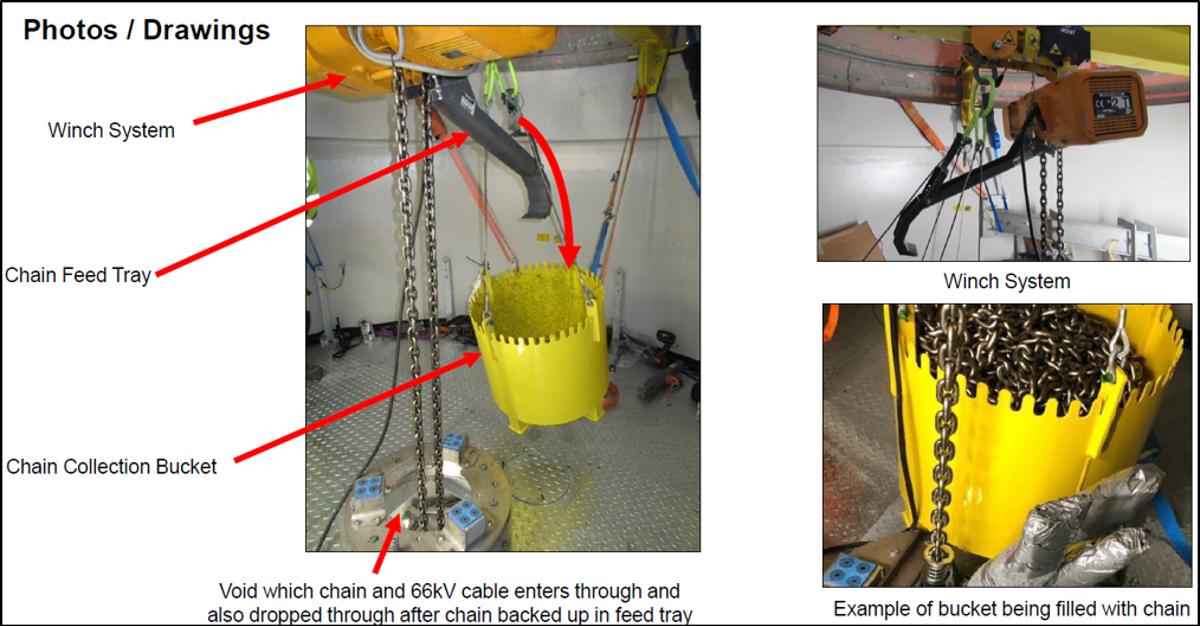
The incident occurred during the pulling through of a 66kv HV cable during installation.
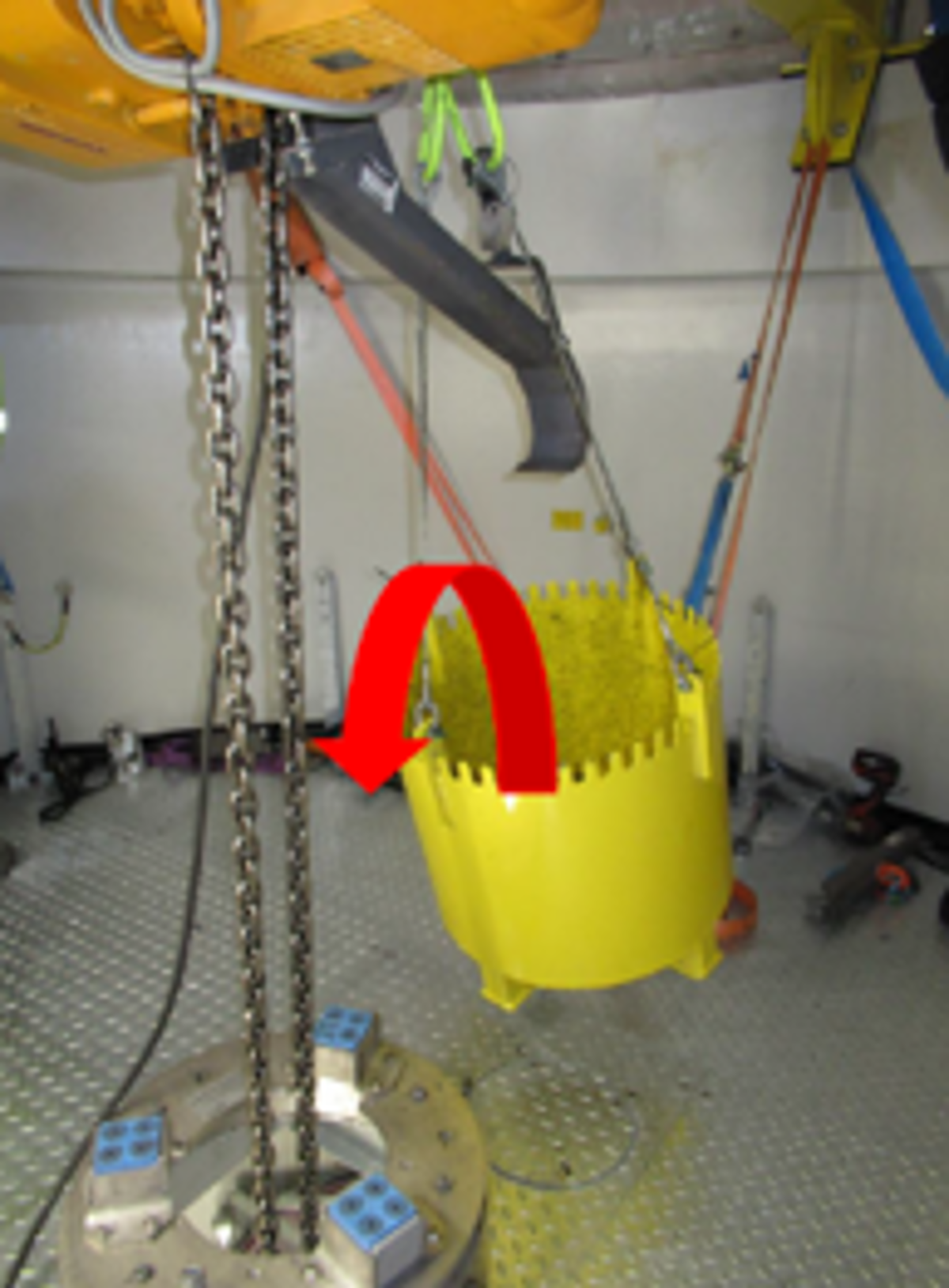
The surplus chain came out of a storage bucket and spooled uncontrolled 84 m down the tower to the entrance level.
The noise of the chain spooling down the tower alerted the client’s HSE inspector who went towards the tower to investigate.
There were workers near the chain as it fell and as it landed, but no-one was hit or injured.
The company investigation noted, with regard to severity, that “although no actual harm occurred there is a possibility for significant injury due to the height and weight involved”, and the “probability was high based on historic events of this nature“.
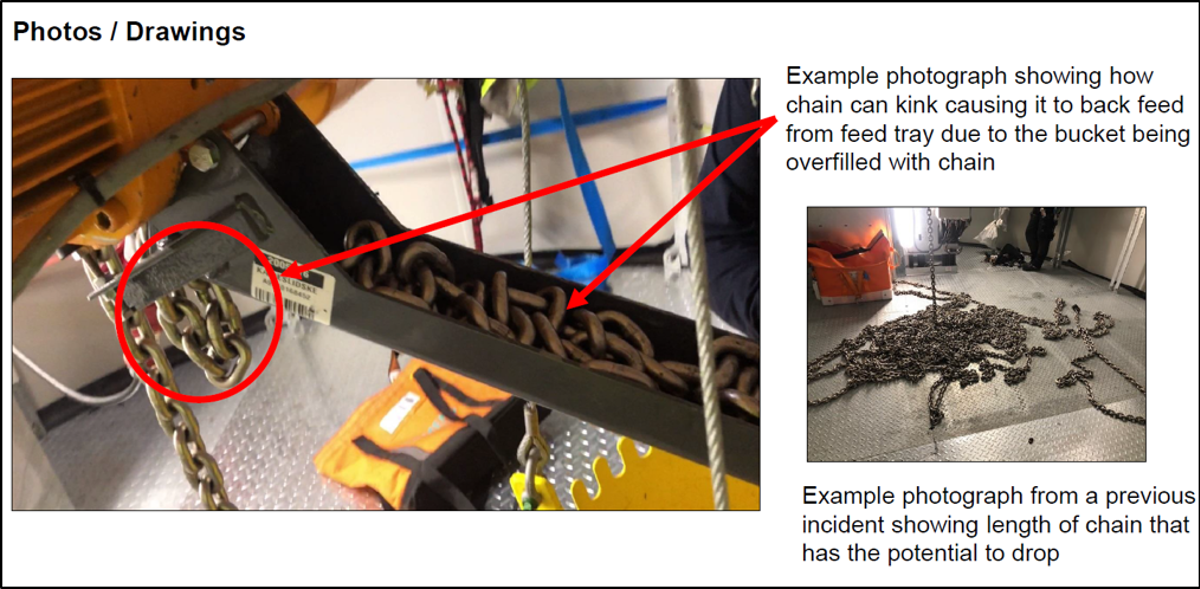
The very informative annotated photographs provided by the company involved are reproduced here in full:
What were the causes?
The company investigation noted the following:
- Minuted corrective actions from a similar incident six months previously had not been implemented and crew were not aware of the incident or the learnings from it:
- When interviewed, the spotter and the other members of the team had no knowledge of the prior incident and the importance of ensuring the chain does not kink.
- A watchman or ‘spotter’ moved/looked away from their role of ensuring the chain did not kink:
- There were clear instructions to the effect that the spotter, if moving away, must stop the operation.
What actions were taken and what lessons were learned?
- Create a way of capturing and disseminating information from previous incidents where control measures have been implemented, and provide evidence to the client that this has been ‘taken on board’ by all crew on site.
- Ensure that all persons performing any given task at the worksite are fully competent and capable of doing so.
- Ensure that persons ‘spotting’ in this particular work context understand that if for any reason they must look away, they must STOP THE JOB until they are back in position.
Members may wish to refer to “Reliable Securing” booklet developed by the G+ Global Offshore Wind Health and Safety Organisation and DROPS.
Members may wish to refer to:
- Technip DROPS (IMCA HSS039)
- Saipem DROPS – choice not chance (IMCA HSS042)
- DROPS [provided by Subsea 7] (IMCA HSS043)
IMCA Safety Flashes summarise key safety matters and incidents, allowing lessons to be more easily learnt for the benefit of the entire offshore industry.
The effectiveness of the IMCA Safety Flash system depends on the industry sharing information and so avoiding repeat incidents. Incidents are classified according to IOGP's Life Saving Rules.
All information is anonymised or sanitised, as appropriate, and warnings for graphic content included where possible.
IMCA makes every effort to ensure both the accuracy and reliability of the information shared, but is not be liable for any guidance and/or recommendation and/or statement herein contained.
The information contained in this document does not fulfil or replace any individual's or Member's legal, regulatory or other duties or obligations in respect of their operations. Individuals and Members remain solely responsible for the safe, lawful and proper conduct of their operations.
Share your safety incidents with IMCA online. Sign-up to receive Safety Flashes straight to your email.