MAIB: Unexploded ordnance – subsea explosion causes injury and damage
- Safety Flash
- Published on 22 March 2022
- Generated on 24 October 2026
- IMCA SF 07/22
- 3 minute read
The UK Marine Accident Investigation Branch (MAIB) has published its Accident Report 1/2022 into a subsea explosion which damaged crab potting vessel Galwad-Y-Mor on 15 December 2020.
What happened?
A 15m crab potting vessel was hauling pots in the North Sea approximately 22 miles north-east of Cromer. The crabbing gear disturbed a 250kg unexploded WWII bomb, which went off on the seabed 30m below the vessel. The ensuing explosion caused a shock wave that threw the boat about, resulting in significant injuries to five of the seven crew and major damage to the vessel’s hull and machinery.
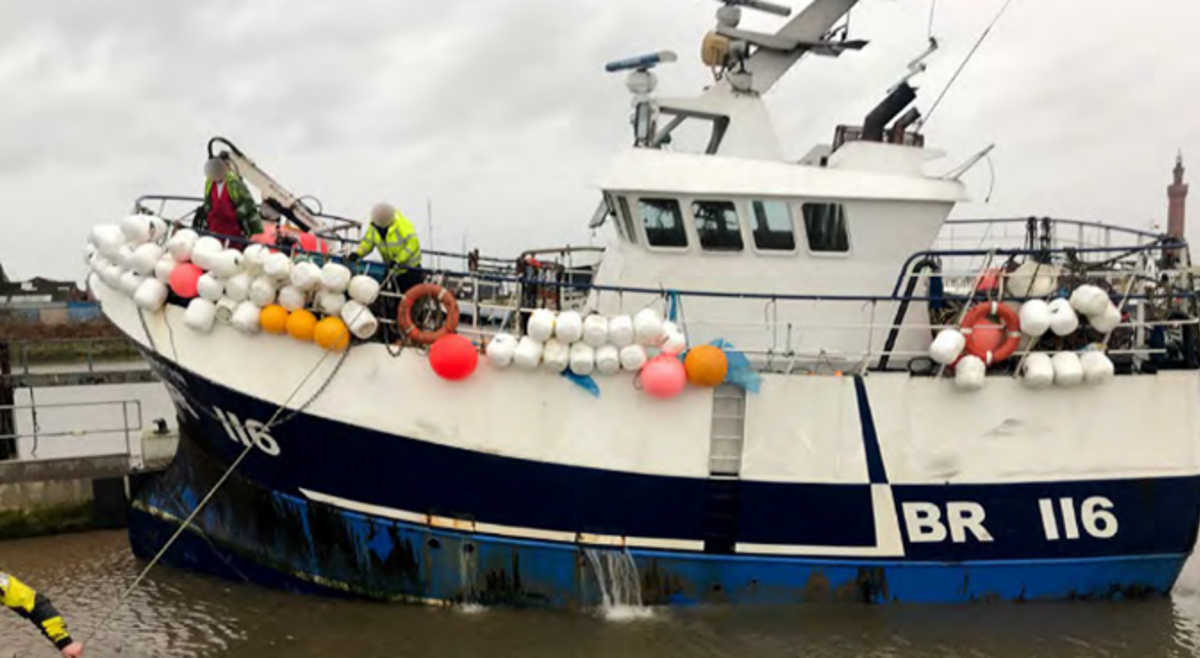
When the bomb went off, three loud bangs were heard by the crew on the main deck. The vessel was thrown about. Propulsion and electrical power immediately failed. The main deck was deluged with seawater and one crew member’s personal flotation device (PFD) automatically inflated. The skipper had hit his head and was dazed; four of the crew were severely injured but all remained conscious. The wheelhouse equipment was seriously damaged, water flooded onto the main deck, and into the engine room, and the vessel settled low in the water. The skipper roused the night watchman and made a distress call with a handheld VHF radio on channel 16. Unsure that the distress call had been received, he texted the skipper of another fishing vessel and requested that a distress message be relayed to the coastguard. Galwad-Y-Mor’s skipper launched the life raft with the help of a crew member and ordered the crew to prepare to abandon ship.
The injured crew were transferred to hospital by helicopter and RNLI lifeboat and treated for head, back and knee injuries.
What went right?
- The crew’s actions after the explosion were both prompt and effective; five of the seven crew were significantly injured and yet they were able to send a distress message, launch a life raft, and evacuate to rescue boats provided by the nearby offshore support vessel Esvagt Nord.
- It is likely that Galwad-Y-Mor crew’s formal training, emergency drills, and combined length of onboard service prepared them to deal with this unforeseen emergency scenario and enabled them to take swift action that, undoubtedly, saved lives.
- The emergency response and rescue that offshore support vessel Esvagt Njord provided was also prompt and effective. The onboard triage of the casualties was aided by the presence of a trained paramedic and increased the survivability of Galwad-Y-Mor’s injured crew members.
- Galwad-Y-Mor’s hull was well constructed and able to withstand the force of the nearby seabed explosion.
- Galwad-Y-Mor was successfully salvaged and has been rebuilt.
Related Safety Flashes
-
IMCA SF 17/18
3 August 2018
-
IMCA Safety Flashes summarise key safety matters and incidents, allowing lessons to be more easily learnt for the benefit of the entire offshore industry.
The effectiveness of the IMCA Safety Flash system depends on the industry sharing information and so avoiding repeat incidents. Incidents are classified according to IOGP's Life Saving Rules.
All information is anonymised or sanitised, as appropriate, and warnings for graphic content included where possible.
IMCA makes every effort to ensure both the accuracy and reliability of the information shared, but is not be liable for any guidance and/or recommendation and/or statement herein contained.
The information contained in this document does not fulfil or replace any individual's or Member's legal, regulatory or other duties or obligations in respect of their operations. Individuals and Members remain solely responsible for the safe, lawful and proper conduct of their operations.
Share your safety incidents with IMCA online. Sign-up to receive Safety Flashes straight to your email.