Eye injury: Crewman got something in his eye when removing his PPE
- Safety Flash
- Published on 12 April 2017
- Generated on 15 October 2026
- IMCA SF 08/17
- 3 minute read
A member has reported an incident in which a seafarer had to receive medical treatment due to a foreign object getting in his eye.
What happened?
The incident occurred when the injured person had been chipping with a chipping gun and other tools. At the end of his shift, approximately 17.20 local time, he stopped the gun and began removing his PPE. While removing his face shield, some rust debris – trapped on top of the face shield’s upper lip – fell onto his face and into his left eye. He immediately went to the nearest eye wash station and flushed his eye thoroughly. Assuming that his condition was not serious, he did not report this occurrence to anyone else on-board even though he felt the foreign object was still caught in his eye.
At 07.30 the following morning, before starting his shift, he went to the 2nd Officer, complaining of his condition. After close examination by the 2nd Officer, it became apparent that there was still debris in the injured persons left eye, so it was decided to land the injured person to the local medical clinic for further treatment. At the clinic, the particle was removed and anti-infection medication was issued; the seafarer was returned to the vessel on the same day.
What went right?
- Work Planning – The work was fully planned, with Risk Assessment and Toolbox Talks conducted, recorded and on-file.
- PPE – The injured person was wearing full required PPE – boots, helmet, coveralls, gloves, full face shield and safety glasses underneath the face shield.
- Immediate Actions – He went immediately to the eye wash station to self-administer initial first aid.
What went wrong?
- The IP did not report the incident – report every incident, near miss and observation, regardless of how minor you think it is!
- Had the IP reported immediately to the Medical Officer, further first aid could have been administered on board and a hospital visit could have been avoided.
- The IP removed his face shield without being careful – when removing any PPE and equipment be sure to clean off as much debris as possible; this will prevent foreign objects, dust, debris, particles etc. coming into contact with you.
Recommendations
General advice on removing head & face protection:
- Bend forward at the waist – this will ensure any debris falls onto the deck away from you and not into your face and down your coveralls!
- Ask for help – if necessary, get a shipmate to “spot” you as you go, so they can remove any debris from your PPE and clothing before taking it off.
Whilst members’ attention can be drawn to a number of previous eye injuries, none has as a causal factor the careless way in which the injured person removed his PPE, unfortunately allowing debris into his eye.
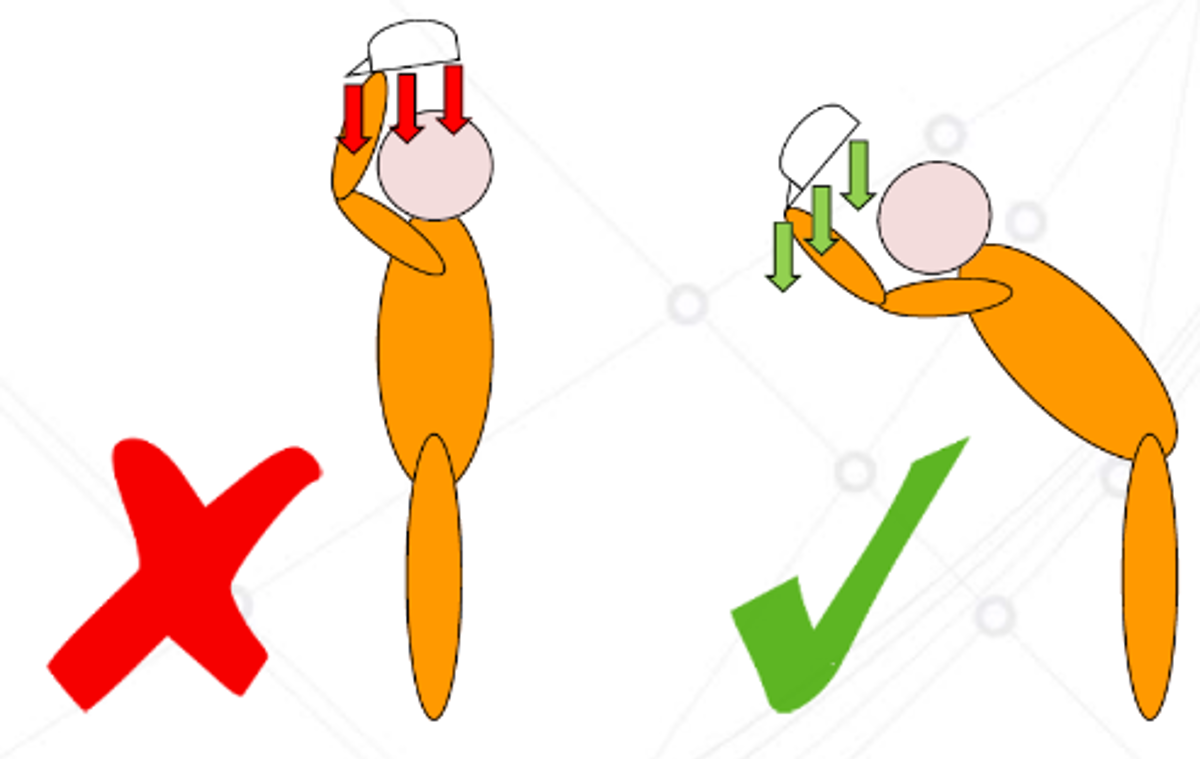
Please see Pocket Safety Card Protect your eyes.
IMCA Safety Flashes summarise key safety matters and incidents, allowing lessons to be more easily learnt for the benefit of the entire offshore industry.
The effectiveness of the IMCA Safety Flash system depends on the industry sharing information and so avoiding repeat incidents. Incidents are classified according to IOGP's Life Saving Rules.
All information is anonymised or sanitised, as appropriate, and warnings for graphic content included where possible.
IMCA makes every effort to ensure both the accuracy and reliability of the information shared, but is not be liable for any guidance and/or recommendation and/or statement herein contained.
The information contained in this document does not fulfil or replace any individual's or Member's legal, regulatory or other duties or obligations in respect of their operations. Individuals and Members remain solely responsible for the safe, lawful and proper conduct of their operations.
Share your safety incidents with IMCA online. Sign-up to receive Safety Flashes straight to your email.