A reminder on watertight doors
- Safety Flash
- Published on 16 April 2024
- Generated on 7 June 2026
- IMCA SF 08/24
- 2 minute read
Watertight doors that ought have been secured shut, were observed open during a safety walkaround.
What happened?
Watertight doors that ought have been secured shut, were observed open during a safety walkaround. It’s worth reiterating the importance of watertight doors – the clue is in the name. Watertight doors are special types of doors found on vessels, which prevent the ingress of water from one compartment to other during flooding or accidents, and therefore act as a safety barrier limiting the spread of water inside the vessel.
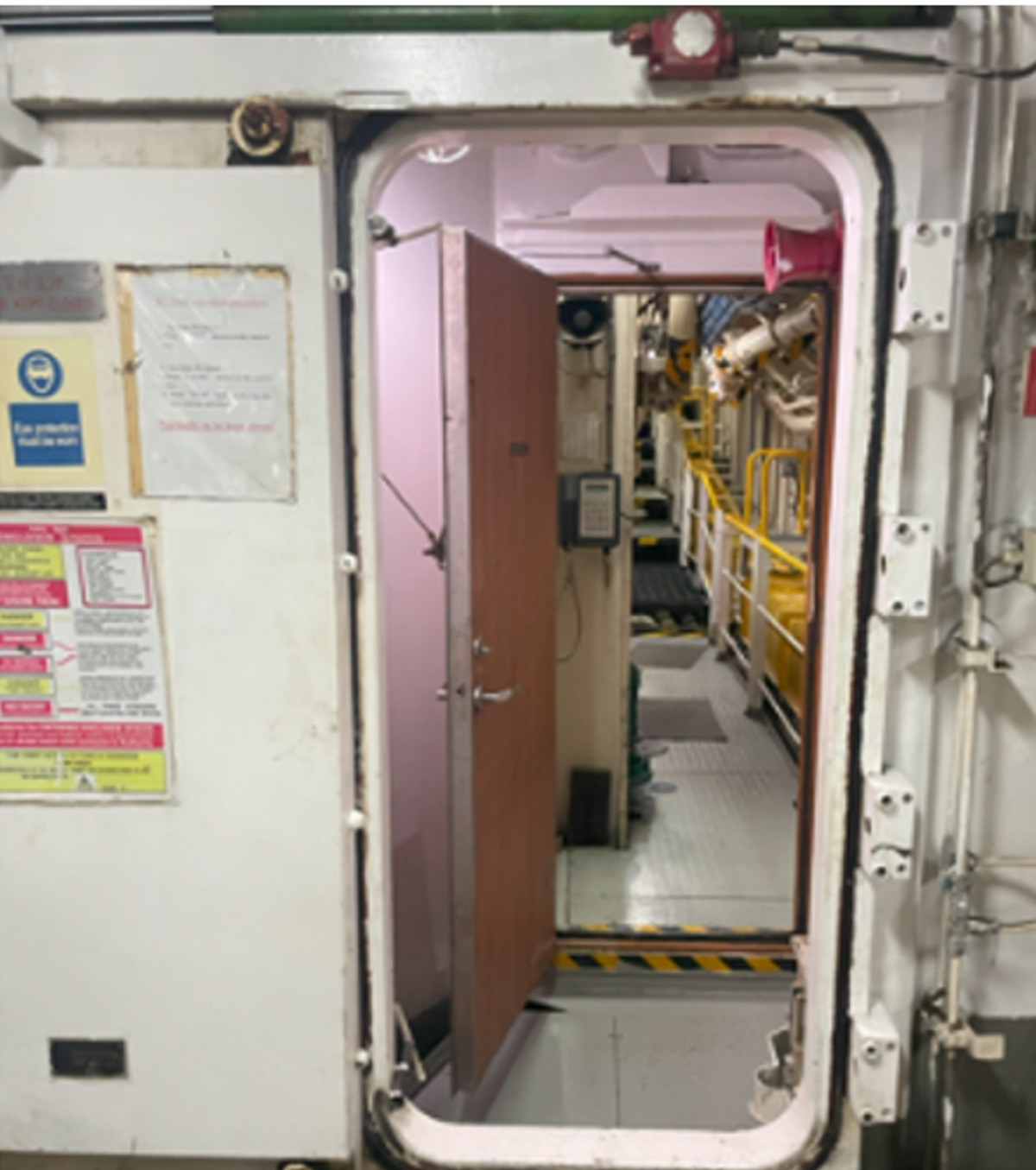
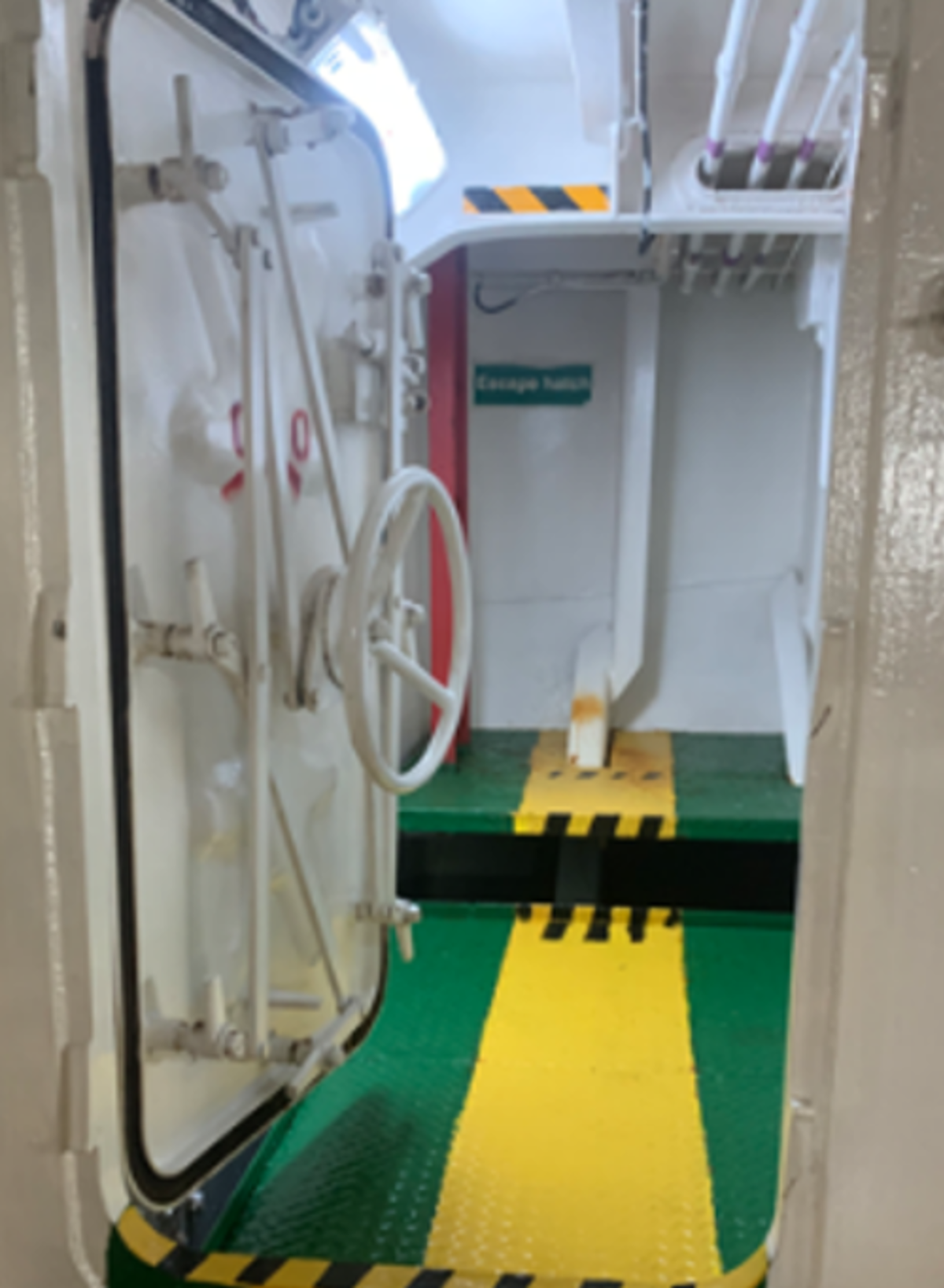
SOLAS regulations mandate that watertight doors should be kept closed at sea except when in use – i.e. when there is the need for crew to pass through them. (SOLAS: Chapter II-1, Part B-4, Regulation 22). The company’s own rules mandated this also: All watertight doors, scuttles, and fittings below the main deck shall always remain closed except when in use.
What was the cause?
- It was noted, after further investigation during review of similar cases on two other fleet vessels, that watertight doors were left open after the regular engine room walk around, as this was a regular activity and there was “no point to open and close each time”.
- It was found that some crew were not aware of the relevant SOLAS and SMS requirements or the importance of keeping watertight doors closed at sea in case of emergency.
IMCA notes: In this case, it seems easy and simple to leave the watertight door open – and thus do things in an unsafe way. What could we do in this case to make it difficult to work in an unsafe way? Is there a way here to make it easy and simple to work in a safe way?
Lessons
- Look out for yourself your colleagues and others around you.
- Take 5 seconds to think about a task before you start.
- Don’t take shortcuts in safety to get the job done faster.
- If it’s unsafe – STOP THE JOB!
Related Safety Flashes
-
IMCA SF 11/23
3 May 2023
-
-
IMCA SF 01/22
10 January 2022
-
-
IMCA SF 12/21
27 April 2021
-
-
IMCA SF 06/21
23 February 2021
-
-
IMCA SF 03/12
4 April 2012
IMCA Safety Flashes summarise key safety matters and incidents, allowing lessons to be more easily learnt for the benefit of the entire offshore industry.
The effectiveness of the IMCA Safety Flash system depends on the industry sharing information and so avoiding repeat incidents. Incidents are classified according to IOGP's Life Saving Rules.
All information is anonymised or sanitised, as appropriate, and warnings for graphic content included where possible.
IMCA makes every effort to ensure both the accuracy and reliability of the information shared, but is not be liable for any guidance and/or recommendation and/or statement herein contained.
The information contained in this document does not fulfil or replace any individual's or Member's legal, regulatory or other duties or obligations in respect of their operations. Individuals and Members remain solely responsible for the safe, lawful and proper conduct of their operations.
Share your safety incidents with IMCA online. Sign-up to receive Safety Flashes straight to your email.