Dropped object – intermediate bulk container (IBC)
- Safety Flash
- Published on 24 April 2018
- Generated on 22 October 2026
- IMCA SF 09/18
- 2 minute read
An intermediate bulk container (IBC) was dropped from a crane to deck.
What happened?
The incident occurred when a vessel crane was being used with a certified lifting device to lift and move an IBC containing 1000kg of monoethylene glycol. As the IBC was moved, the liquid inside was sloshed around (owing to the ‘free surface’ effect) which changed the centre of gravity. This change in the centre of gravity caused the IBC to rotate, resulting in the lift rigging device being unable to support the load. Subsequently the IBC fell approximately 3.5 metres to the deck and burst open, spilling the contents. The spill was contained onboard with no pollution to the environment.
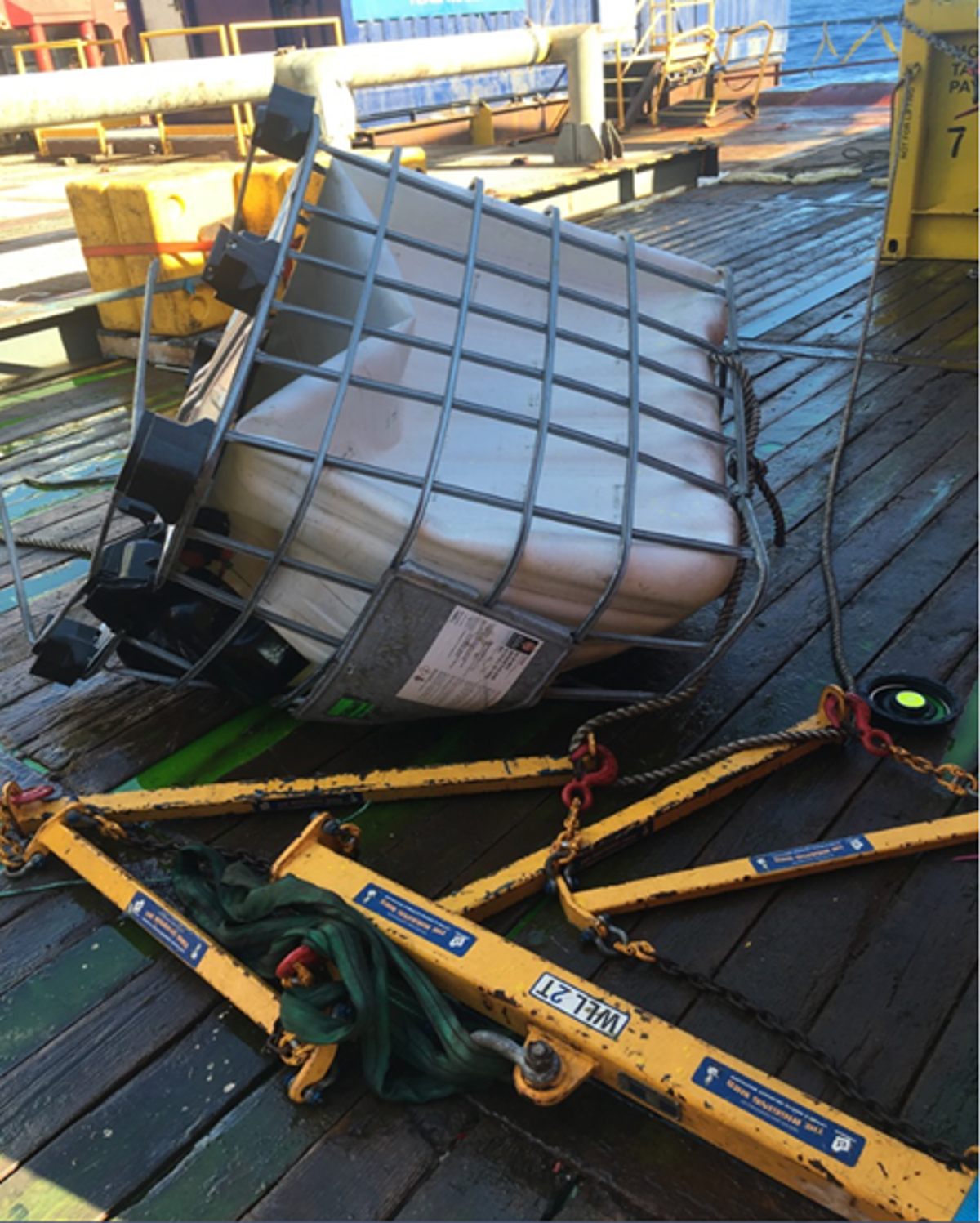
Result of dropped object – IBC after loss of load
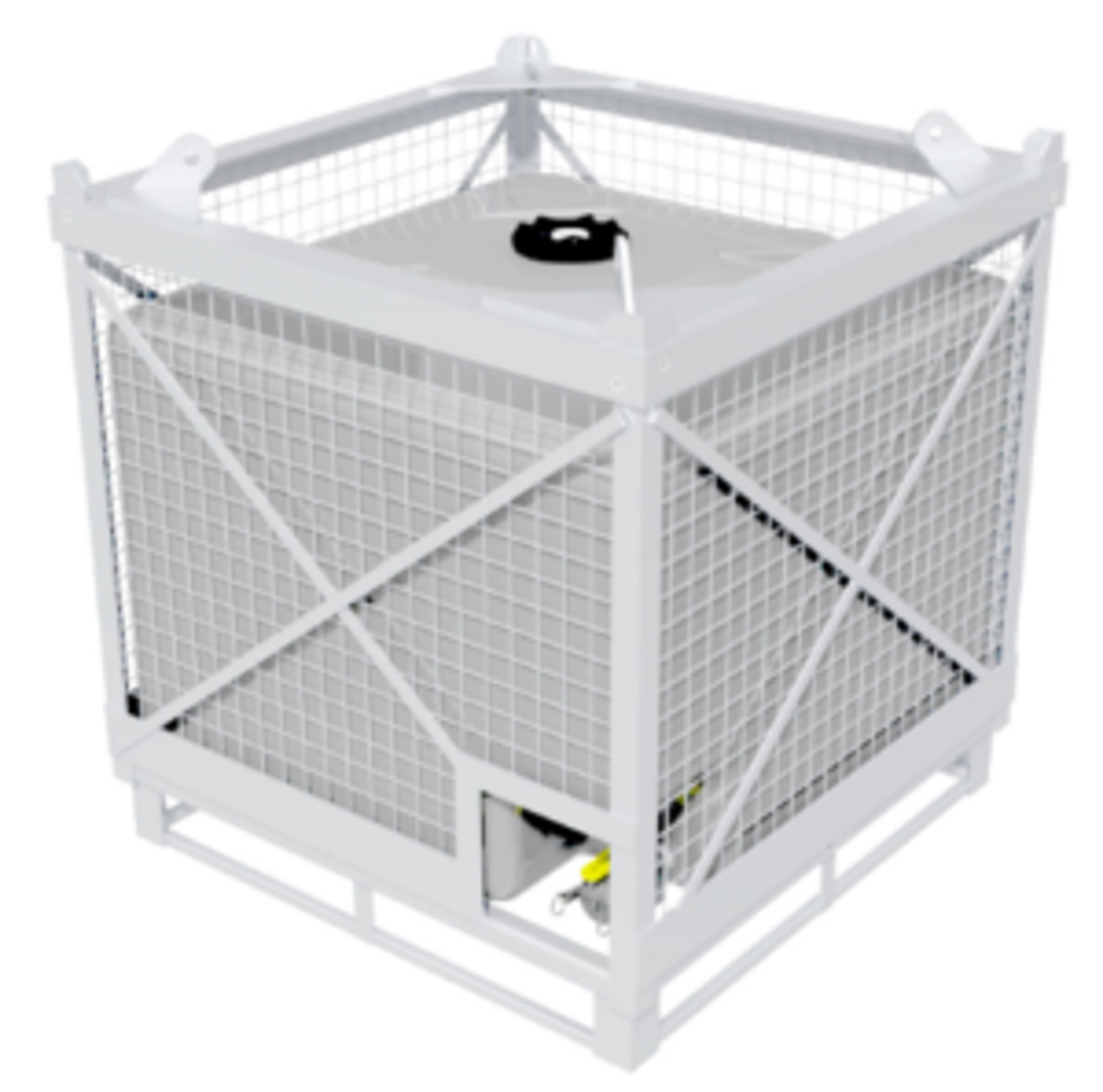
An IBC stored within appropriately designed lifting frame (note lift points at top of frame)
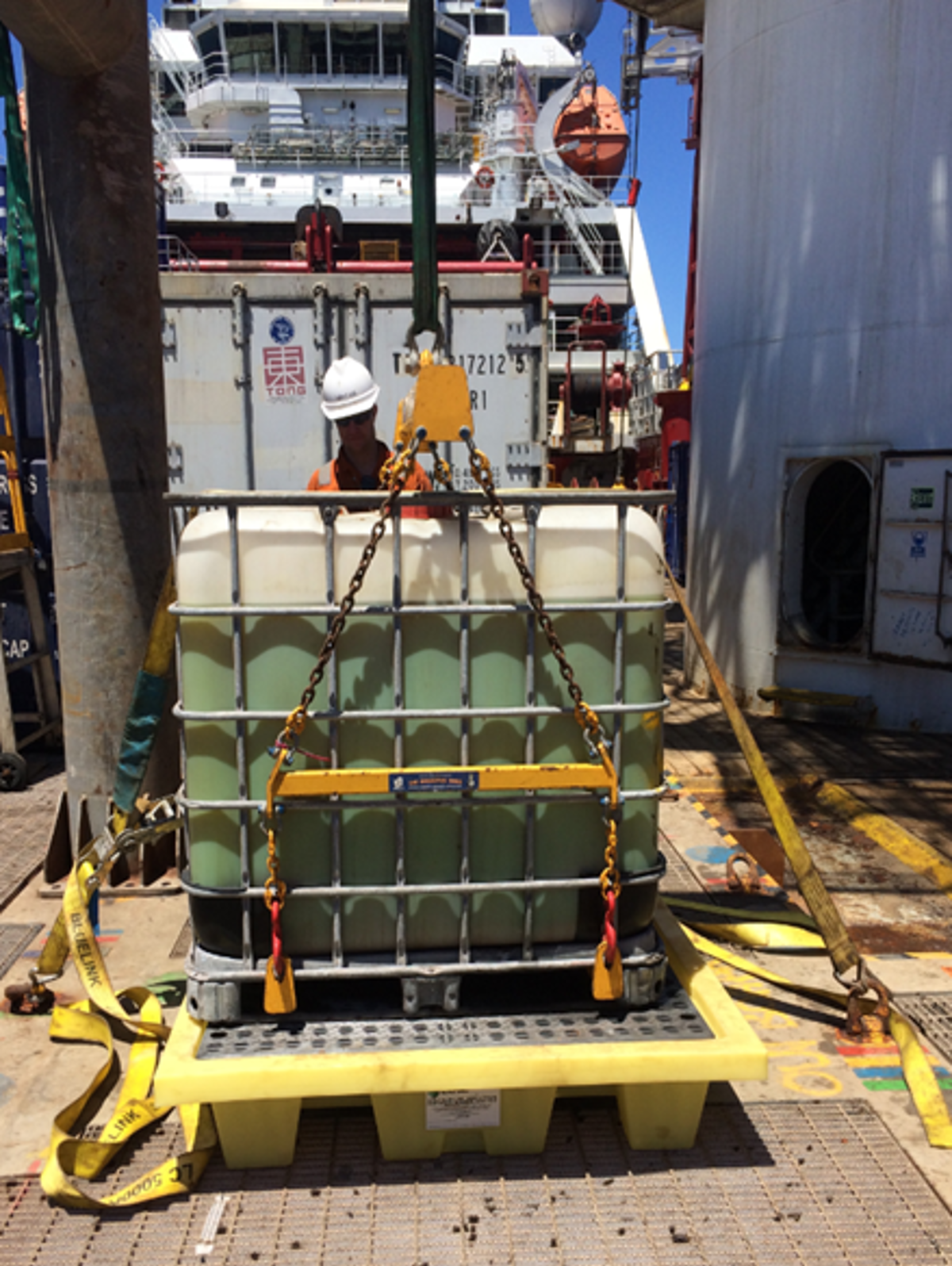
Lifting arrangement used in this incident (re-enactment)
What went wrong?
There was no adequate risk assessment of the effects of the possible combination of:
- The ‘free surface’ effect in the liquid within the IBC.
- Vessel movement in sea states (within limits and minor).
- Crane movement.
The rigging installed to lift the IBC – whilst certified – was of incorrect selection which created:
- Minimal resistance to side loading.
- The lift bars were able to slide under the base of the load.
- The load was lifted below the centre of gravity.
What were the causes?
Our members’ investigation is ongoing, but the current cause analysis determined:
- Inadequate risk assessment of the lift.
- Inappropriate selection of rigging arrangement.
- Inappropriate design of storage equipment/containers for liquids which require movement in the offshore environment.
What actions were taken? What lessons were learned?
- Review and re-assess the selection and use of liquid storage containers.
- Review and re-assess the lifting and rigging arrangements in accordance to identified international standards.
- Lift plans and associated risk assessments should include not only lifting and rigging arrangements but also possible movement of loads within storage containers which may affect centre of gravity.
Our member also prohibited the lifting of IBC’s utilising ‘pallet’ type rigging arrangements, and made arrangements to transfer all IBCs into appropriately designed and certified lifting frames.
Related Safety Flashes
-
IMCA SF 23/16
13 September 2016
-
IMCA SF 17/14
31 October 2014
-
IMCA SF 18/13
20 December 2013
IMCA Safety Flashes summarise key safety matters and incidents, allowing lessons to be more easily learnt for the benefit of the entire offshore industry.
The effectiveness of the IMCA Safety Flash system depends on the industry sharing information and so avoiding repeat incidents. Incidents are classified according to IOGP's Life Saving Rules.
All information is anonymised or sanitised, as appropriate, and warnings for graphic content included where possible.
IMCA makes every effort to ensure both the accuracy and reliability of the information shared, but is not be liable for any guidance and/or recommendation and/or statement herein contained.
The information contained in this document does not fulfil or replace any individual's or Member's legal, regulatory or other duties or obligations in respect of their operations. Individuals and Members remain solely responsible for the safe, lawful and proper conduct of their operations.
Share your safety incidents with IMCA online. Sign-up to receive Safety Flashes straight to your email.