Vessel made contact with rig legs
- Safety Flash
- Published on 9 May 2018
- Generated on 27 October 2026
- IMCA SF 10/18
- 2 minute read
A vessel came into contact with the legs of a rig – however, there was no damage to the vessel.
What happened?
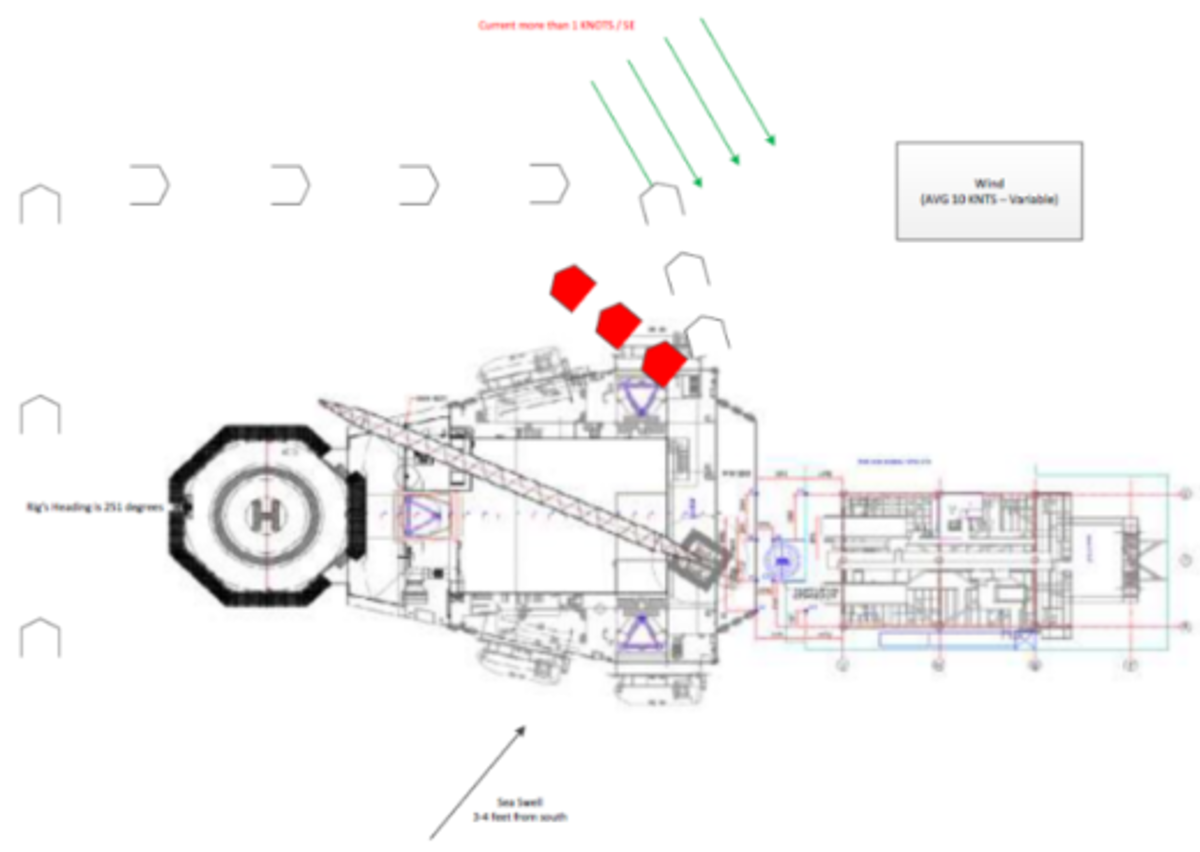
The incident occurred when the vessel was moving astern down the prevailing current, to approach the starboard side of the rig. Because the cargo was located on the vessel’s forward deck, the vessel had to approach within two metres of the rig in order to allow the hook to reach the load. When the vessel reached her offload/snatch position below the crane’s hook, the vessel’s bow turned slightly to port, which allowed the current to catch the vessel’s starboard side. The Master observed the vessel drifting towards the rig’s starboard side aft leg and he immediately decided to abort the operation. The vessel was manoeuvred forward with both engines to escape; unfortunately, the port quarter slightly touched the rig’s starboard side aft leg.
What went wrong? What were the causes?
The findings noted were as follows:
- The Master permitted the operation to take place on the starboard or weather side of the rig and did not request to have the work done from the rig’s port or lee side.
- The effect of wind and current played a vital role in vessel’s approach to and hitting the rig’s leg.
- The Master’s decision to approach was not properly risk assessed – he misjudged the direction and effect of the current during manoeuvring.
- It was not evident that the lifting operation was covered in a specific risk assessment for that particular project.
- The Master had no robust plan for escape manoeuvring and did not plan when to abort manoeuvring.
What actions were taken? What lessons were learned?
- A better understanding was needed of the risks and hazards of manoeuvring against the current.
- A more detailed prior agreement should have been made between the vessel Master and the offshore installation manager (OIM) with regard to cargo and lifting operations.
- Escape routes and plans should be considered before starting any critical manoeuvring.
- The vessel Master – rather than the OIM or the client – has the overriding authority to accept or reject the operation based on judgment about the weather limitations and circumstances.
Related Safety Flashes
-
IMCA SF 23/17
21 September 2017
-
-
IMCA SF 07/17
28 March 2017
-
IMCA Safety Flashes summarise key safety matters and incidents, allowing lessons to be more easily learnt for the benefit of the entire offshore industry.
The effectiveness of the IMCA Safety Flash system depends on the industry sharing information and so avoiding repeat incidents. Incidents are classified according to IOGP's Life Saving Rules.
All information is anonymised or sanitised, as appropriate, and warnings for graphic content included where possible.
IMCA makes every effort to ensure both the accuracy and reliability of the information shared, but is not be liable for any guidance and/or recommendation and/or statement herein contained.
The information contained in this document does not fulfil or replace any individual's or Member's legal, regulatory or other duties or obligations in respect of their operations. Individuals and Members remain solely responsible for the safe, lawful and proper conduct of their operations.
Share your safety incidents with IMCA online. Sign-up to receive Safety Flashes straight to your email.