Uncontrolled movement of spreader bar
- Safety Flash
- Published on 3 May 2023
- Generated on 29 September 2026
- IMCA SF 11/23
- 2 minute read
A vessel was set up alongside a barge in preparation for the subsea deployment of a 16″ (40cm) spool.
What happened?
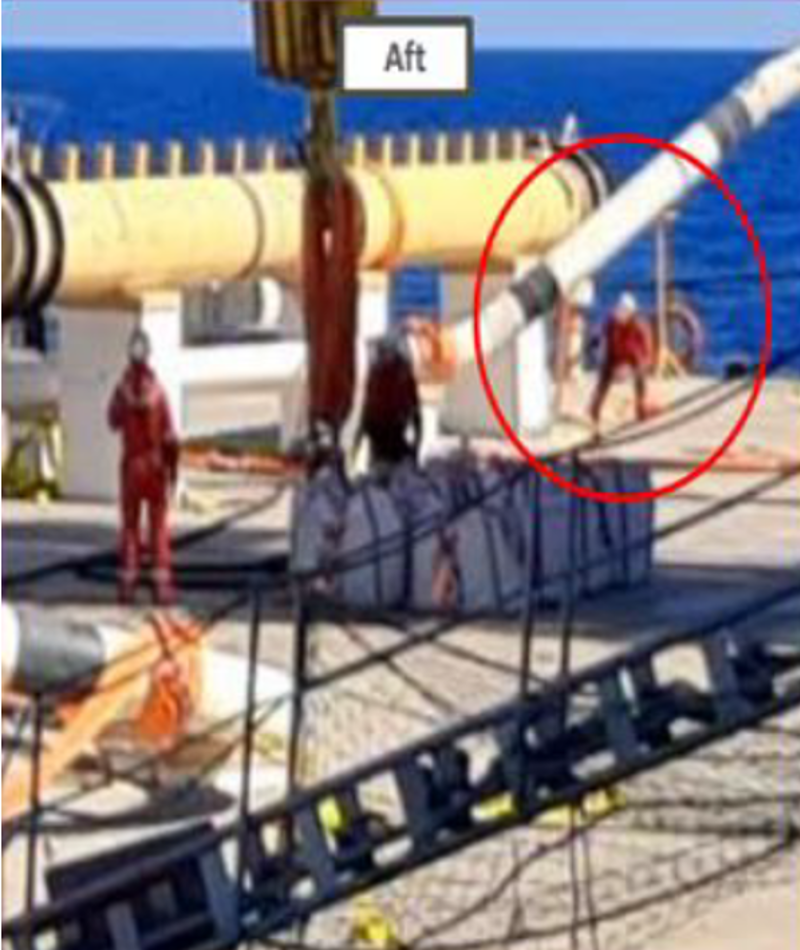
The spreader bar sea-fastenings were removed by the deck crew and as the crane raised the rigging, the spreader bar rotated uncontrollably causing it to fall from its supports, with the forward end landing on deck and aft end landing on the spool.
The potential for rotation was unforeseen; a rigger who was nearby had to move quickly to get out of the line of fire. There were no injuries.
Underlying causes
- The roll potential was identified by the onshore mobilisation team; however, it was not communicated to the offshore team.
- The procedure and lift plan did not detail the correct sequence for sea-fastening removal and lifting.
- There was a failure to identify and manage change requirements.
- The design / drawings presented at the risk review were not detailed enough to allow robust assessment of associated risks.
- The hazard of roll potential was not identified at design stage and was not detailed in design requirements.
Learnings
- Emphasise requirement to carry out a tool-box task before starting a task, and after a worksite inspection, so that all participants are made aware of all foreseeable hazards and implement suitable and sufficient control measures.
- Perform post-task debriefs, considering the following:
- What went well?
- What was different than planned or expected?
- What could have gone better?
- What surprised you?
- What changes were made to address the issue or condition discovered?
- What hazards/safeguards/issues still require follow up?
- What would you change or do differently next time?
- What went well?
- Ensure sea fastening design requirements and the need for suitable technical review of full lifting operation is communicated.
Related safety flashes
-
IMCA SF 01/22
10 January 2022
-
-
IMCA SF 11/18
4 June 2018
-
-
IMCA SF 21/17
23 August 2017
-

IMCA Safety Flashes summarise key safety matters and incidents, allowing lessons to be more easily learnt for the benefit of the entire offshore industry.
The effectiveness of the IMCA Safety Flash system depends on the industry sharing information and so avoiding repeat incidents. Incidents are classified according to IOGP's Life Saving Rules.
All information is anonymised or sanitised, as appropriate, and warnings for graphic content included where possible.
IMCA makes every effort to ensure both the accuracy and reliability of the information shared, but is not be liable for any guidance and/or recommendation and/or statement herein contained.
The information contained in this document does not fulfil or replace any individual's or Member's legal, regulatory or other duties or obligations in respect of their operations. Individuals and Members remain solely responsible for the safe, lawful and proper conduct of their operations.
Share your safety incidents with IMCA online. Sign-up to receive Safety Flashes straight to your email.