USCG: Role of the main propulsion lube oil system in the loss of the El Faro
- Safety Flash
- Published on 14 June 2018
- Generated on 26 October 2026
- IMCA SF 12/18
- 2 minute read
The United States Coast Guard (USCG) has distributed Marine Safety Alert 04-18
“Compliance with SOLAS and USCG Regulations for Operation of Main Propulsion and Essential Auxiliary Machinery: Lessons Learned from the SS El Faro Casualty,” in order to inform operators of the role that the main propulsion lube oil system was found to have played in the El Faro casualty, in which 33 lives were lost. This alert also recommends that operators, especially ship engineers, review the operational procedures and limitations of vital propulsion machinery, and verify compliance with International Convention for the Safety of Life at Sea (SOLAS), Classification Society and regulatory standards.
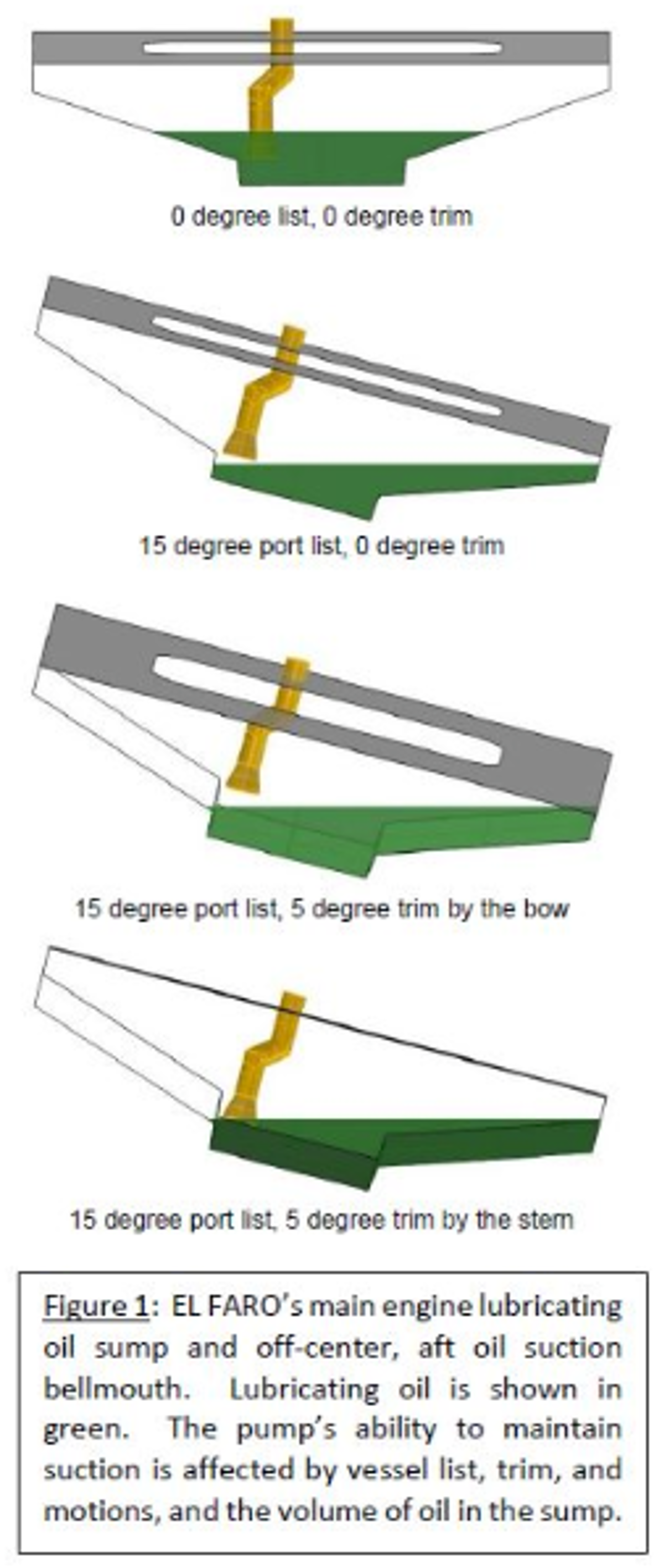
The USCG Marine Board Report on the sinking of the El Faro revealed that the loss of propulsion during extremely heavy weather was a contributing factor to the sinking of the vessel. The exact operational status of all vital El Faro engineering equipment during the hours preceding the casualty could not be determined. However, bridge audio recordings indicated that the vessel lost lube oil pressure to the main propulsion turbine and reduction gear bearings, resulting in loss of propulsion. It is believed that the vessel’s substantial list, coupled with trim by the bow, caused the main engine lube oil pump to lose suction. A detailed modelling and static analysis of El Faro’s lube oil system determined that a severe inclination of the ship, coupled with a relatively low volume of oil in the sump, would likely result in a loss of pump suction.
Figure 1 below shows examples (at a constant lube oil volume) of the position of the suction bellmouth relative to the level of lube oil in the sump in several heel and trim conditions. This static model does not attempt to address the sloshing of lube oil in the sump caused by vessel motions.
The USCG Alert 04-18 can be seen on the USCG website.
IMCA Safety Flashes summarise key safety matters and incidents, allowing lessons to be more easily learnt for the benefit of the entire offshore industry.
The effectiveness of the IMCA Safety Flash system depends on the industry sharing information and so avoiding repeat incidents. Incidents are classified according to IOGP's Life Saving Rules.
All information is anonymised or sanitised, as appropriate, and warnings for graphic content included where possible.
IMCA makes every effort to ensure both the accuracy and reliability of the information shared, but is not be liable for any guidance and/or recommendation and/or statement herein contained.
The information contained in this document does not fulfil or replace any individual's or Member's legal, regulatory or other duties or obligations in respect of their operations. Individuals and Members remain solely responsible for the safe, lawful and proper conduct of their operations.
Share your safety incidents with IMCA online. Sign-up to receive Safety Flashes straight to your email.