Near-miss: Bilge cover left open
- Safety Flash
- Published on 30 June 2016
- Generated on 26 October 2026
- IMCA SF 17/16
- 2 minute read
A member has reported an incident in which a bilge cover was left open.
What happened?
During a ‘routine’ walk around the vessel, crew noticed in the engine room that a bilge cover had been left open. There was no barrier or signage in place. On investigation the bilge cover had been opened to permit brine pump maintenance work. This work had been interrupted and the employees had left the job, putting in place no safety precautions, but with the intent of returning later.
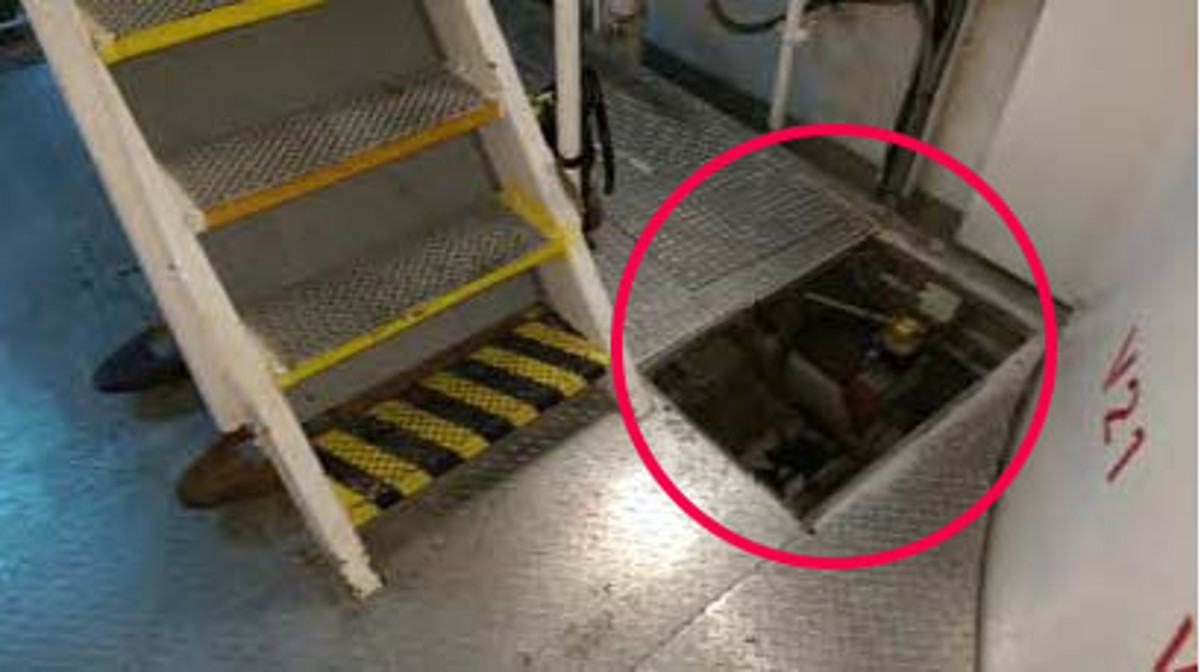
Our member noted the following:
There had recently been two similar near misses in which covers have been left open in the engine rooms on company vessels. The investigation and lessons learned has been included to the monthly fleet safety meeting presentations and distributed to all fleet for discussion, but the lessons were clearly not being learned.
Our member took the following actions:
- Stopped the job: the opened engine room bilge covers were closed and returned to a safe condition.
- A safety stand down was conducted with focus on maintaining and following the correct control of work procedures.
Key Lessons Learnt:
- Maintenance processes in the engine room should be planned, all risks assessed with further implementation of control measures where needed.
- Any openings or potential trip hazards should be controlled to ensure any risk is as low as reasonably practical.
- There should be effective supervision at all times.
- Vessel crews ‘not learning the lessons’ – further effort required to address this.
Related Safety Flashes
-
IMCA SF 20/15
3 December 2015
-
IMCA SF 08/08
24 April 2008
IMCA Safety Flashes summarise key safety matters and incidents, allowing lessons to be more easily learnt for the benefit of the entire offshore industry.
The effectiveness of the IMCA Safety Flash system depends on the industry sharing information and so avoiding repeat incidents. Incidents are classified according to IOGP's Life Saving Rules.
All information is anonymised or sanitised, as appropriate, and warnings for graphic content included where possible.
IMCA makes every effort to ensure both the accuracy and reliability of the information shared, but is not be liable for any guidance and/or recommendation and/or statement herein contained.
The information contained in this document does not fulfil or replace any individual's or Member's legal, regulatory or other duties or obligations in respect of their operations. Individuals and Members remain solely responsible for the safe, lawful and proper conduct of their operations.
Share your safety incidents with IMCA online. Sign-up to receive Safety Flashes straight to your email.