MSF: Cut Hand Whilst Cleaning / Hand Safety
- Safety Flash
- Published on 12 July 2021
- Generated on 26 October 2026
- IMCA SF 19/21
- 2 minute read
The Marine Safety Forum (MSF) has published Safety Alert 21-10 relating to a crew member who suffered an unpleasant cut to the hand whilst engaged in routine cleaning.
What happened?
Whilst cleaning cabinets in the galley area, a crew member on a vessel sustained a bad cut to the hand from a sharp edge. This resulted in a section of skin being sliced off. The MSF notes that this was yet another preventable injury caused during a routine job.
During our work and daily lives, we use our hands continuously, our hands are valuable and need proper care. When it comes to protecting different parts of the body from lacerations, hands are the most important. Hand injuries are difficult to repair because of the complexity of the hand.
The MSF notes that most hand injuries can be associated with:
- working with machinery or equipment
- the materials being used or the job process being hazardous
- hand tools or powered hand tools that may be faulty or improperly used.
The MSF notes that the most common causes of hand injuries are:
- sharp edges
- lack of awareness
- disregard for safety procedures
- distractions.

Actions
- Whilst cleaning always be aware of sharp edges.
- Ensure safety checks in the galley are performed and if sharp edges are discovered they are removed, or a warning sign is put in place.
- Use most appropriate type of safety gloves for task being performed and check equipment used for cleaning.
- Hand and finger safety to be added to the risk assessments.
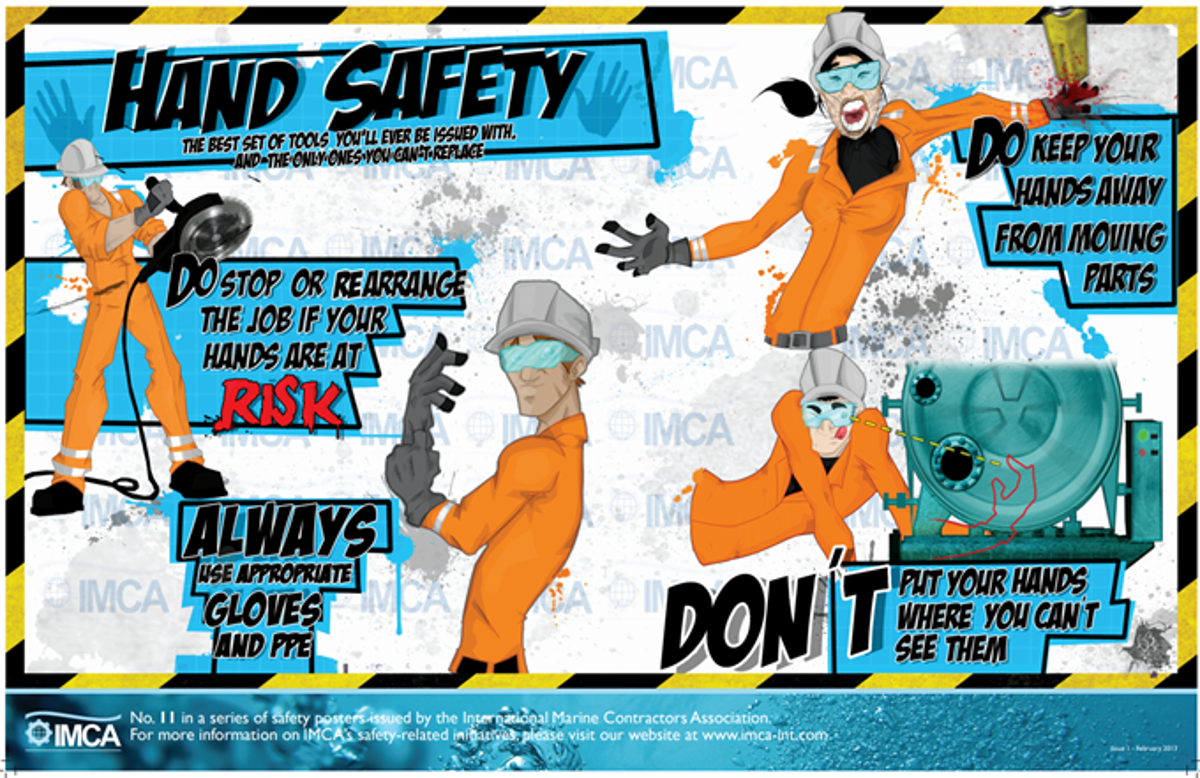
IMCA and the MSF think alike on this matter, that hand and finger safety is an area where the greatest focus may be needed. Please STOP and think!! Watch your hands – you’ve only got one set!!
Members may wish to review:
- IMCA safety promotional video HSS036 In the line of fire
- IMCA poster on hand safety
Related Safety Flashes
-
IMCA SF 13/19
4 June 2019
-
-
IMCA SF 28/17
7 November 2017
-
-
IMCA SF 28/16
18 October 2016
-
IMCA SF 09/15
23 June 2015
-
IMCA SF 05/15
2 April 2015
-
IMCA SF 22/20
24 July 2020
-
-
IMCA SF 22/20
24 July 2020
-
-
IMCA SF 22/20
24 July 2020
-
-
IMCA SF 16/19
5 July 2019
-
-
IMCA SF 28/18
18 December 2018
-
-
IMCA SF 25/18
9 November 2018
-
-
IMCA SF 13/18
22 June 2018
-

IMCA Safety Flashes summarise key safety matters and incidents, allowing lessons to be more easily learnt for the benefit of the entire offshore industry.
The effectiveness of the IMCA Safety Flash system depends on the industry sharing information and so avoiding repeat incidents. Incidents are classified according to IOGP's Life Saving Rules.
All information is anonymised or sanitised, as appropriate, and warnings for graphic content included where possible.
IMCA makes every effort to ensure both the accuracy and reliability of the information shared, but is not be liable for any guidance and/or recommendation and/or statement herein contained.
The information contained in this document does not fulfil or replace any individual's or Member's legal, regulatory or other duties or obligations in respect of their operations. Individuals and Members remain solely responsible for the safe, lawful and proper conduct of their operations.
Share your safety incidents with IMCA online. Sign-up to receive Safety Flashes straight to your email.