Oxygen and acetylene hose caught fire
- Safety Flash
- Published on 11 August 2017
- Generated on 27 October 2026
- IMCA SF 20/17
- 3 minute read
On investigating the source of smoke and flames that were noticed near their work location, workers discovered some oxygen and acetylene hoses on fire.
What happened?
A small fire was discovered in oxygen/acetylene hoses. Workers heard an “air blowing sound” and left their work location to investigate. Smoke and flames were noticed and a closer look revealed oxygen and acetylene hoses on fire.
The fire alarm was raised; one person immediately grabbed and kinked the hoses to close the supply of gas. This ceased the fire before another person came with an extinguisher, which at that point was no longer needed.
The valves on the gas cylinders (located some distance away) were closed, and the hoses depressurised and disconnected. There were no injuries, just some slight material damage.
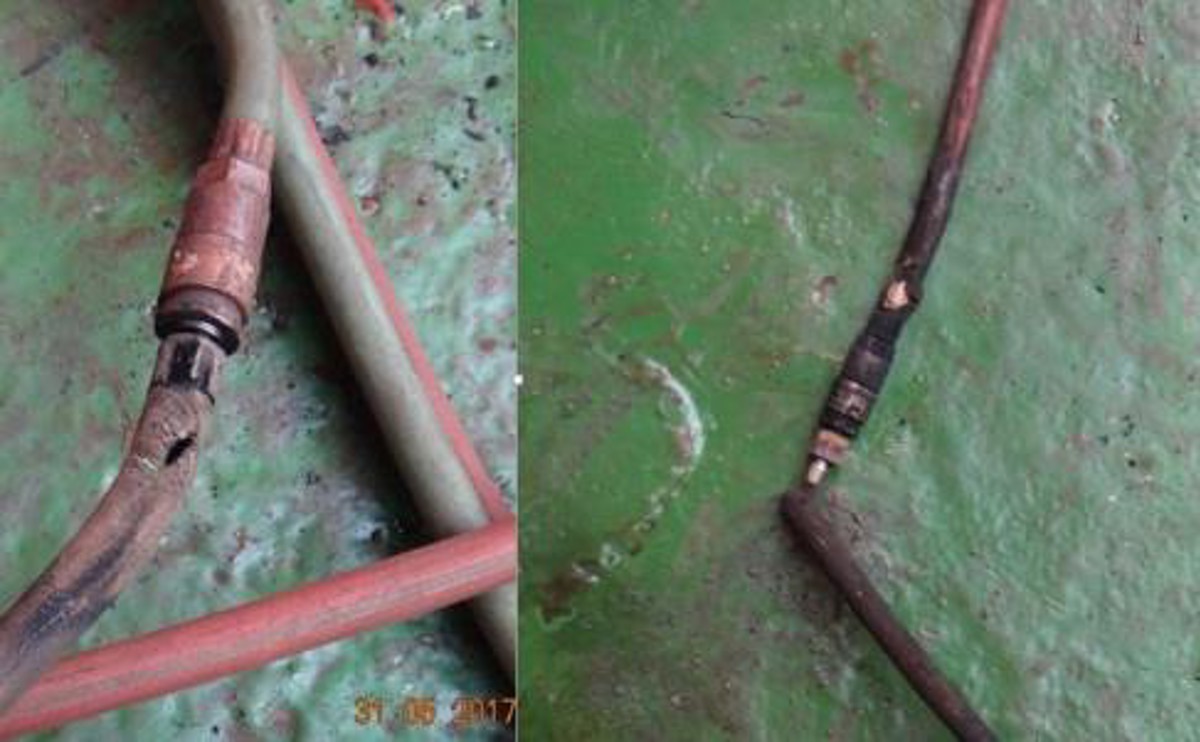
At the time of the incident:
- No personnel were working in the area.
- No hot work activities were ongoing in the area.
- Gas hoses were found contaminated with a few hydraulic oil stains.
- Gas hoses were in a narrow-edged area.
What went wrong? What were the causes?
Oxygen is very reactive. Pure oxygen, at high pressure – such as from a cylinder – can react violently with common materials, such as oil and grease, resulting in a spontaneous fire. Also, other materials may catch fire spontaneously.
A leaking valve or hose in a poorly ventilated room or confined space also can quickly increase the oxygen concentration to a dangerous level.
The air we breathe contains about 21% oxygen. Even a small increase in the oxygen level (called oxygen enrichment) in the air – to just 24% – can create a dangerous situation.
To avoid the risk of fires and explosions when oxygen comes into contact with oil and grease, it is important that equipment used for welding and cutting is not allowed to become contaminated with these materials.
Lessons learned
Our member notes that in this particular case the following workplace conditions could have contributed to the incident:
- Sharp edges and a surface that could have damaged the hose.
- Oil residues that could have contaminated the hose.
- Narrow, almost confined space conditions, with potential lack of ventilation that could have contributed to the build-up of the oxygen level.
Actions - What should you do if you suspect oxygen enrichment from an oxygen leak?
- Turn off the oxygen supply.
- Extinguish cigarettes and open flames.
- Make sure the room is well ventilated.
- Identify and repair the source of the leak.
Useful information regarding these hazards can be found in the leaflet Oxygen Use in the Workplace, published by the UK Health and Safety Executive (UK HSE).
Related safety flashes
-
IMCA SF 17/17
13 July 2017
-
-
IMCA SF 02/14
20 February 2014
-
IMCA SF 07/06
21 June 2006

IMCA Safety Flashes summarise key safety matters and incidents, allowing lessons to be more easily learnt for the benefit of the entire offshore industry.
The effectiveness of the IMCA Safety Flash system depends on the industry sharing information and so avoiding repeat incidents. Incidents are classified according to IOGP's Life Saving Rules.
All information is anonymised or sanitised, as appropriate, and warnings for graphic content included where possible.
IMCA makes every effort to ensure both the accuracy and reliability of the information shared, but is not be liable for any guidance and/or recommendation and/or statement herein contained.
The information contained in this document does not fulfil or replace any individual's or Member's legal, regulatory or other duties or obligations in respect of their operations. Individuals and Members remain solely responsible for the safe, lawful and proper conduct of their operations.
Share your safety incidents with IMCA online. Sign-up to receive Safety Flashes straight to your email.