Stored energy – dislodged pin causes injury
- Safety Flash
- Published on 3 June 2024
- Generated on 27 October 2026
- IMCA SF 11/24
- 3 minute read
A hydraulic jack was employed to eject a pin which resulted in the pin being released under load directly into someone’s face.
What happened?
During disconnection of a structure, a securing pin became stuck and could not be removed by hand. A hydraulic jack was employed to eject the pin which resulted in the pin being released under load directly into someone’s face. A team of four persons were removing a structure. This involved the removal of four securing pins, each weighing around 10kg. The task has been done numerous times and was usually accomplished with a hammer and drift. On this occasion, one of the pins became stuck and could not be removed. The work team decided to use a hydraulic jack to force the pin out. Initially this did not work; one of the workers moved directly into the line of fire to obtain better sight of the restriction. The worker tapped on the adjacent plate with a hammer and the pin came loose and ejected with force, hitting the worker in the face. The pin hit the bridge of the person’s safety glasses causing a laceration to the forehead. They were treated onshore and returned to work soon after the incident.
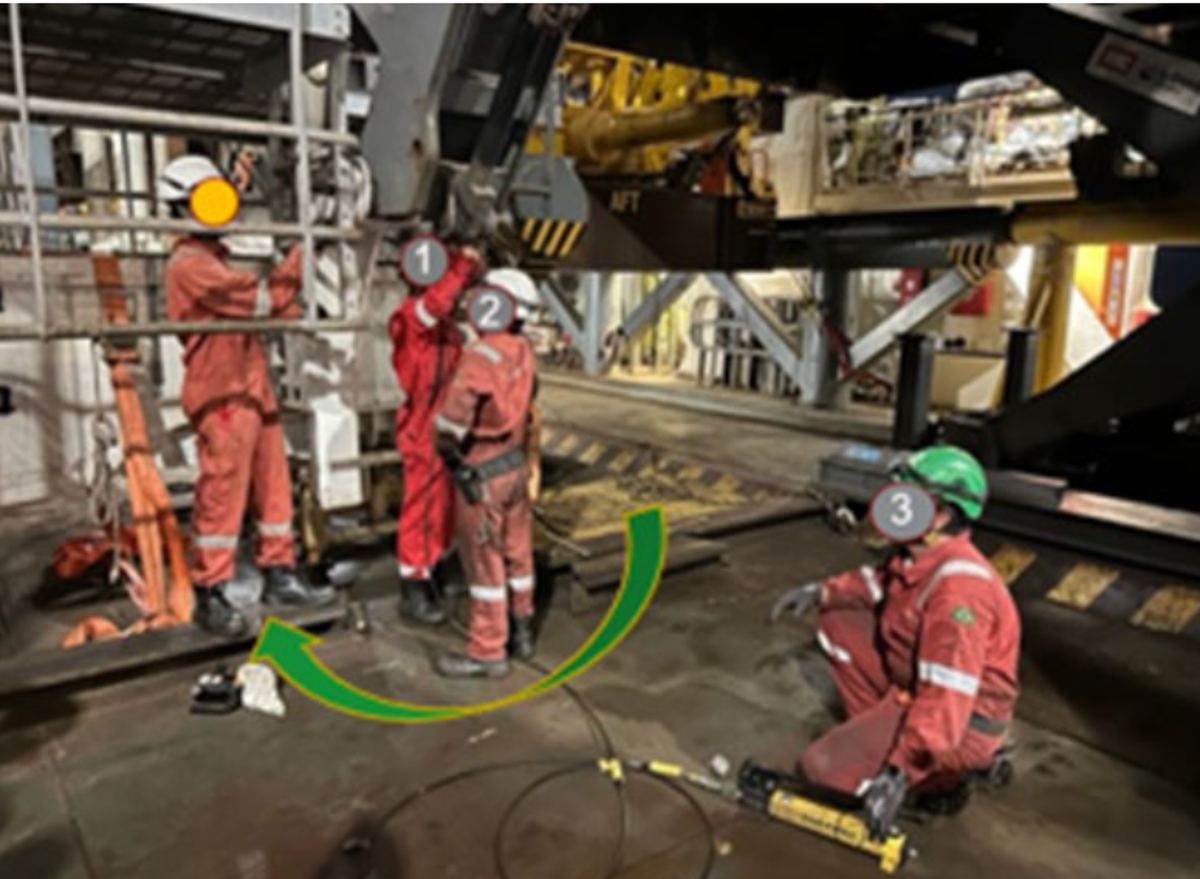
Position of person hit by pin (yellow dot)
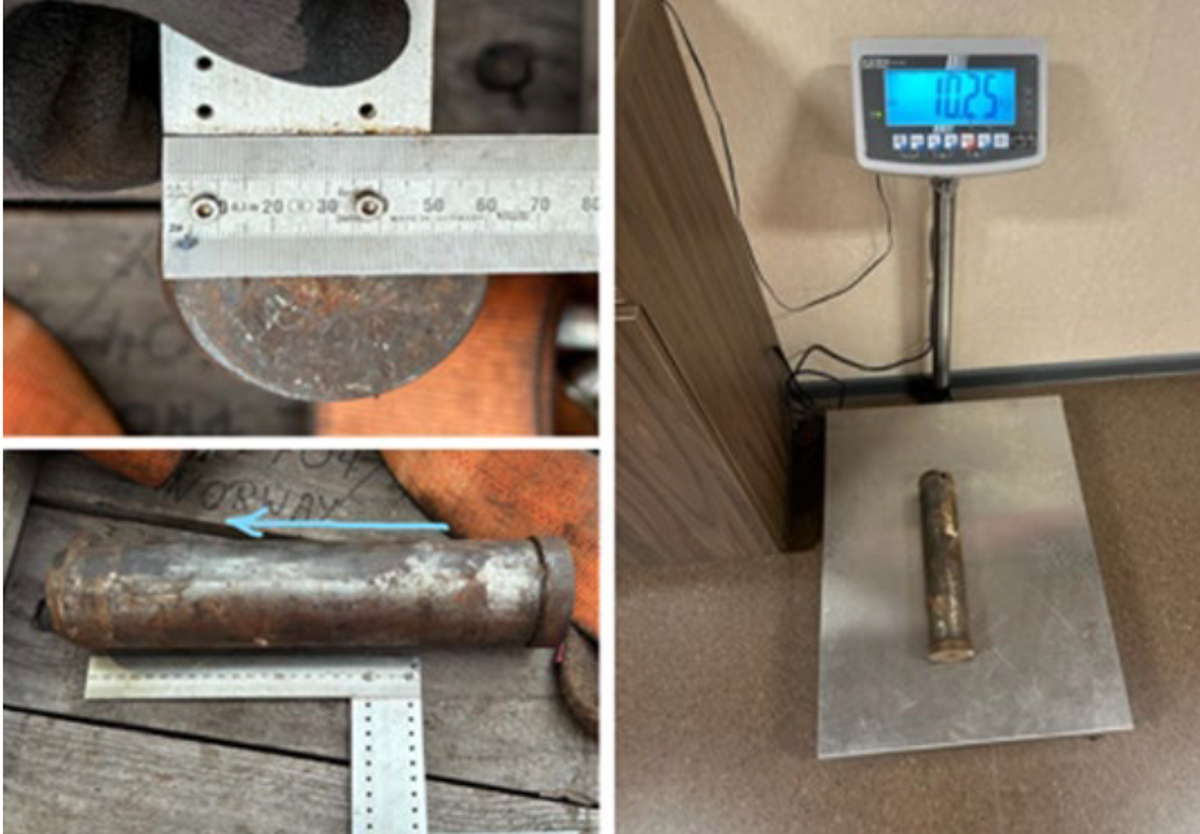
Size and weight of pin
What went wrong?
- The task risk assessment (TRA) for this task did not consider the use of a hydraulic jack for removal of the pin, nor did the toolbox talk (TBT) before starting work.
- A change was then made during the task (introduction of the jack), but the new risks were not thought through at all. Nobody in the work team thought to intervene and stop the job due to the change in method and equipment.
- During the operation of the jack, one person decided to switch positions to get a better view and to try and release the pin. That person got directly into the line of fire. There was significant stored energy now pushing behind the pin and that risk was not recognised.
Actions and lessons learned
- Our member noted that lessons were not being learned from previous incidents involving getting in the line of fire. A fresh review on the line of fire risks was initiated, considering all the potential energy forms, including release of stored energy.
- If something changes during a task – stop the job, and reassess.
- Stop and think – take the time to think things through.
- An engineering solution was proposed to remove the line of fire risk while removing these pins. A proposed design of cages or catchers on each pin was put forward, such that the pins can be controllably released into an area without potential for people to be harmed.
Related Safety Flashes
-
IMCA SF 22/22
3 October 2022
-
-
IMCA SF 13/21
6 May 2021
-
-
IMCA SF 32/17
21 December 2017
-
-
IMCA SF 14/14
7 August 2014
-
IMCA SF 08/10
15 December 2010
IMCA Safety Flashes summarise key safety matters and incidents, allowing lessons to be more easily learnt for the benefit of the entire offshore industry.
The effectiveness of the IMCA Safety Flash system depends on the industry sharing information and so avoiding repeat incidents. Incidents are classified according to IOGP's Life Saving Rules.
All information is anonymised or sanitised, as appropriate, and warnings for graphic content included where possible.
IMCA makes every effort to ensure both the accuracy and reliability of the information shared, but is not be liable for any guidance and/or recommendation and/or statement herein contained.
The information contained in this document does not fulfil or replace any individual's or Member's legal, regulatory or other duties or obligations in respect of their operations. Individuals and Members remain solely responsible for the safe, lawful and proper conduct of their operations.
Share your safety incidents with IMCA online. Sign-up to receive Safety Flashes straight to your email.