Tumble dryer fire: lint ignition
- Safety Flash
- Published on 17 March 2021
- Generated on 21 October 2026
- IMCA SF 08/21
- 2 minute read
Accumulated lint trapped inside an industrial tumble dryer onboard a Member’s vessel, overheated and ignited.
What happened?
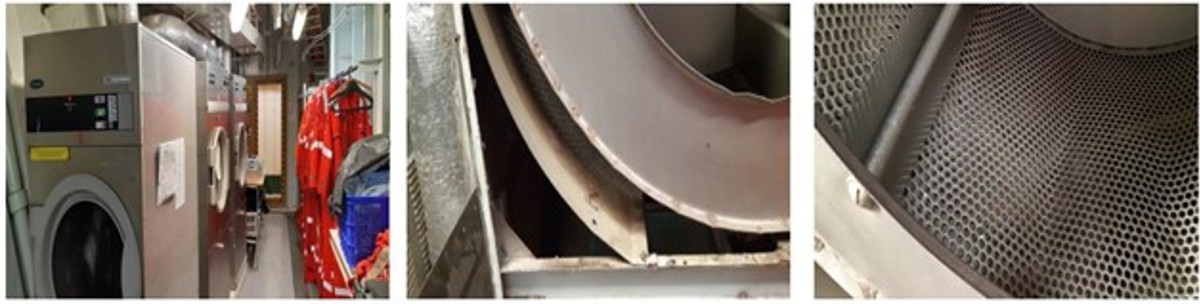
Whilst working in the vessel laundry a steward smelt burning coming from one of the three tumble driers. The steward stopped the dryer immediately, removed the contents and observed a flame coming through from the base of the rotating drum. He extinguished the fire with a portable fire extinguisher and immediately notified the bridge.
The other dryers in the laundry were subsequently isolated to inspect their filters which were found to be clean. A small amount of scorched lint was found trapped between the drum and the drum casing in the dryer: this lint had ignited. The gap between the drum and casing of the two other dryers was found to be clean.
Actions and lessons learned
Our Member drew some key lessons learned and preventive measures from this event:
- Confirm that everyone understands that they should raise the alarm before attempting to tackle a fire.
- Systems for fire prevention, detection, protection and extinguishing, should be communicated to all crew during vessel inductions and that information regularly reinforced thereafter.
- A review of manufacturer’s user guides to support operation and planned maintenance of tumble dryers – assessing where appropriate additional measures required to reduce the risk arising from operational use.
- Take extra care when assessing the condition of filters within tumble dryers – it is more difficult to identify any passing or obstructions beyond filters.
- Ensure that the design of the tumble dryer filters, drums and exhaust ducting enable sufficient access to allow for cleaning and removal of build-up of material.
- Ensure all personnel are familiar with operations, maintenance and emergency procedures for equipment and machinery they are operating.
IMCA notes: tumble dryer fires have potentially very serious consequences, particularly in a ship. Please review the Related Safety Flashes below.
Members may also wish to refer to IMCA M119 Fires in (DP) vessel.
Related Safety Flashes
-
IMCA SF 32/20
26 November 2020
-
IMCA SF 18/18
23 August 2018
-
-
IMCA SF 07/16
31 March 2016
-
IMCA SF 03/16
27 January 2016
-
IMCA SF 16/09
10 November 2009
IMCA Safety Flashes summarise key safety matters and incidents, allowing lessons to be more easily learnt for the benefit of the entire offshore industry.
The effectiveness of the IMCA Safety Flash system depends on the industry sharing information and so avoiding repeat incidents. Incidents are classified according to IOGP's Life Saving Rules.
All information is anonymised or sanitised, as appropriate, and warnings for graphic content included where possible.
IMCA makes every effort to ensure both the accuracy and reliability of the information shared, but is not be liable for any guidance and/or recommendation and/or statement herein contained.
The information contained in this document does not fulfil or replace any individual's or Member's legal, regulatory or other duties or obligations in respect of their operations. Individuals and Members remain solely responsible for the safe, lawful and proper conduct of their operations.
Share your safety incidents with IMCA online. Sign-up to receive Safety Flashes straight to your email.