MSF: Watertight door fatality
- Safety Flash
- Published on 4 September 2025
- Generated on 17 October 2026
- IMCA SF 16/25
- 2 minute read
The Marine Safety Forum (MSF) has published Safety Alert 25-09 relating to a watertight door fatality.
What happened?
An individual at a marine worksite was found in between the sliding hydraulic watertight door and the door frame. He was found unconscious and not breathing. He was brought to sick bay and assessed with no signs of life. Although actual causes have yet to be determined since the investigation is still ongoing, the purpose of sharing this alert is to facilitate reflective discussions with vessel marine crews and interested parties on the dangers posed by watertight doors.
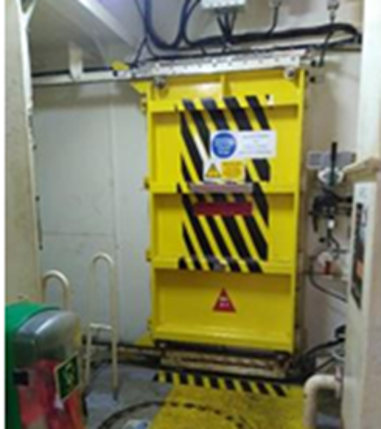
Watertight Door safety awareness
- What are watertight doors for?
- Watertight doors are there to prevent water passage between compartments, maintain buoyancy and stability; and enhance safety by limited water movement during emergencies.
- Where are they found?
- Watertight doors are typically located in underdeck areas prone to water ingress and commonly found on various types of ships and vessels, including container ships, offshore vessels, etc.
- Watertight doors are typically located in underdeck areas prone to water ingress and commonly found on various types of ships and vessels, including container ships, offshore vessels, etc.
- Types of watertight door
- Two main types of doors: hinged and sliding doors.
- Powered watertight doors can be operated locally, remotely from the bridge or have a form of automatic closure mechanism.
- Powered watertight doors are extremely heavy and powerful.
Lessons to learn
- How aware are you of the operation of power-operated doors/equipment at your work locations, and their associated risks?
- What control measures and safeguards are in place at your worksite to prevent this type of incident?
- Are they sufficient?
Members may wish to refer to:
· UK MCA (Maritime & Coastguard Agency):
-
- Marine Guidance Note 35 (M+F) Amendment 2 Accidents when using power operated watertight doors
- Code of safe working practices for merchant seafarers (COSWP) section 11.6 on Power-operated watertight doors
Related Safety Flashes
-
IMCA SF 08/24
16 April 2024
-
-
IMCA SF 05/23
16 February 2023
-
-
IMCA SF 17/23
13 July 2023
-
-
IMCA SF 09/23
4 April 2023
-


IMCA Safety Flashes summarise key safety matters and incidents, allowing lessons to be more easily learnt for the benefit of the entire offshore industry.
The effectiveness of the IMCA Safety Flash system depends on the industry sharing information and so avoiding repeat incidents. Incidents are classified according to IOGP's Life Saving Rules.
All information is anonymised or sanitised, as appropriate, and warnings for graphic content included where possible.
IMCA makes every effort to ensure both the accuracy and reliability of the information shared, but is not be liable for any guidance and/or recommendation and/or statement herein contained.
The information contained in this document does not fulfil or replace any individual's or Member's legal, regulatory or other duties or obligations in respect of their operations. Individuals and Members remain solely responsible for the safe, lawful and proper conduct of their operations.
Share your safety incidents with IMCA online. Sign-up to receive Safety Flashes straight to your email.