Dropped load (bottled water) during lifting operations
- Safety Flash
- Published on 16 July 2019
- Generated on 27 October 2026
- IMCA SF 17/19
- 1 minute read
During a routine lifting operation, a pallet laden with about 1 tonne of bottled water, slid off the pallet lifting forks and fell around 8 metres to the quayside area below.
What happened?
The banksman had to run clear of the area to avoid being struck by falling items.
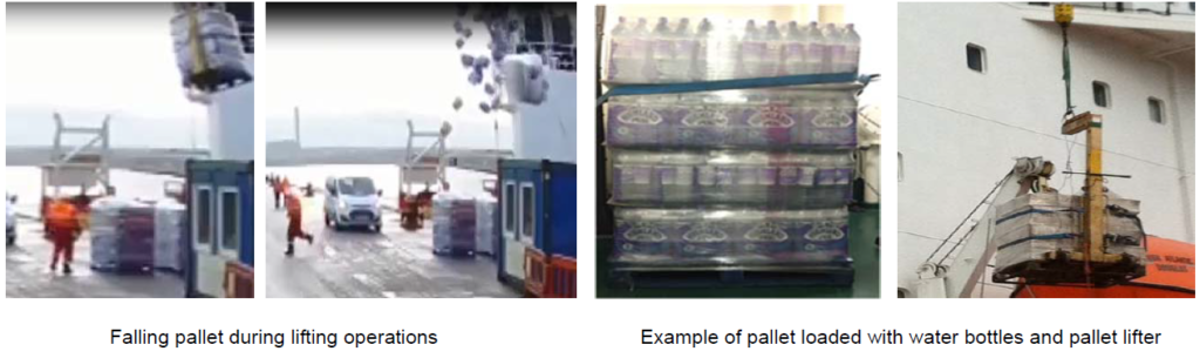
How did it happen?
Inattention, complacency and failure to follow company lifting procedures with regards to lift team size.
Actions
- Follow company procedures and standards with regards to lifting operations.
- STOP THE JOB if worksite controls are not being followed or if work is not safe.
- Ensure sufficient barrier management is in place for lifting operations.
Related Safety Flashes
-
IMCA SF 12/19
28 May 2019
-
-
IMCA SF 23/16
13 September 2016
-
IMCA SF 14/15
2 October 2015
IMCA Safety Flashes summarise key safety matters and incidents, allowing lessons to be more easily learnt for the benefit of the entire offshore industry.
The effectiveness of the IMCA Safety Flash system depends on the industry sharing information and so avoiding repeat incidents. Incidents are classified according to IOGP's Life Saving Rules.
All information is anonymised or sanitised, as appropriate, and warnings for graphic content included where possible.
IMCA makes every effort to ensure both the accuracy and reliability of the information shared, but is not be liable for any guidance and/or recommendation and/or statement herein contained.
The information contained in this document does not fulfil or replace any individual's or Member's legal, regulatory or other duties or obligations in respect of their operations. Individuals and Members remain solely responsible for the safe, lawful and proper conduct of their operations.
Share your safety incidents with IMCA online. Sign-up to receive Safety Flashes straight to your email.