Hose management and chemicals: crew person felt ill
- Safety Flash
- Published on 20 January 2022
- Generated on 26 October 2026
- IMCA SF 02/22
- 3 minute read
Whilst filling a bucket from a hose, someone was adversely affected by the contents of the hose.
What happened?
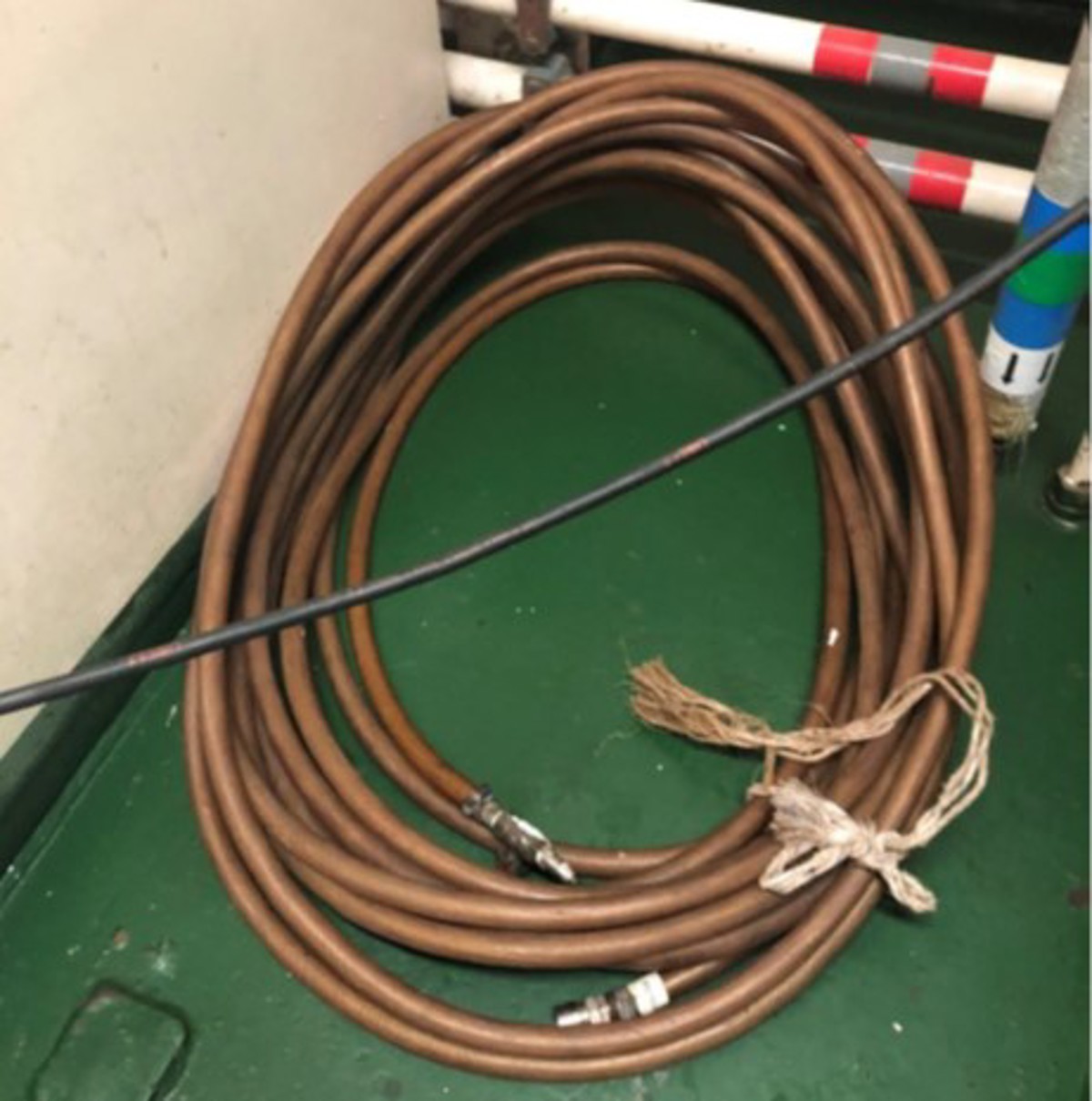
Whilst filling a bucket from a hose, someone was adversely affected by the contents of the hose. The incident happened whilst two engineers were in the process of flushing non-potable water through a hose (to get all of the air out) before filling a cooling water system. One engineer started coughing as the contents of the hose started to fill up the bottom of the bucket. The individual was approached by a colleague and asked if they were OK. The individual continued to cough and so was asked to go and wash their hands and get some fresh air. On returning to the area the individual still didn’t feel right and so was escorted to the bridge. The individual was advised to rest and get plenty of fresh air and in due course felt better. There were no long-term ill-effects.
What went wrong?
- The two engineers both noticed that there was some yellow/brown liquid in the bottom of the bucket which obviously wasn’t water. They started thinking that there was something wrong with this water.
- The person who felt ill had also come into contact with the fluid; gloves were not worn as the assumption had been made that it was only water that was being dealt with.
- It was considered that the hose contained mostly stagnant water and some of the cooling medium liquid. The hose has been sat in a cupboard coiled up for nearly two years and was unlikely to have been allowed to drip dry at any point, leaving remnants of non-potable water and cooling medium inside.
Our member considered the root cause of the incident to be poor hose management. After investigation it was found that this hose had been previously used to fill up the system with Antifrogen, a cooling agent, in July 2019. It had not been properly flushed afterwards and some of the previous liquid had remained in the hose. The hose had not been used since.
Actions
- The old hose was disposed of. Two new hoses were prepared, one for cooling agent, the other for non-potable water.
- All such hoses to be flushed clean after use and left to dry before storage.
- Avoid touching a substance if you are not sure exactly what it is!
Related Safety Flashes
-
IMCA SF 31/21
19 November 2021
-
IMCA SF 15/21
2 June 2021
-
-
IMCA SF 10/07
20 December 2007

IMCA Safety Flashes summarise key safety matters and incidents, allowing lessons to be more easily learnt for the benefit of the entire offshore industry.
The effectiveness of the IMCA Safety Flash system depends on the industry sharing information and so avoiding repeat incidents. Incidents are classified according to IOGP's Life Saving Rules.
All information is anonymised or sanitised, as appropriate, and warnings for graphic content included where possible.
IMCA makes every effort to ensure both the accuracy and reliability of the information shared, but is not be liable for any guidance and/or recommendation and/or statement herein contained.
The information contained in this document does not fulfil or replace any individual's or Member's legal, regulatory or other duties or obligations in respect of their operations. Individuals and Members remain solely responsible for the safe, lawful and proper conduct of their operations.
Share your safety incidents with IMCA online. Sign-up to receive Safety Flashes straight to your email.