NTSB: Engine Failure leads to fire aboard offshore supply vessel
- Safety Flash
- Published on 10 February 2022
- Generated on 27 October 2026
- IMCA SF 04/22
- 2 minute read
The National Transportation Safety Board of the United States (NTSB) has published a report into a diesel generator engine failure and subsequent fire aboard an offshore supply vessel (OSV) in December 2020. Further information here.
What happened?
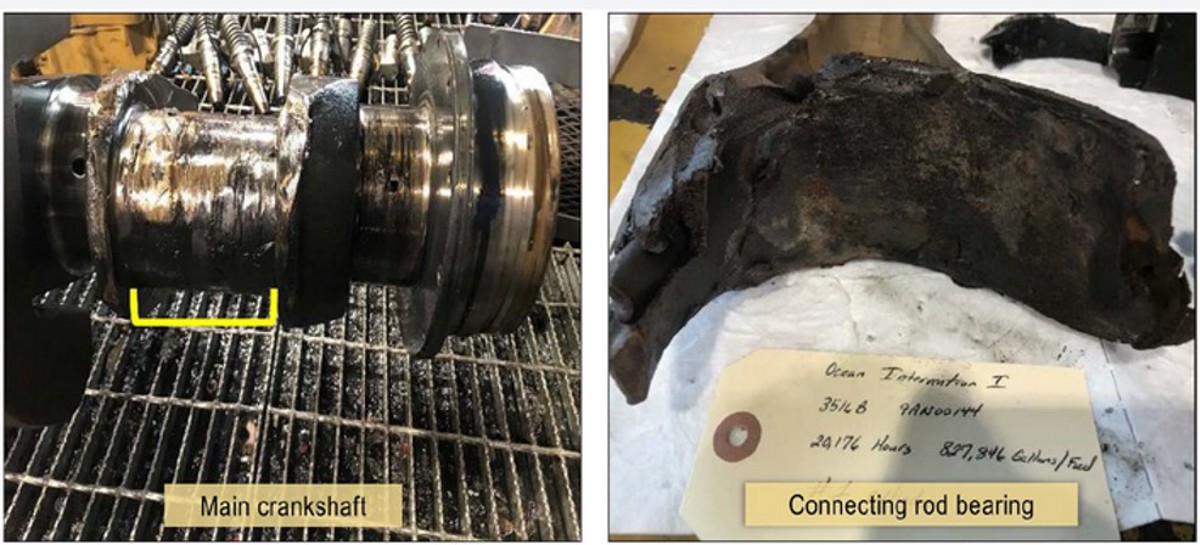
Crew on a OSV at anchor were troubleshooting speed variation issues related to two of the engines driving the vessel’s generators. This involved replacement and calibration of several electrical components and multiple engine restarts. When later carrying the vessel’s electrical load, one of these two engines suffered catastrophic mechanical failure. A cylinder connecting rod was ejected through the engine crankcase while the engine was running. The ejection of the connecting rod allowed atomized oil to be released from the engine and ignite, starting a fire in the engine room.
Photo
What was the cause?
The NTSB determined the probable cause of the diesel generator engine failure was a cylinder’s connecting rod bearing adhering to the crankshaft. In short – it seized up. This led to the ejection of the connecting rod and catastrophic damage to the engine.
What went right?
- The crew’s quick and effective actions to prevent the spread of the fire resulted in the fire extinguishing itself without putting crewmembers at risk.
- The crew isolated the fire before it could spread throughout the vessel.
- There was no pollution and no injuries to the sixteen crew.
There was, however, over $3 million worth of damage to the vessel.
Lessons learned
The NTSB noted that:
“The crew effectively contained the spread of a fire by removing fuel and oxygen sources.
Vessel crews should familiarize themselves and train frequently on machinery, fuel oil, lube oil, and ventilation shutoff systems to quickly act to contain and suppress engine room fires before they can spread to other spaces and/or cause a loss of propulsion and electrical power.”
Related Safety Flashes
-
IMCA SF 34/21
9 December 2021
-
IMCA SF 21/21
30 July 2021
-
IMCA SF 11/21
19 April 2021
IMCA Safety Flashes summarise key safety matters and incidents, allowing lessons to be more easily learnt for the benefit of the entire offshore industry.
The effectiveness of the IMCA Safety Flash system depends on the industry sharing information and so avoiding repeat incidents. Incidents are classified according to IOGP's Life Saving Rules.
All information is anonymised or sanitised, as appropriate, and warnings for graphic content included where possible.
IMCA makes every effort to ensure both the accuracy and reliability of the information shared, but is not be liable for any guidance and/or recommendation and/or statement herein contained.
The information contained in this document does not fulfil or replace any individual's or Member's legal, regulatory or other duties or obligations in respect of their operations. Individuals and Members remain solely responsible for the safe, lawful and proper conduct of their operations.
Share your safety incidents with IMCA online. Sign-up to receive Safety Flashes straight to your email.